How to Integrate Political CTV with Mobile Retargeting to Close the Persuasion Loop
How to Integrate Political CTV with Mobile Retargeting to Close the Persuasion Loop
![[HERO] How to Integrate Political CTV with Mobile Retargeting to Close the Persuasion Loop](https://cdn.marblism.com/C__uQKaL-md.webp)
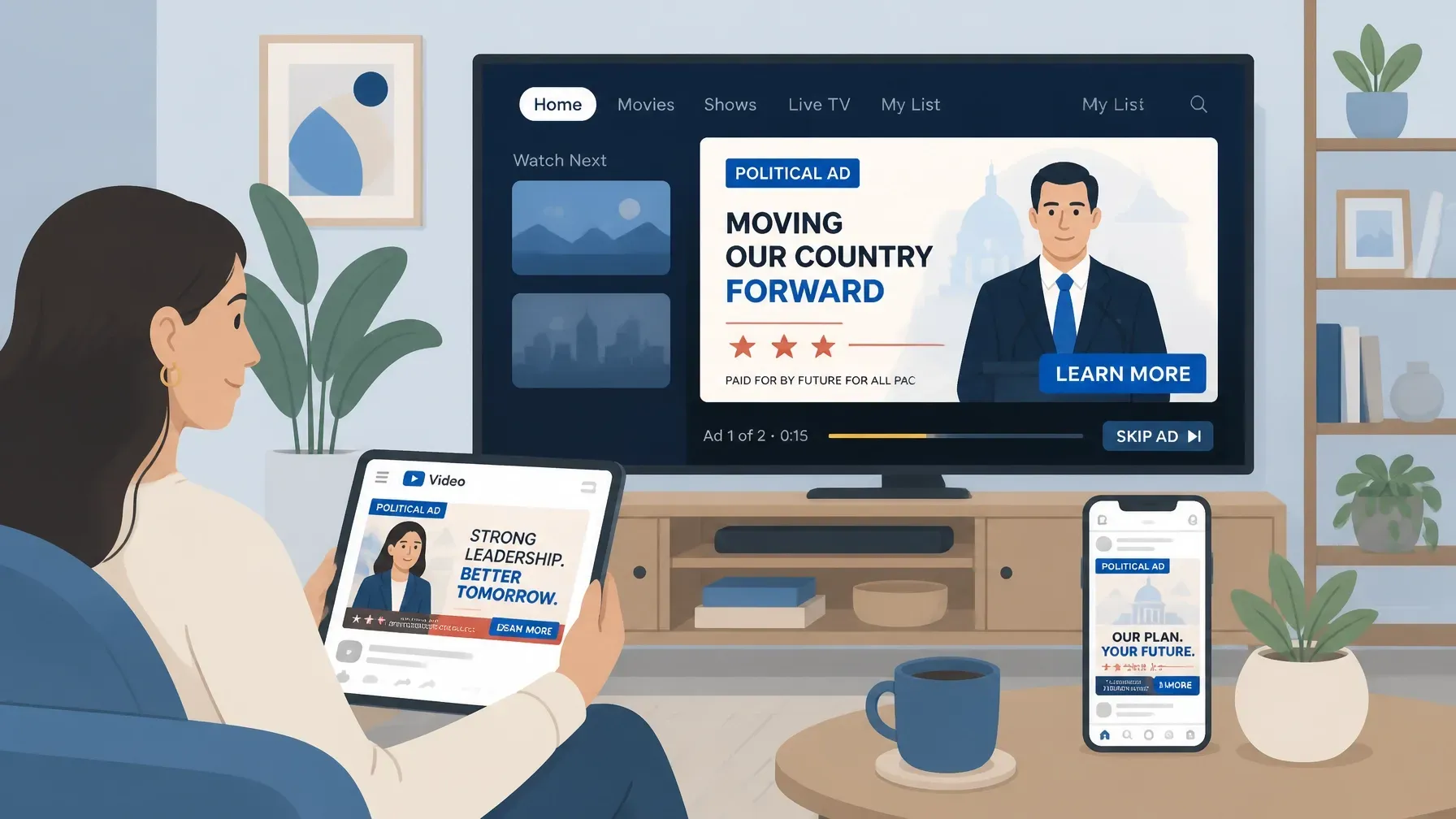
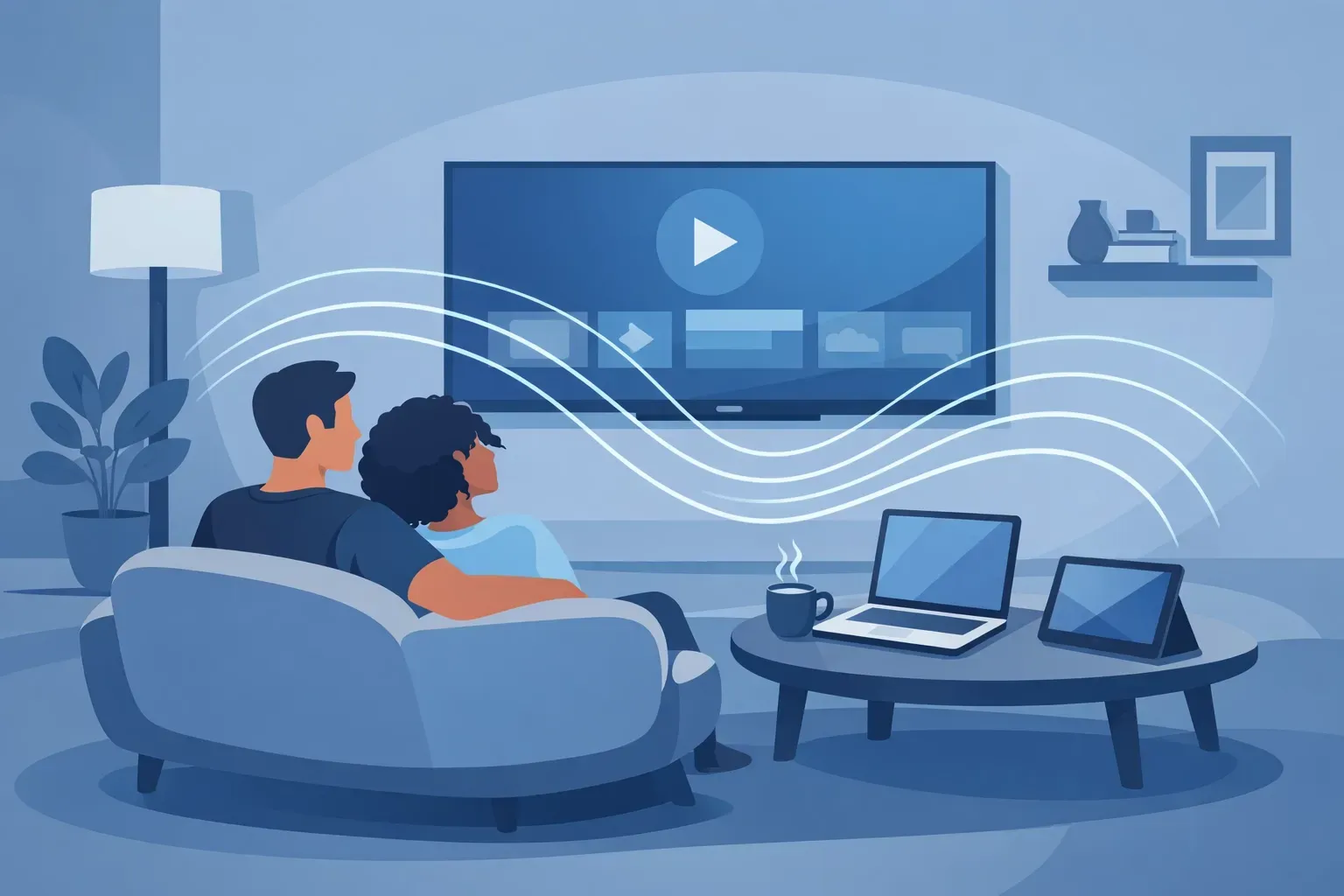
Imagine a voter, let’s call him Mark, sitting on his couch after a long day. He’s catching up on a high-stakes basketball game on Hulu or perhaps the latest prestige drama on Peacock. Your candidate’s ad appears: a high-definition, 30-second spot that clearly articulates a stance on local property taxes. Mark is engaged, but he doesn't have a "Vote Now" button on his remote. Ten minutes later, during a commercial break, Mark picks up his phone to check the news. There, in a small banner at the top of his screen, is your candidate again, this time with a simple button: "Learn More."
This isn't a coincidence. It’s a persuasion loop.
In the 2026 cycle, simply running ads on one platform isn't enough to move the needle in a 50/50 district. To actually change a voter's mind: or ensure they show up at the polls: you need to follow them across screens. You need to anchor your message on the big screen and reinforce it on the small one. At Turn It Blue Ads, we’ve perfected this "one-two punch" through our integrated programmatic suite, and the best part is that you don’t need a million-dollar media buy to execute it.
The CTV Anchor: Why the Big Screen Still Matters
Connected TV (CTV) is the gold standard for digital persuasion. It offers the lean-back, high-impact environment of traditional television but with the surgical precision of digital targeting.
When you run a CTV ad, you’re capturing the voter’s undivided attention. Unlike social media, where users are scrolling past content at lightning speed, streaming TV ads are generally non-skippable and viewed on a large screen. This is where you establish your narrative. It’s where you build the emotional connection.
Here’s why CTV is your campaign’s anchor:
- High Engagement: Viewers are in "content mode," making them more receptive to storytelling.
- Premium Inventory: Your ad appears alongside top-tier content on platforms like Roku, Hulu, Pluto, and Tubi.
- Household Reach: You aren't just targeting an individual; you’re reaching the entire household of registered voters.
But a CTV ad is just the beginning. The biggest mistake campaigns make is treating CTV as a silo. If the voter sees your ad on the big screen and then never sees it again, the persuasion decays rapidly.

Enter Deterministic Matching: Bridging the Gap
How do we know that the person who saw the ad on their Roku is the same person holding the iPhone? The answer is deterministic matching.
In the old days of digital advertising, we relied on cookies. But cookies don’t exist on your smart TV. Instead, we use household-level targeting based on voter data: specifically through our partners like Tunnl. We match a known voter file to a specific IP address and the Device IDs associated with that household.
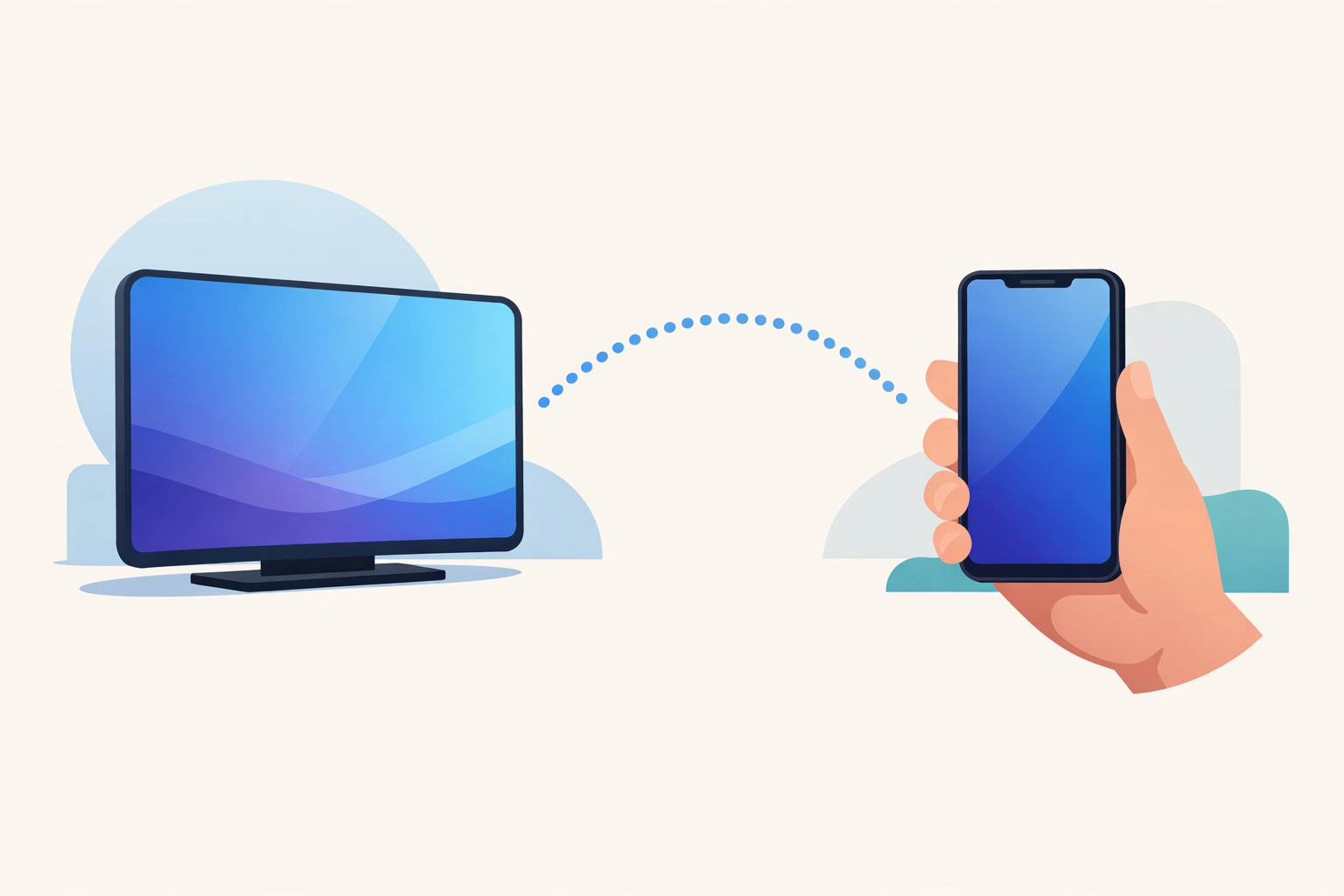
This allows us to create a "digital map" of a voter's home. Once we deliver a CTV impression to that IP address, our system recognizes that household. We don't just hope they remember the ad; we proactively trigger a follow-up.
Bottom line: We aren't guessing. We are using verified voter data to ensure your message follows the voter from the living room to the palm of their hand.
Closing the Loop with Mobile Retargeting
This is where the magic happens. Within hours of Mark seeing your CTV ad, he receives a "shadow" ad on his mobile device or laptop.
This isn't about being "creepy": it’s about being consistent. Research shows that voters often need between 8 and 12 touchpoints before a message truly sticks. By integrating CTV with mobile and desktop retargeting, you’re hitting those touchpoints faster and more efficiently.
Here’s how the synergy works:
- Reinforcement: The mobile ad reminds the voter of the message they saw on TV.
- Call to Action: While CTV is great for "awareness," mobile is built for "action." Your mobile banner can lead directly to a donation page, a volunteer sign-up, or a polling place locator.
- Cross-Screen Continuity: You can use Dynamic Creative Optimization (DCO) to vary the message. If the CTV ad was about healthcare, the mobile retargeting ad can provide a specific bullet point about a local clinic or a quote from a trusted doctor.
Don’t Let the "Middleman Tax" Eat Your Reach
For a long time, this level of sophisticated cross-device retargeting was reserved for statewide races with massive budgets and expensive consultants. Smaller agencies and local campaigns were left with "boosted posts" and basic Facebook ads.
We built Turn It Blue Ads to change that.
Our platform is a self-serve, meta-DSP (Demand Side Platform) designed specifically for political agencies. We’ve removed the "middleman tax": those heavy consultant fees that usually eat up 30% of your media spend before a single ad even runs. Because our platform is automated and intuitive, we can offer a $500 minimum to launch.
This means a candidate for City Council or School Board can now run the same "Persuasion Loop" strategy as a U.S. Senator. You get the same premium inventory and the same precision targeting, but at a price point that actually makes sense for your budget.
Key takeaway: Efficiency and targeting make smaller budgets more powerful. You don't have to outspend your opponent if you out-target them.
Measuring What Actually Moves the Needle
If you can’t measure it, you can’t optimize it. Most platforms will give you "vanity metrics" like clicks or impressions. While those are fine, they don’t tell the whole story of voter influence.
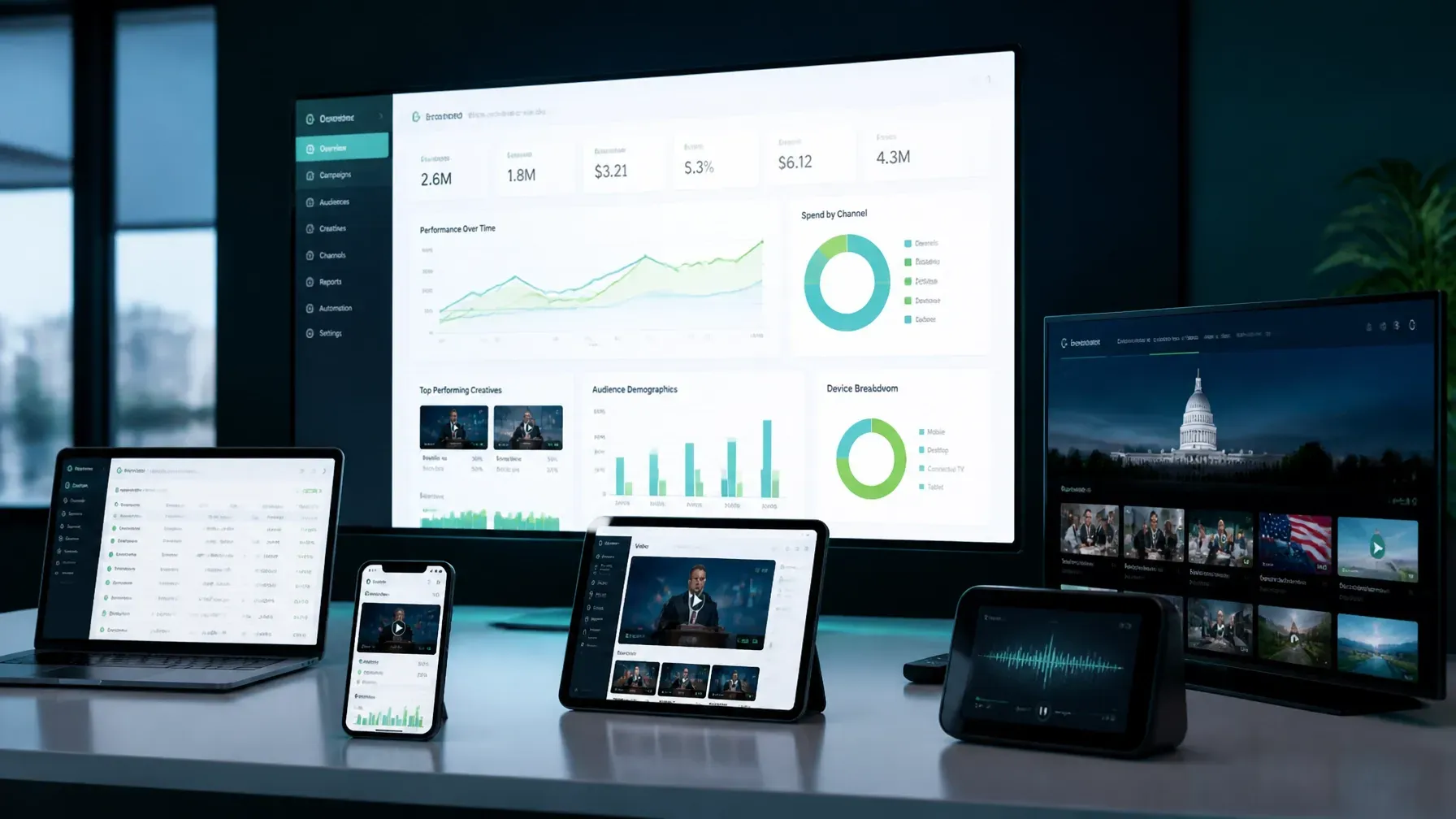
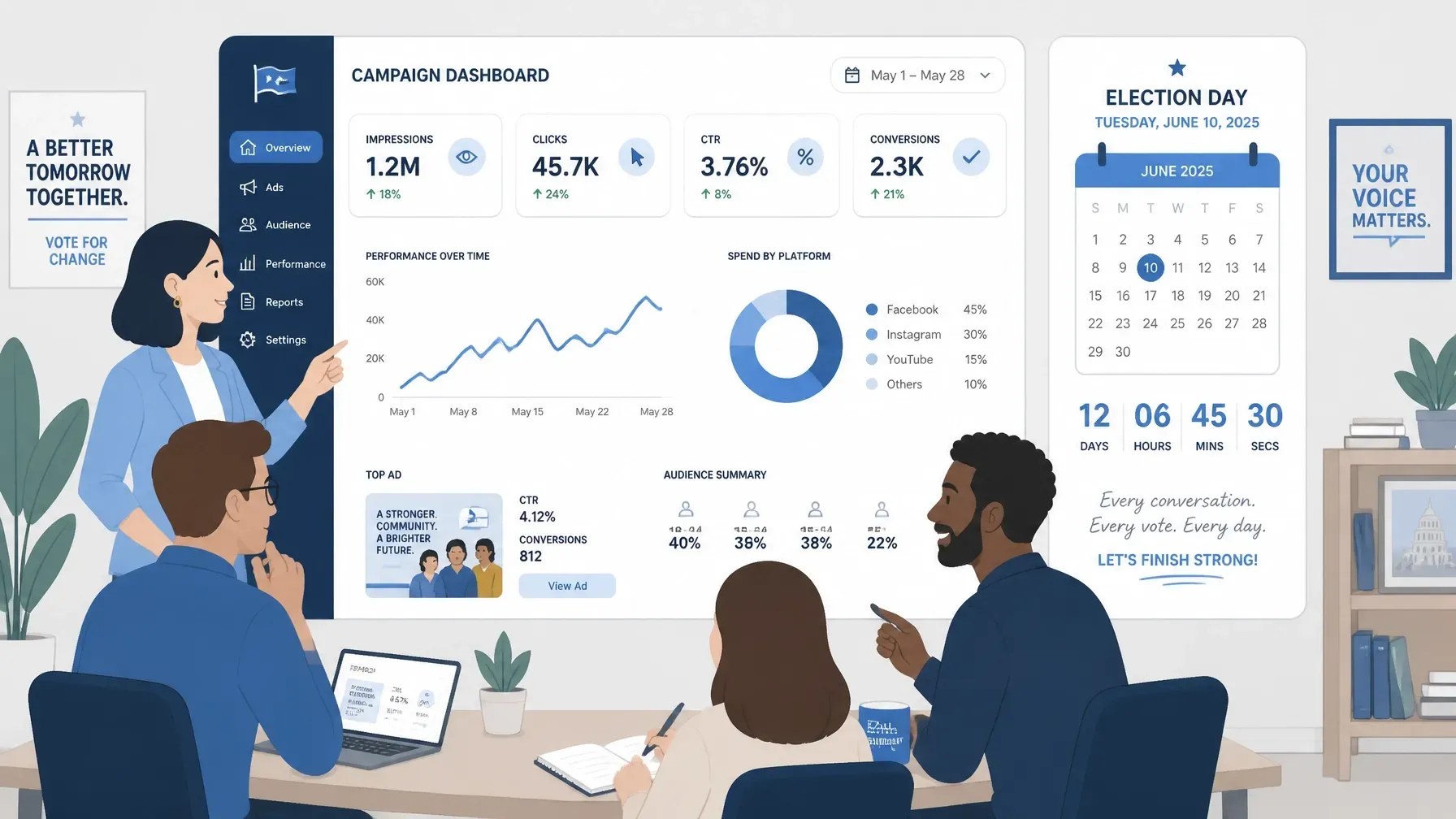
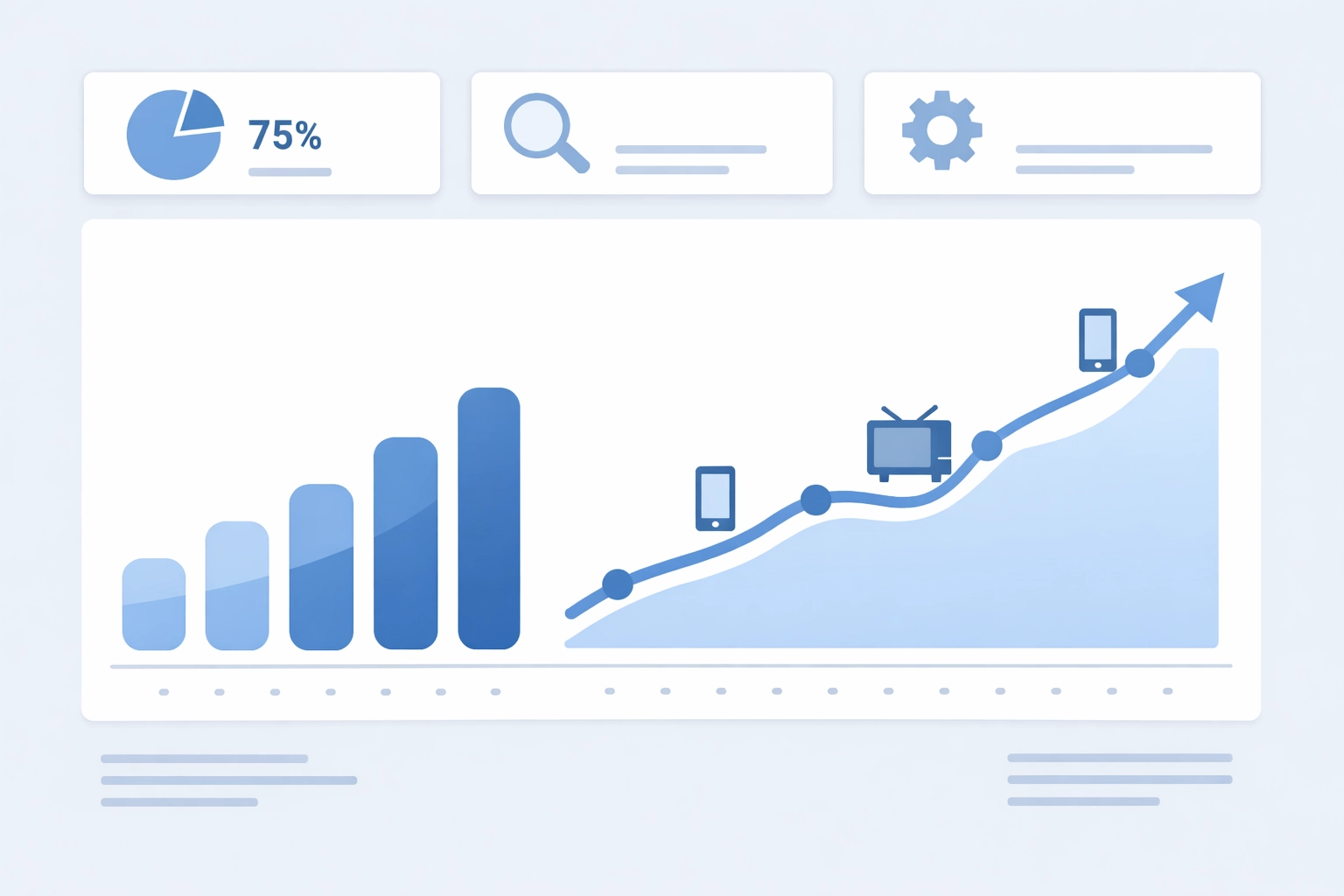
Through our reporting dashboard, you can track reach and frequency across both CTV and mobile devices simultaneously. You can see how many households have completed the "loop."
- Did they watch the full 30 seconds on the big screen?
- Did they subsequently see the mobile banner?
- Did that mobile banner lead to a website visit?
We’ve seen this data-first approach lead to incredible results. In fact, Turn It Blue Ads maintains an 85% win rate for clients who utilize our full programmatic suite. Our commitment to making these tools accessible is why we were honored with the 2025 Award for ‘Best Political Service Team’ by Campaigns & Elections Magazine (C&E).
Step-by-Step: Setting Up Your First Loop
Ready to close the loop for your clients? Here is the sequence you should follow:
- Define Your Audience: Use Tunnl data within our platform to select your target voters (e.g., "Persuadable Independents" or "Likely Democratic Primary Voters").
- Upload Your Creative: You’ll need a high-quality video for CTV (15 or 30 seconds) and a set of display banners (300x250, 728x90, 320x50) for the mobile retargeting. Check our creative portfolio for inspiration.
- Set Your Budget: Even with just a few thousand dollars, you can run a highly effective localized loop.
- Activate Retargeting: In the platform, build your CTV campaign first. Then 'clone' that campaign into a programmatic display campaign using the identical targeting parameters.
- Monitor and Tweak: Use our real-time analytics dashboard to see how your campaign is performing and make any changes to targeting or creatives that might be necessary.
Why You Can't Afford to Wait
The 2026 election cycle is going to be noisier than ever. Linear TV is increasingly crowded and expensive, and "cord-cutters" are becoming the majority in many districts. If you aren't reaching voters on their streaming devices—and then following up on their phones—you are leaving the door wide open for your opponent to dominate the conversation.
Integrating CTV and mobile retargeting isn't just a "nice-to-have" anymore; it’s a strategic necessity. It’s about creating a unified campaign presence that surrounds the voter with your message, making it impossible to ignore.
Don’t let your message get lost in the shuffle. Take control of the persuasion funnel and ensure every dollar you spend is working twice as hard.
Ready to win?
Share this Content!