The 2026 Guide to Political Streaming TV Advertising (Without the Consultant Fees)
The 2026 Guide to Political Streaming TV Advertising (Without the Consultant Fees)
![[HERO] The 2026 Guide to Political Streaming TV Advertising (Without the Consultant Fees)](https://cdn.marblism.com/tZu9pytp2QQ.webp)
The 2026 election cycle is officially here, and the numbers are staggering. We are looking at a projected $10.8 billion in total political ad spending, a massive jump from just four years ago. But here is the real story: while broadcast TV is gasping for air, political streaming tv (CTV) advertising has exploded into a $2.9 billion powerhouse.
If you are still waiting for a media consultant to return your call just to place a simple buy, you are already behind. In 2026, the most successful campaigns aren’t the ones with the biggest "war chests": they are the ones that have cut out the middleman and moved their budgets into the self-serve revolution.
The Death of the "Consultant Tax"
For decades, political advertising was a gatekept industry. If you wanted to get your candidate on a screen, you had to hire a media buyer who charged a 15% to 20% commission just to place the ads. Then you had the creative consultants, the strategy leads, and the "digital experts" all taking a slice of your donor dollars before a single voter saw a single frame.
We decided that model was broken.
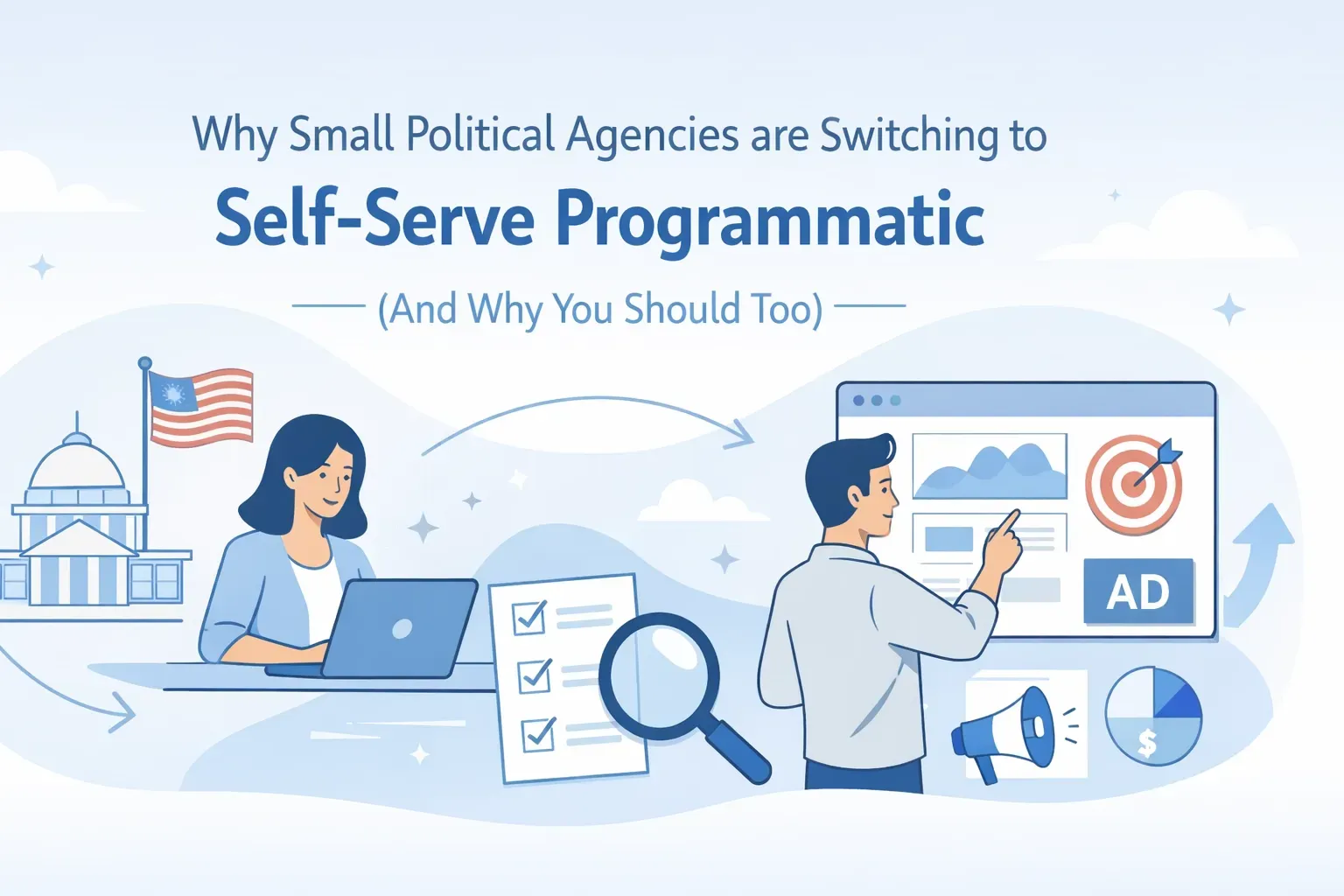
At Turn It Blue Ads, we’ve built a self-serve programmatic suite that puts the power back in your hands. You don't need a six-figure retainer to access premium inventory on Hulu, Peacock, or Roku. You just need a platform that works. By using a self-serve model, you aren't just saving money; you are ensuring that 100% of your working budget actually goes toward reaching voters. This shift is why so many small political agencies are moving to self-serve programmatic in 2026.
Why Linear TV is a Wasted Investment in 2026
Let’s look at the math. Nearly 46% of all TV viewing is now happening on streaming platforms. More importantly, nearly one-third of the electorate: especially the "persuadable" swing voters: cannot be reached through traditional cable or broadcast at all. They are cord-cutters.
When you buy broadcast TV, you are paying to show your ad to everyone in a Designated Market Area (DMA). If you are running for a State House seat in a district that only covers three zip codes, you are paying to reach hundreds of thousands of people who can’t even vote for you. It’s the digital equivalent of burning money.
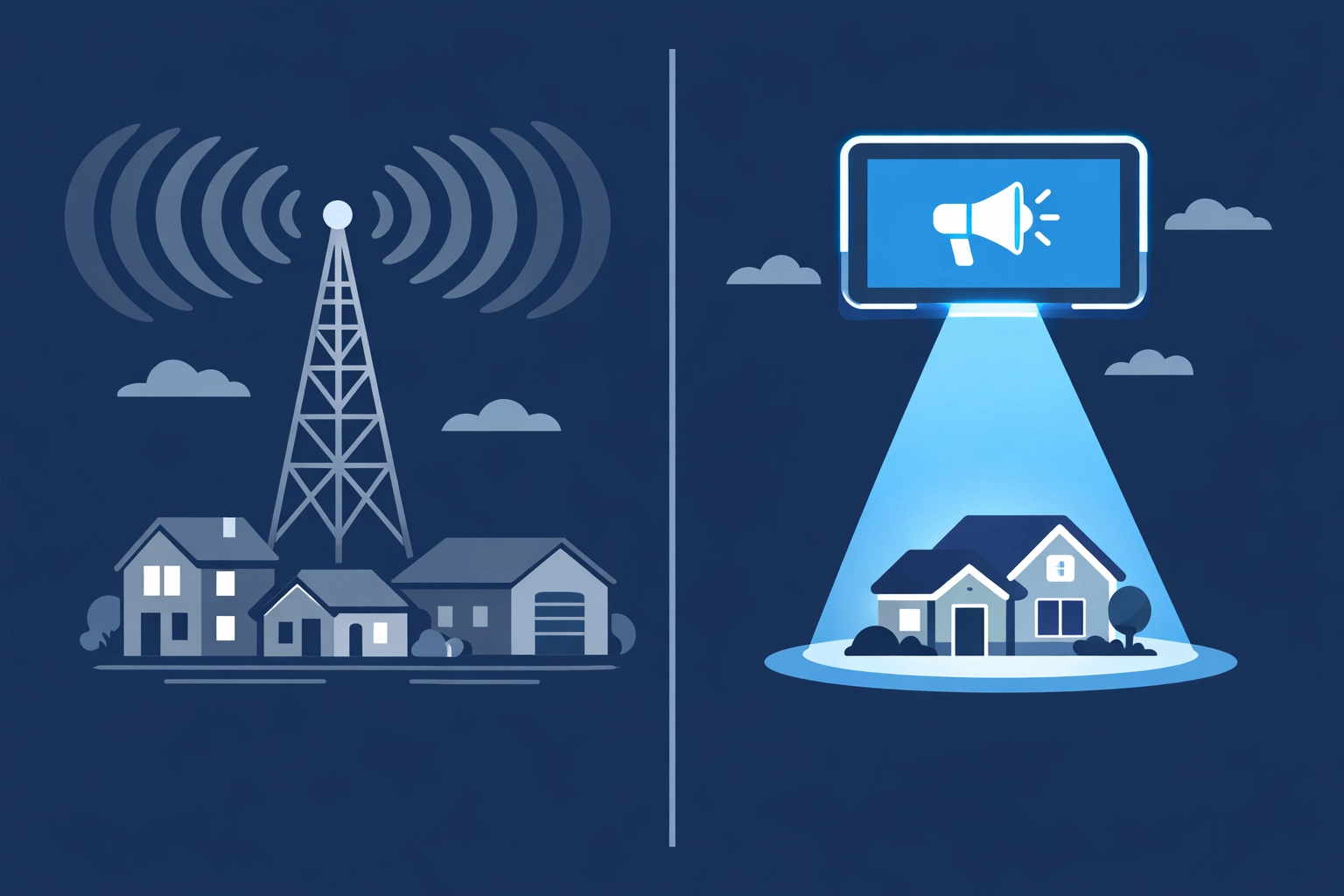
Here’s why political streaming tv advertising (CTV) wins:
- Zip Code (or Political District) Precision: You only pay to reach voters in your specific district lines.
- No "Waste" Impressions: Unlike linear, where you're forced to buy around the news or sports, CTV follows the voter, regardless of what they are watching.
- Frequency Capping: You can ensure a voter sees your ad enough to remember your name, but not so much that they start to hate you.
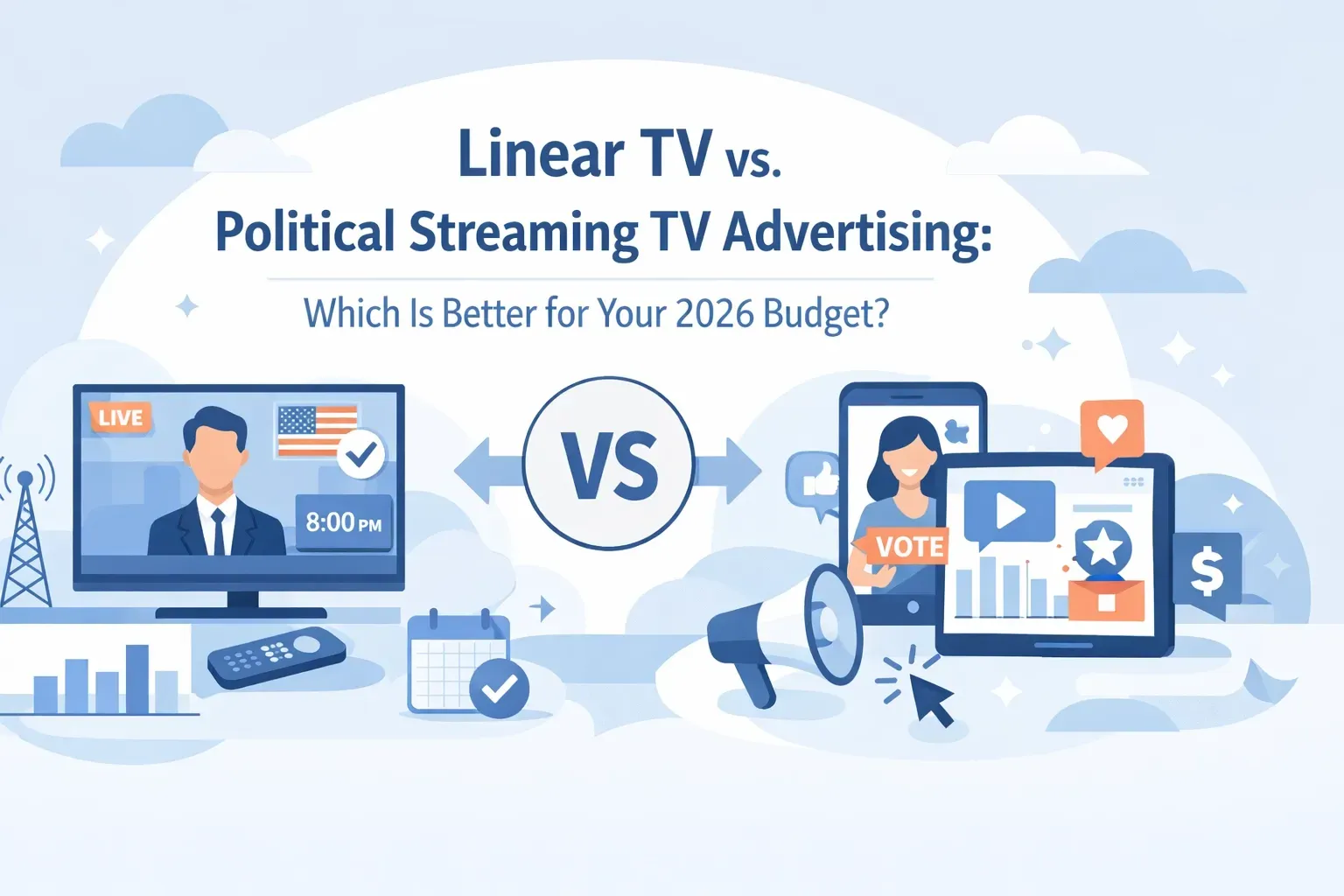
If you want to dive deeper into why old-school buys are failing, check out our breakdown on Linear vs. CTV and how to avoid wasting budget.
The Power of Tunnl Data
In 2026, "demographic" targeting (like "Women 18-35") isn't enough. You need values-based targeting. We prioritize data from Tunnl and L2 to give our users deep insights into voter behavior.
Instead of just guessing who might support your platform, you can target specific "micro-audiences": voters who care about climate change, healthcare access, or local infrastructure. This level of precision is why our clients saw an 85% win rate in previous cycles. When you pair high-quality creative with Tunnl’s superior data, you stop shouting into the void and start having conversations with the right people.
Launching Your Campaign: The $500 Minimum
The biggest myth in political advertising is that you need $50,000 to get on TV. That might be true for the big-box agencies, but not for us. At Turn It Blue Ads, you can launch a professional-grade CTV campaign for as little as $500 and scale up from there.
This low barrier to entry changes the game for down-ballot candidates. Whether you are running for School Board, City Council, or County Commissioner, you can now afford the same premium "Big Screen" presence as a U.S. Senator.
The process is simple:
- Step 1: Upload your 15 or 30-second spot.
- Step 2: Select your geo-targeting (Zip codes or District boundaries).
- Step 3: Choose your audience segments.
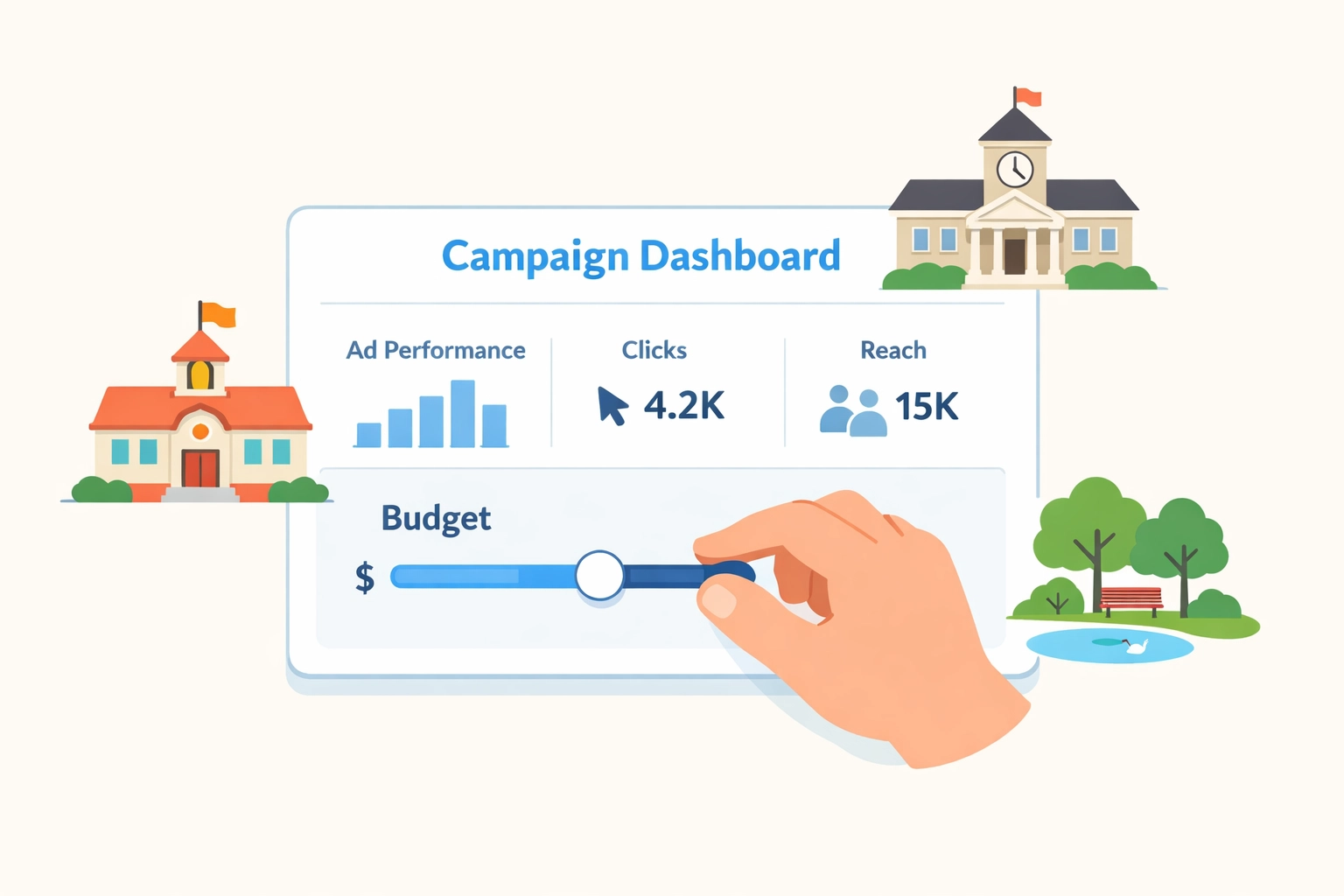
- Step 4: Set your budget and hit go.
It’s Not Just CTV: The Full Programmatic Suite
While streaming TV is the "hero" of the 2026 cycle, a winning campaign requires a multi-channel approach. Voters don't just watch TV; they browse the news, listen to podcasts, and use apps.
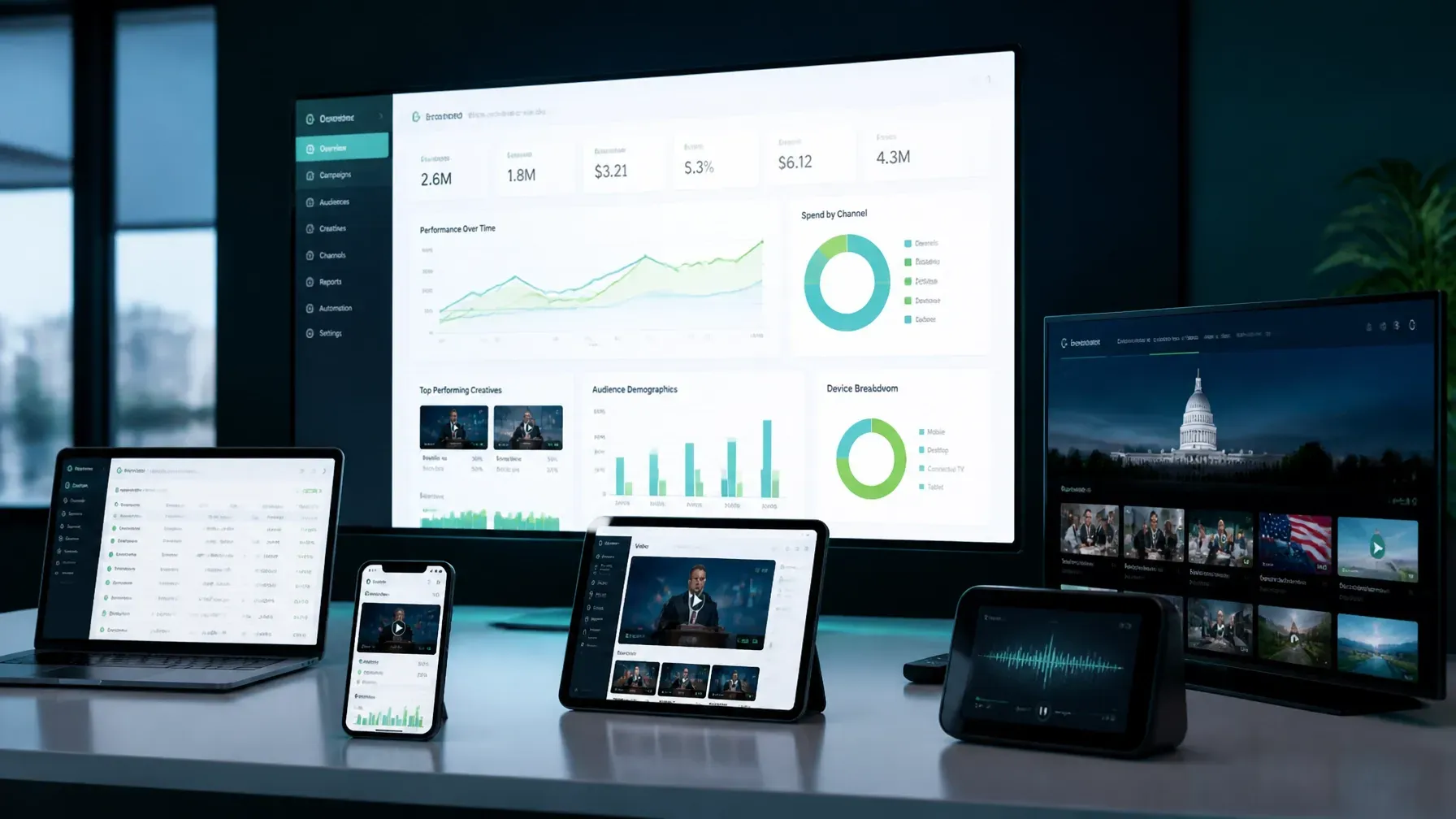
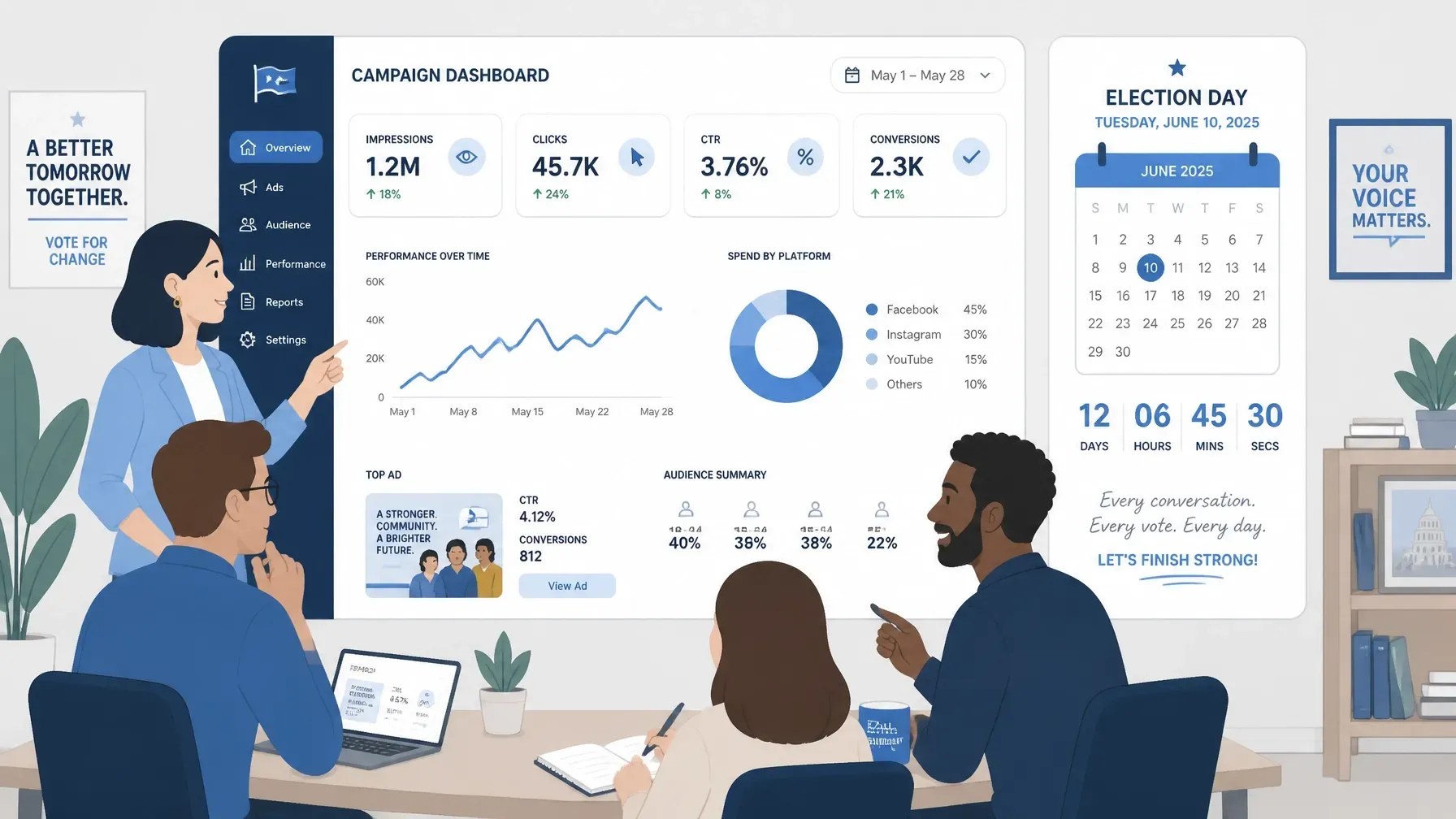
Turn It Blue Ads is a full programmatic suite. That means from one dashboard, you can manage:
- Display Ads: Stay top-of-mind while voters are reading local news.
- Online Video (OLV): Reach voters on YouTube and across the web.
- Digital Audio: Get into their ears on Spotify, iHeartRadio, and Top 40 podcasts.
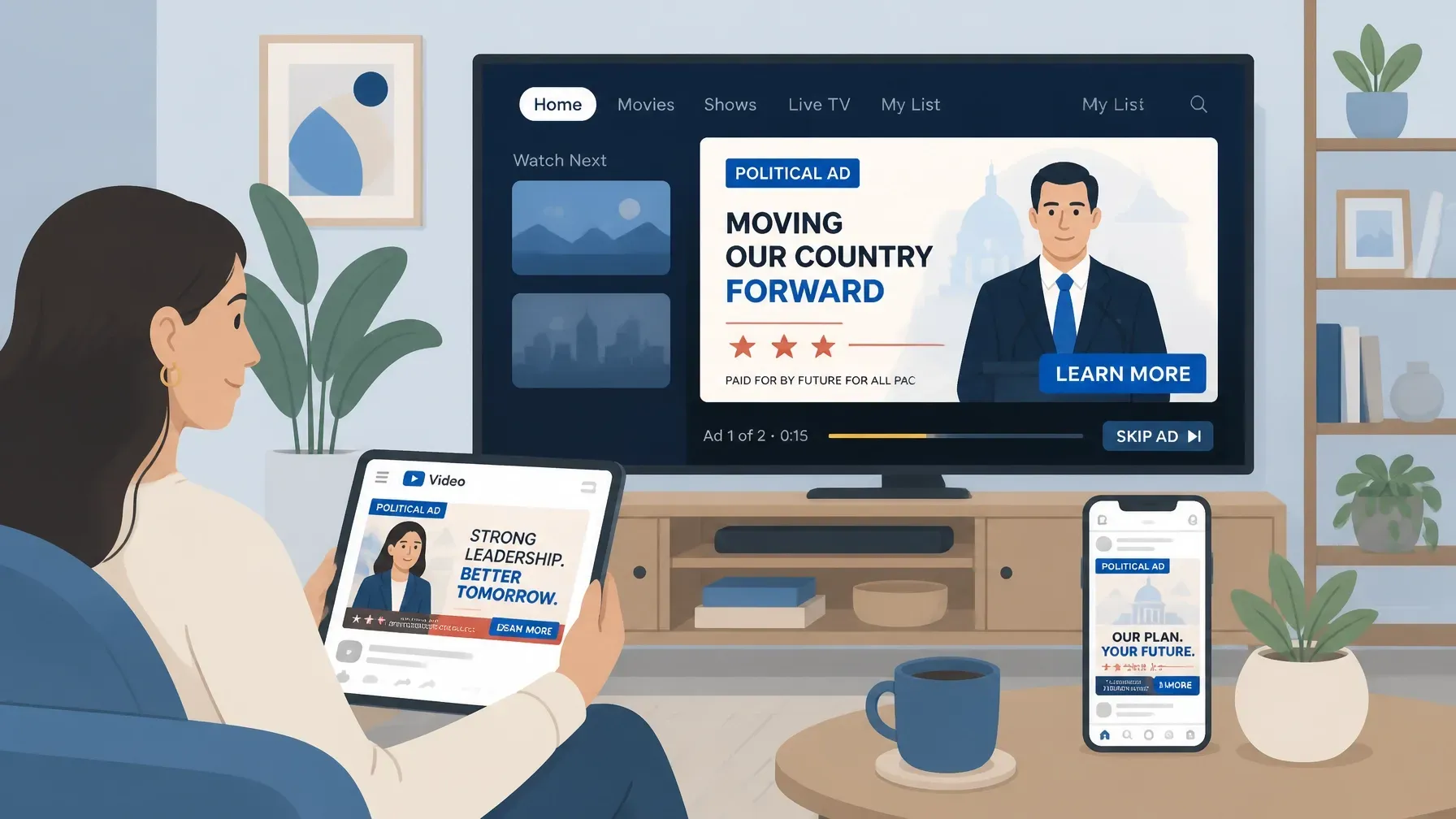
- Connected TV: The "Big Screen" impact in the living room.
By surrounding the voter across all these touchpoints, you build the kind of name recognition that wins races. We call this "Voter Surround Sound," and it’s a far cry from the "boosted posts" that most campaigns rely on. In fact, if you’re still clicking that "Boost" button on social media, you need to read our Survival Guide for Progressive Agencies.
Navigating 2026 Compliance (Without a Law Degree)
One of the reasons campaigns stay away from DIY advertising is the fear of compliance. "What if I miss a disclaimer?" "What are the FEC rules for streaming?"
The good news is that most FCC broadcast rules: like the "Equal Time" rule or "Lowest Unit Rate": don’t apply to streaming. However, FEC disclaimer requirements absolutely do. Our platform is built by political pros who understand these nuances. We were even awarded the 2025 'Best Political Service Team' by Campaigns & Elections Magazine (C&E) because of our commitment to making these complex tools accessible and compliant for everyone.
Key takeaway: Our platform guides you through these requirements so you can focus on your message, not the paperwork.
Why Speed is Your Greatest Competitive Advantage
In the final weeks of a campaign, every hour counts. If a scandal breaks or your opponent drops a nasty mailer, you can't wait three days for an agency to "optimize" your buy.
With a self-serve platform, you can pivot in real-time. You can swap out creative, increase spend in a specific precinct, or launch a "Truth" ad within hours of a hit piece landing. This agility is what separates winners from losers in a 50/50 district.

Bottom Line: The Future is Here
The 2026 midterms will be won on the "Second Screen." As CTV officially outspends broadcast in key Senate races, the tech is finally filtering down to every level of the ballot.
You have a choice: You can keep paying the "Consultant Tax" and hope your media buyer is actually looking at your data, or you can take the wheel yourself. With a $500 minimum, an 85% win rate backing our strategy, and an award-winning support team, there is no reason to wait.
Ready to get your message on the big screen?
Share this Content!