The 'Already Voted' Budget Save: How Programmatic Digital Suppression Actually Works
The Already Voted Budget Save: How Programmatic Digital Suppression Actually Works
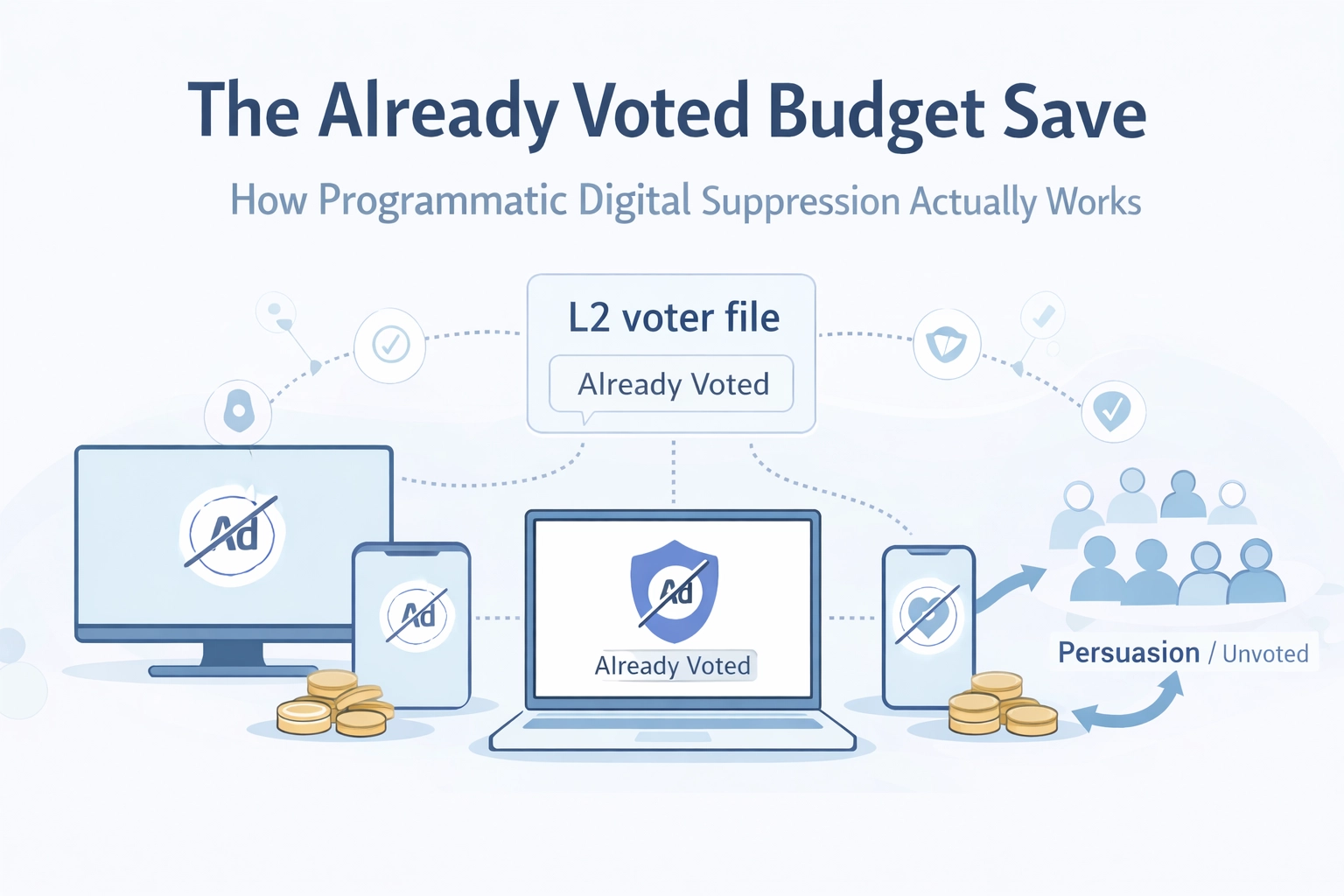
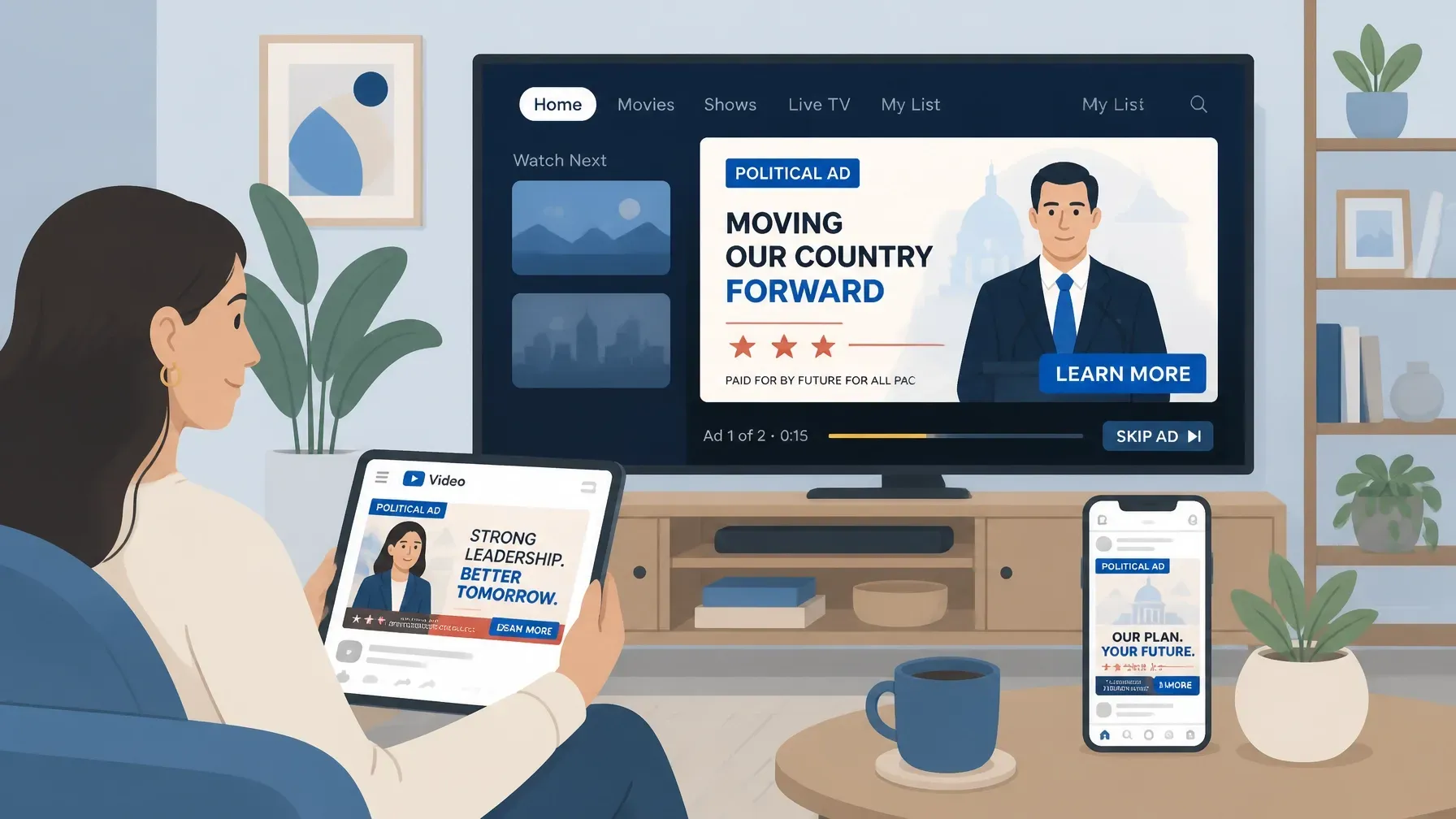
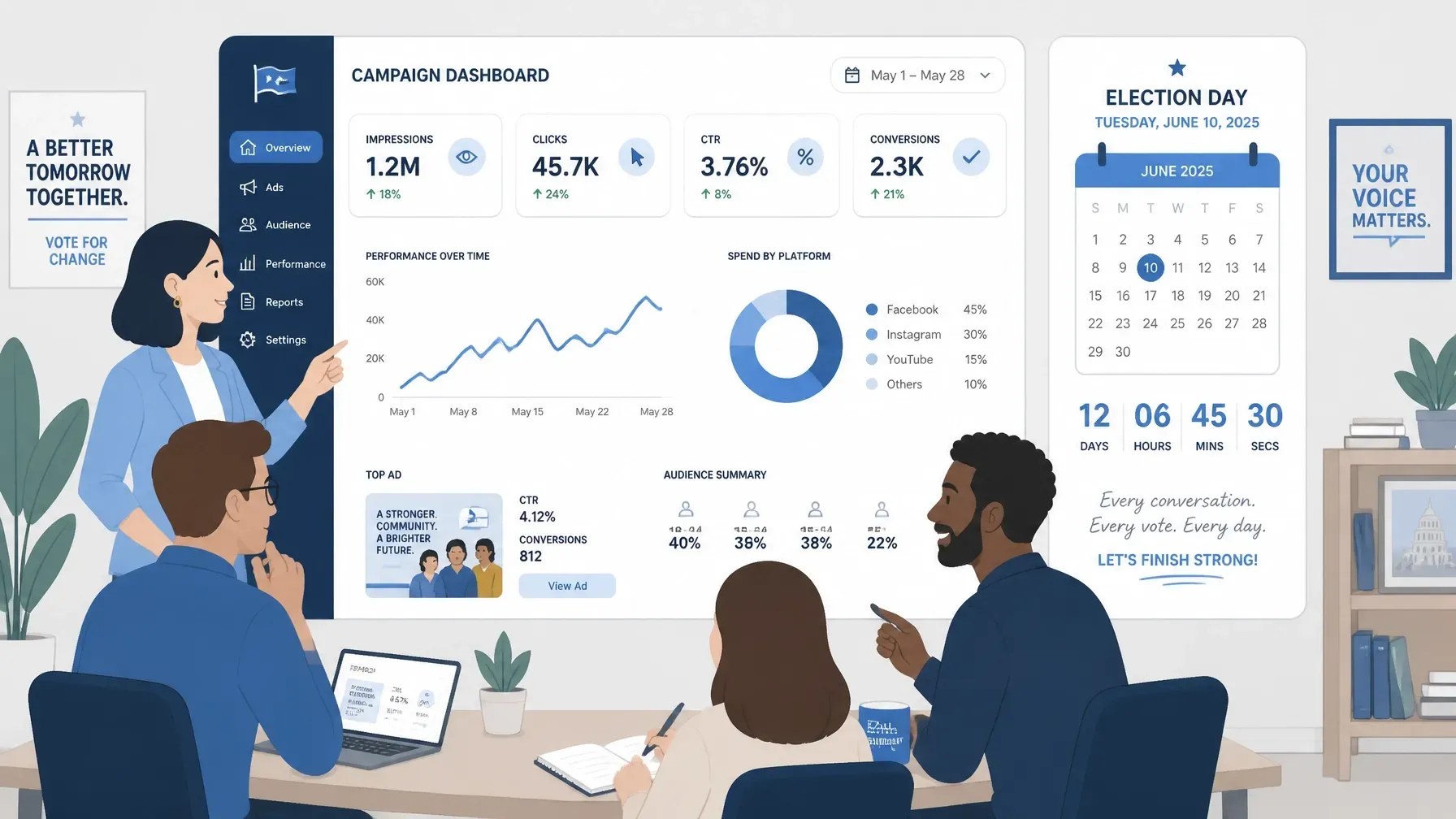
It’s the Friday before Election Day. You’ve been running a high-octane digital ads for political campaigns strategy for months. Your programmatic mix is humming—CTV, display, online video, mobile, the whole thing. Frequency is on point. Your candidate is surging.
But there’s a quiet, expensive problem lurking in your campaign dashboard.
Thousands of the people seeing your "Go Vote" ads have already cast their ballots. They stood in line on Tuesday, they dropped their mail-in envelope on Wednesday, or they hit the early voting site over the weekend. They’re done. They are locked in. And yet, you are still paying to show them ads.
In the final, frantic weeks of a race, every dollar counts. Why are you spending your precious remaining budget talking to people who can’t help you anymore?
This is where the "Already Voted" budget save comes in. At Turn It Blue Ads, we’ve built a political programmatic advertising platform that doesn’t just find your voters: it knows when to stop talking to them.
The Invisible Drain on Your Late-Cycle Budget
Here’s the deal: most digital advertising is "set it and forget it." You upload a list of targets, you set a budget, and the machine grinds away until the money is gone.
If you’re using a standard political streaming tv advertising setup or a broader programmatic plan (display, online video, mobile, etc.) without real-time data integration, you are essentially throwing money into a black hole during the early voting window. As more people vote, the pool of "available" voters shrinks, but your ad spend usually stays the same.
What happens? You end up hammering the same people: those who have already voted: with redundant impressions. This doesn't just waste money; it creates voter fatigue.
If 30% of your target universe has already voted by the final weekend, and you haven't suppressed them, you are effectively wasting 30 cents of every dollar spent.
Here’s How Programmatic “Already Voted” Suppression Actually Works
Suppression isn't a new concept, but the way we execute it on our platform is a game-changer. It’s all about the marriage of high-quality voter targeting data and real-time programmatic execution.
1. The Data Powerhouse: Tunnl and L2
We don’t guess who your voters are. Our platform integrates directly with the industry’s leading data houses: Tunnl and L2. We prioritize Tunnl for its incredibly deep modeling on issue-based audiences and L2 for its best-in-class voter behavior data and the most frequently updated voter file in the industry.
These aren't static spreadsheets from six months ago. These are living, breathing data sets. When a state's Secretary of State updates the "voted" file, that information flows through our partners and into our platform. For the "already voted" exclusion use case specifically, the suppression logic is powered by our L2 Political integration —so as vote history updates, we automatically keep those voters out of your GOTV delivery.
2. The Identity + Household Match (Across Channels)
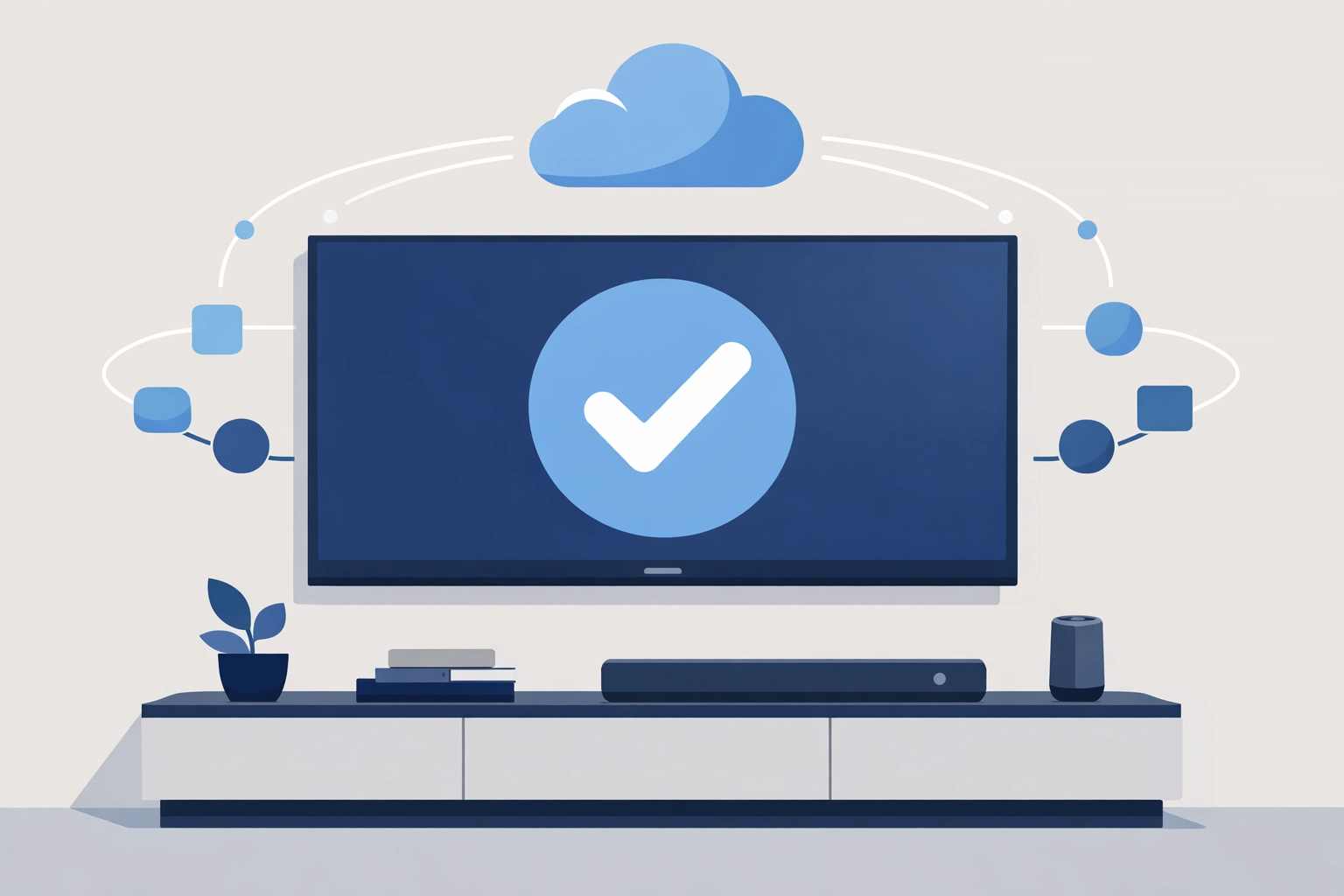
Programmatic advertising is messy in a predictable way. Some inventory is household-based (CTV). Some is device-based (mobile). Some is cookie-less or ID-based (online video and display). The win is connecting those dots.
When our system receives an update that "John Doe" at 123 Main St has voted, we don’t just stop showing ads on a single screen. Using programmatic identity and household matching, we automatically suppress "already voted" delivery across:
- Display
- Online video
- Mobile web and in-app
Why? Because if John has voted, blasting the same GOTV message is a massive waste of your valuable ad impressions.
Since CTV is considered a household-based ID, if there are still members of the household that haven't voted, we won't automatically remove that ID from the targeting universe quite yet.
3. Real-Time Logic (No Middleman Required)
The old way of doing this involved calling a media buyer, who would then call a data person, who would then manually upload a "kill list" to a DSP. By the time that happened, three days had passed and thousands of dollars were gone.
On the Turn It Blue Ads platform, this is handled via our self-serve interface. You can set up suppression rules that trigger automatically as the data refreshes. It’s hands-off, high-efficiency, and built for the speed of 2026 politics.
Reallocating for the Win: The Math of Efficiency
The "Budget Save" isn't just about spending less; it’s about spending smarter.
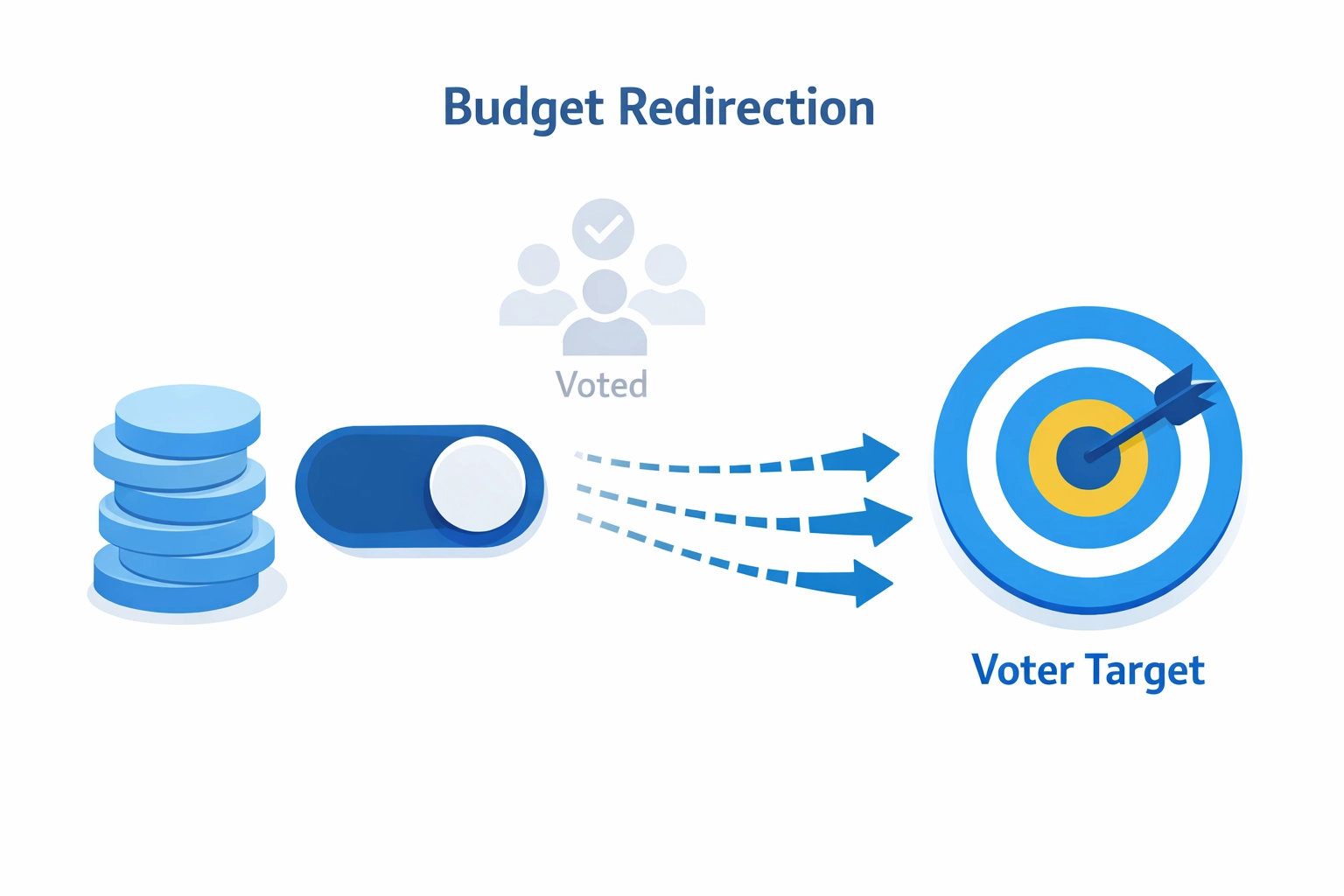
When you suppress the "already voted" crowd, that money doesn't just sit there. Our platform automatically reallocates those funds to the voters in your universe who haven't shown up yet.
Think about the impact on your reach and frequency. In the final 72 hours, you can pivot your entire remaining budget to target the "procrastinator" voters: the ones who need that final nudge to get to the polls.
Key Takeaway: Suppression turns a broad "Get Out The Vote" (GOTV) campaign into a surgical strike on the voters who actually determine the margin of victory.
Why It Matters for Small to Mid-Sized Campaigns
A lot of campaigns think these high-level tactics are reserved for Presidential races or Senate contests with $50 million budgets.
That is simply not true anymore.
We’ve designed our platform to be accessible. Whether you are running for City Council or a competitive State House seat, you can access the same Tunnl-driven suppression tech as the big guys. With a minimum of just $500 to launch a campaign, the "Already Voted" budget save is a tool that every campaign manager should be using to protect their resources.
The Turn It Blue Ads Advantage: Proven Results + Award-Winning Support
We aren't just technologists; we’re political pros who understand the pressure of the final weeks. Our focus on efficiency and precision is one of the reasons we boast an 85% win rate for clients using our ads platform. It’s also why we were honored with the 2025 Award for 'Best Political Service Team' by Campaigns & Elections Magazine.
We know that in a close race, the difference between winning and losing often comes down to who managed their resources better in the final ten days.
Bottom line: Don't let your campaign budget become a casualty of the early voting era. Use the tech that’s available to you to ensure every single impression is working toward a victory.
Ready to maximize your 2026 budget?
Stop wasting money on voters who have already checked their boxes. Harness the power of real-time data and programmatic “already voted” suppression across CTV, display, and online video to make your final push more effective than ever.
Share this Content!