The 2026 Guide to Self-Serve Political Advertising: Why Campaigns are Cutting Out the Middleman
The 2026 Guide to Self-Serve Political Advertising: Why Campaigns are Cutting Out the Middleman
![[HERO] The 2026 Guide to Self-Serve Political Advertising: Why Campaigns are Cutting Out the Middleman](https://cdn.marblism.com/7S12ldFniRJ.webp)
Here's the uncomfortable truth: for decades, political advertising has been built on a gatekeeper model. You needed a media consultant who knew a buyer who had relationships with stations who could maybe get you on air: if you had $50,000 burning a hole in your pocket.
That world is dying. Fast.
In 2026, campaigns from city council to Congress are launching streaming TV ads in minutes, spending as little as $500, and tracking every impression in real time. No middlemen. No minimum contracts. No waiting for a media buyer to return your call three days before Election Day.
Welcome to self-serve political advertising. If you're still waiting for someone else to manage your media, you're already behind.
What "Self-Serve" Actually Means (And Why It's Revolutionary)
Self-serve doesn't mean you're alone. It means you're in control.
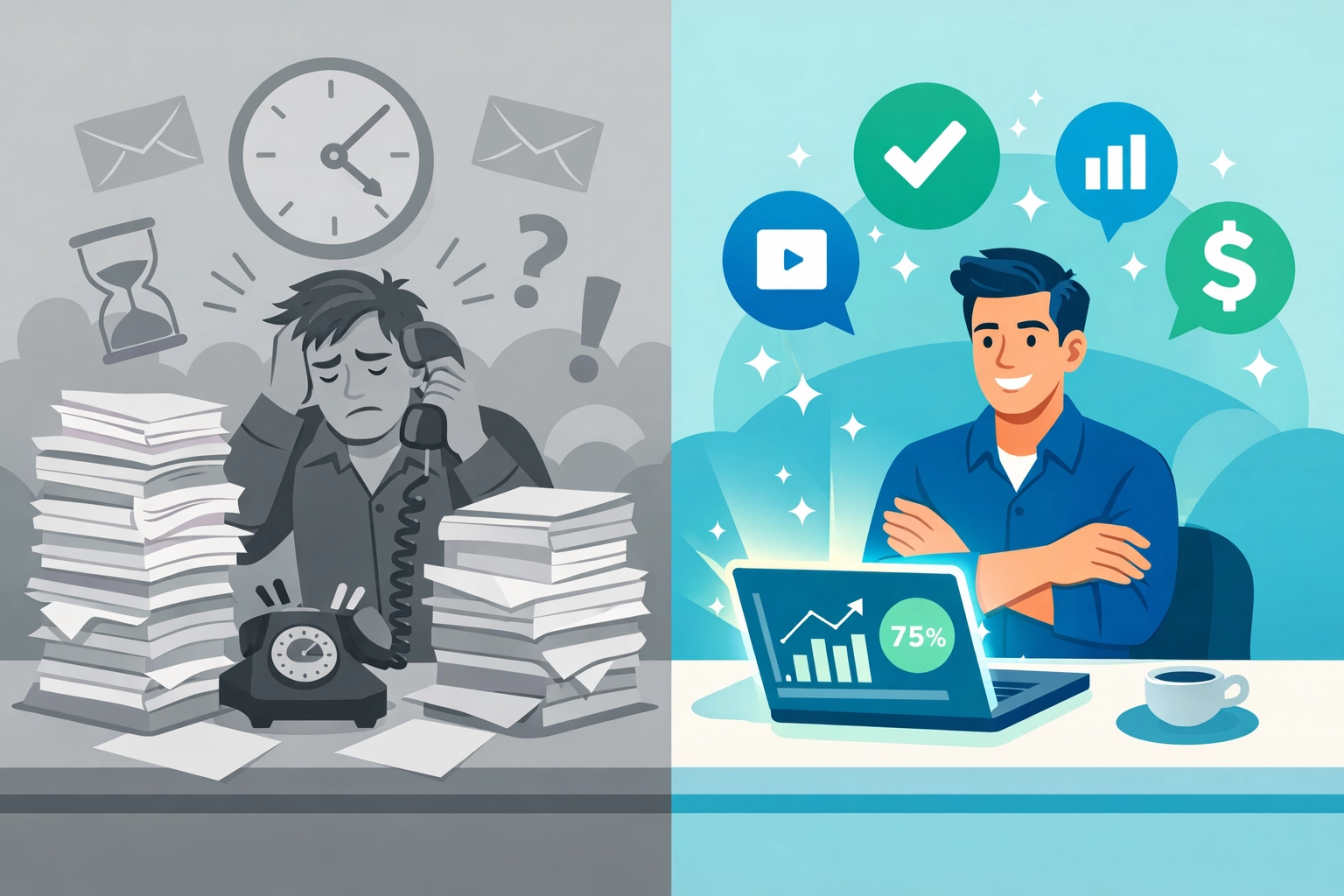
Here's the difference: traditional political advertising requires layers of intermediaries. You brief a consultant. They brief a buyer. The buyer negotiates with stations. You wait. You pay markups at every layer. You get a report three weeks after your ads run telling you... basically nothing useful.
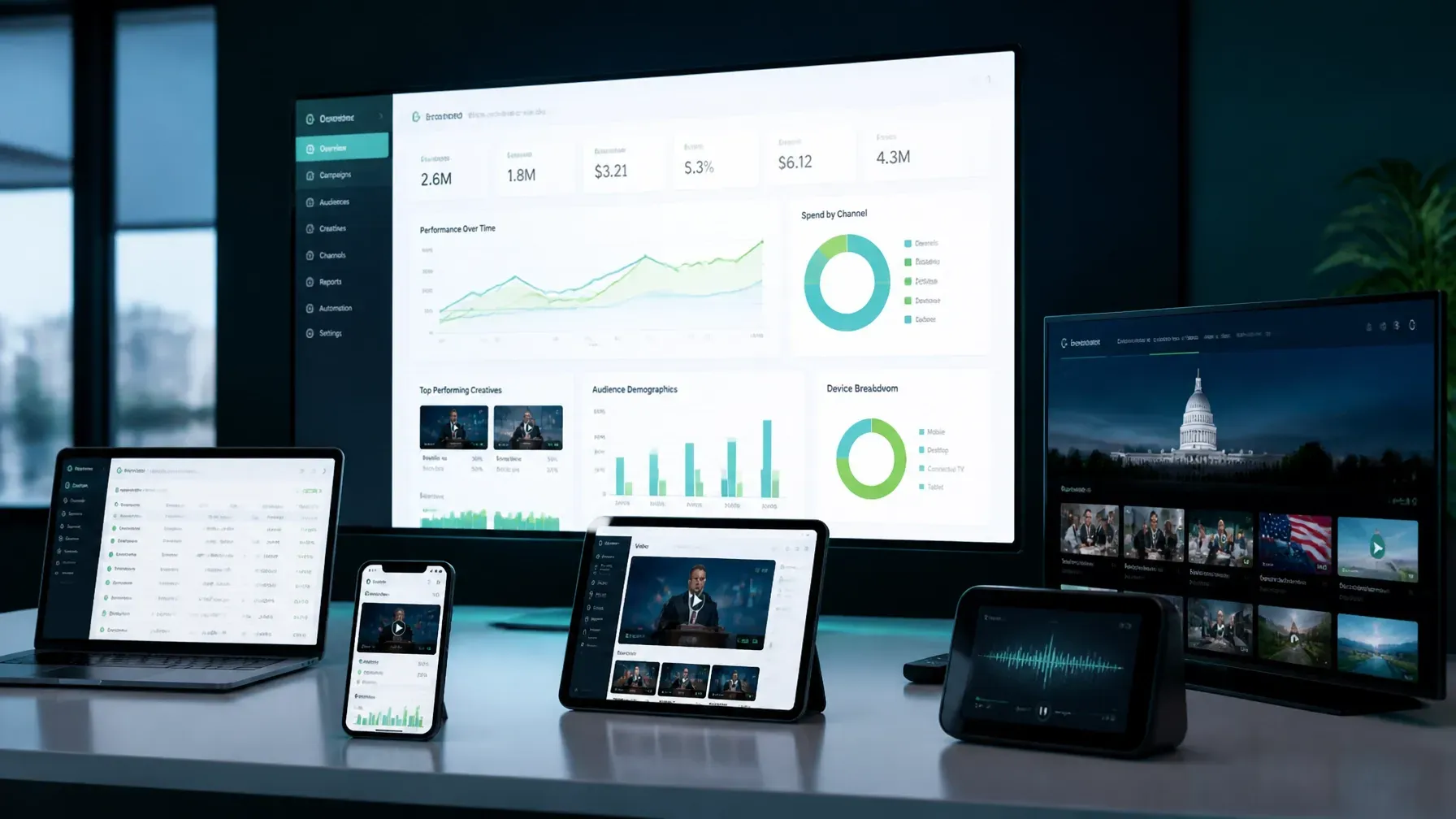
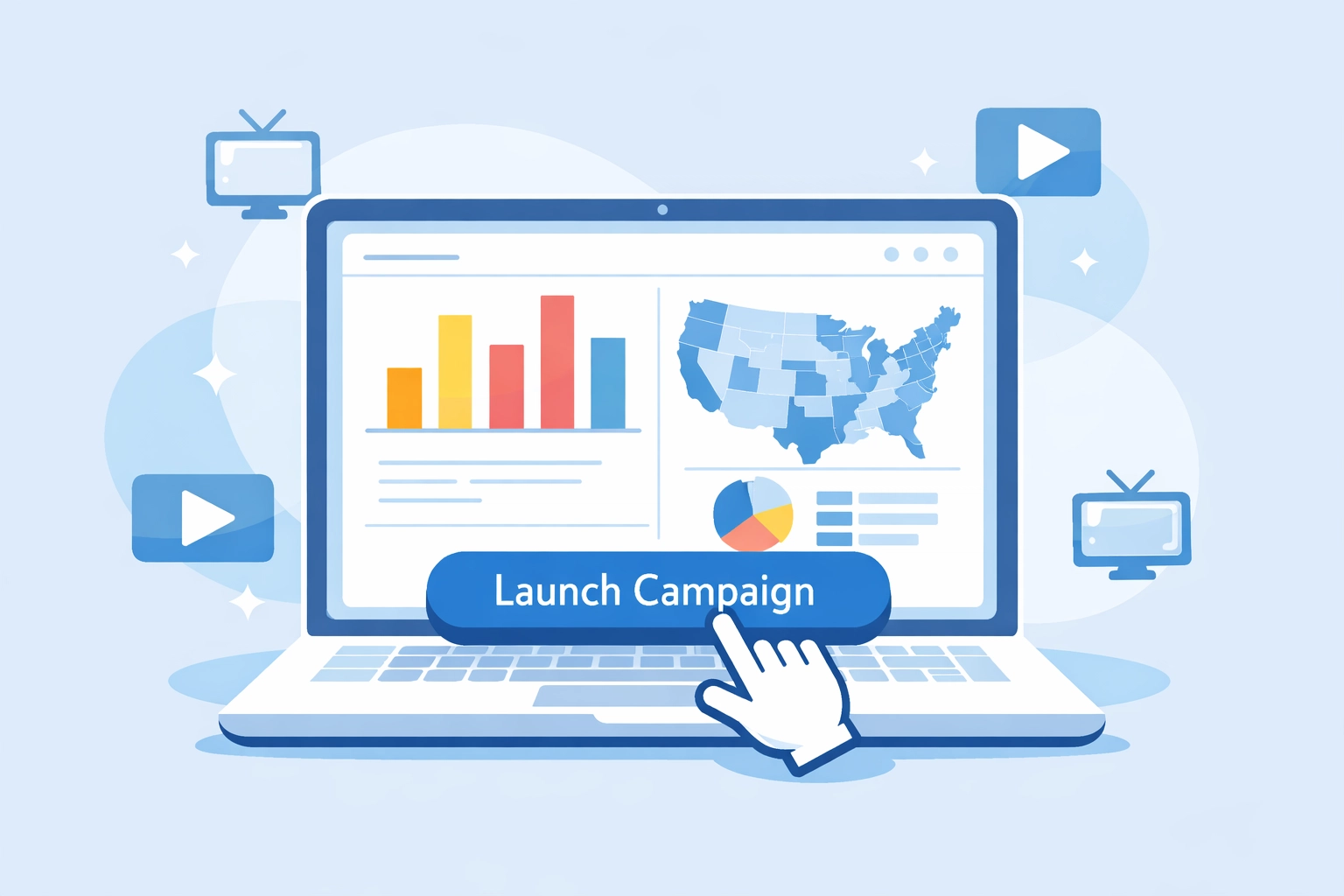
Self-serve platforms let you log in, upload creative, define your audience, set your budget, and launch: today. You're buying directly from the same premium inventory the big campaigns access. Hulu. Roku. Peacock. The exact same streaming services your voters are already watching.
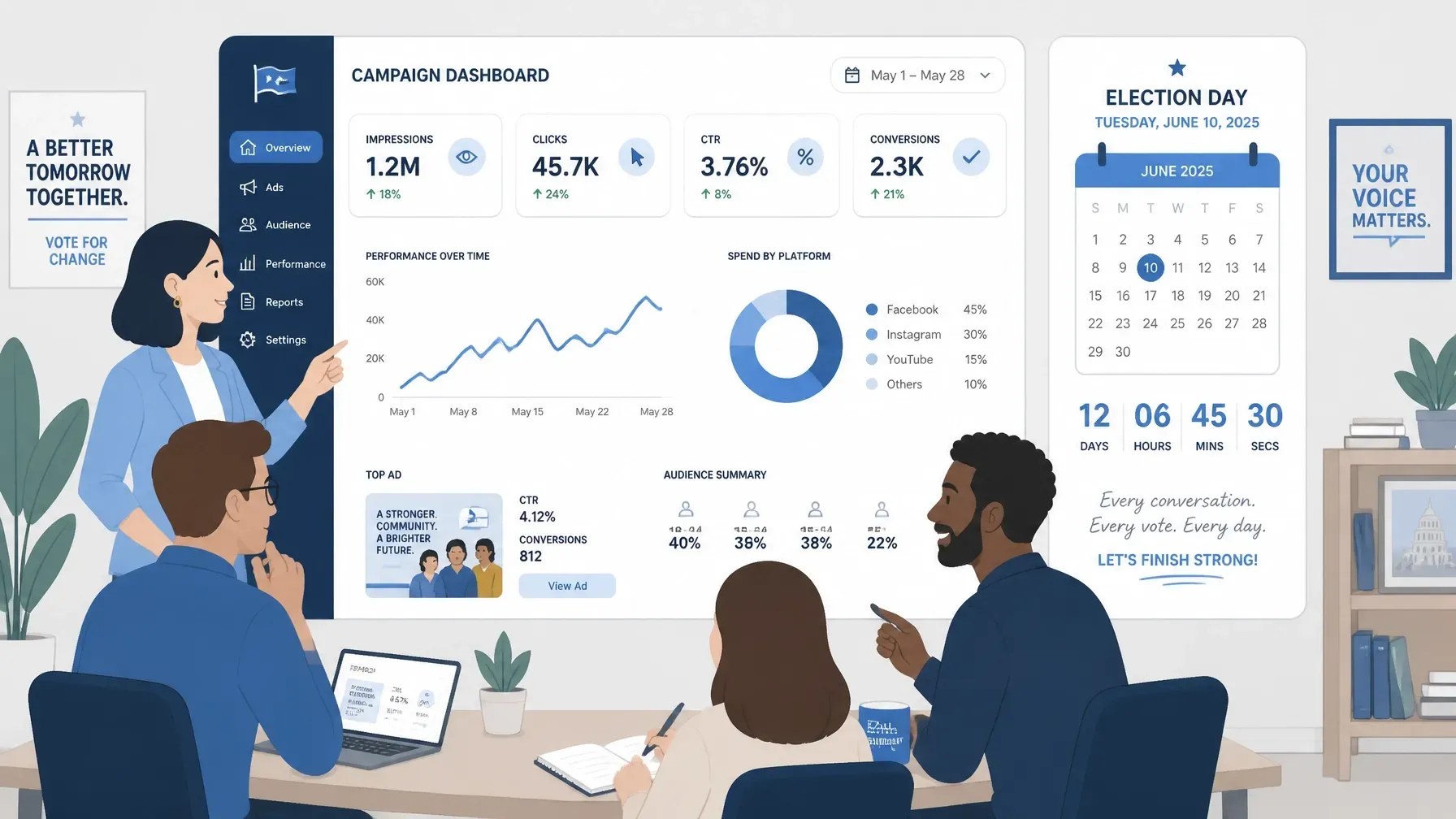
The revolution isn't just about cutting out middlemen. It's about access to data and performance metrics that were previously locked behind agency walls. You can see completion rates, geographic performance, and audience engagement in real time. Not weeks later. Not summarized in a PDF. Right now.
The Old Math vs. The New Math
Let's talk numbers because this is where self-serve platforms fundamentally change who can compete.
Traditional broadcast TV: You're looking at $50,000 minimum buys. Maybe even $100,000 in competitive markets. That money goes toward gross rating points: a metric invented in the 1950s that tells you roughly how many times your ad might have been seen by someone in a broad demographic category.
Self-serve streaming platforms: You can launch with $500. That's not a typo. Five hundred dollars gets you 20,000 targeted impressions at $25 CPM on premium inventory. Your city council candidate can run ads on the same platforms as US Senate campaigns.
Here's what that $500 actually buys:
- Geographic targeting down to the precinct level
- Demographic targeting (age, gender, household income)
- Behavioral targeting (cord-cutters, likely voters, issue engagement)
- Real-time performance tracking
- Completion rate visibility
- Zero agency markup
The cost transparency alone is revolutionary. On our platform, you know exactly what you're paying:
- Premium inventory (Hulu, Peacock):$35-$75 CPM
- Mid-tier streaming:$25-$50 CPM
- FAST channels (Tubi, Pluto TV):$18-$30 CPM
You pick your mix based on your audience and budget. No hidden fees. No "value-added" charges. No wondering if your buyer is prioritizing your flight or the better-funded campaign.
Why Down-Ballot Campaigns Are Going All-In
State house candidates are running CTV-first campaigns. School board races are streaming-native. This isn't experimental anymore: it's standard practice for campaigns that want to compete efficiently.
The reason is simple: you don't need a million-dollar budget to be effective. You need smart targeting and the ability to optimize in real time. A city council candidate with $5,000 can reach 200,000 targeted impressions across the right streaming platforms. That's meaningful frequency in a local race.
Our clients maintain an 85% win rate using the Turn It Blue Ads platform, and we were awarded the 2025 'Best Political Service Team' by Campaigns & Elections Magazine. Those results aren't coming from massive budgets: they're coming from campaigns that can launch fast, test creative, read the data, and adjust daily.
Traditional TV buyers can't pivot mid-flight. You're locked into your buy for weeks. Self-serve platforms let you shift $500 from one streaming channel to another based on yesterday's performance. That agility matters when you're competing against better-funded opponents.
Premium Inventory Without Premium Gatekeeping
Here's what shocks first-time self-serve users: you're getting the same inventory the big agencies access.
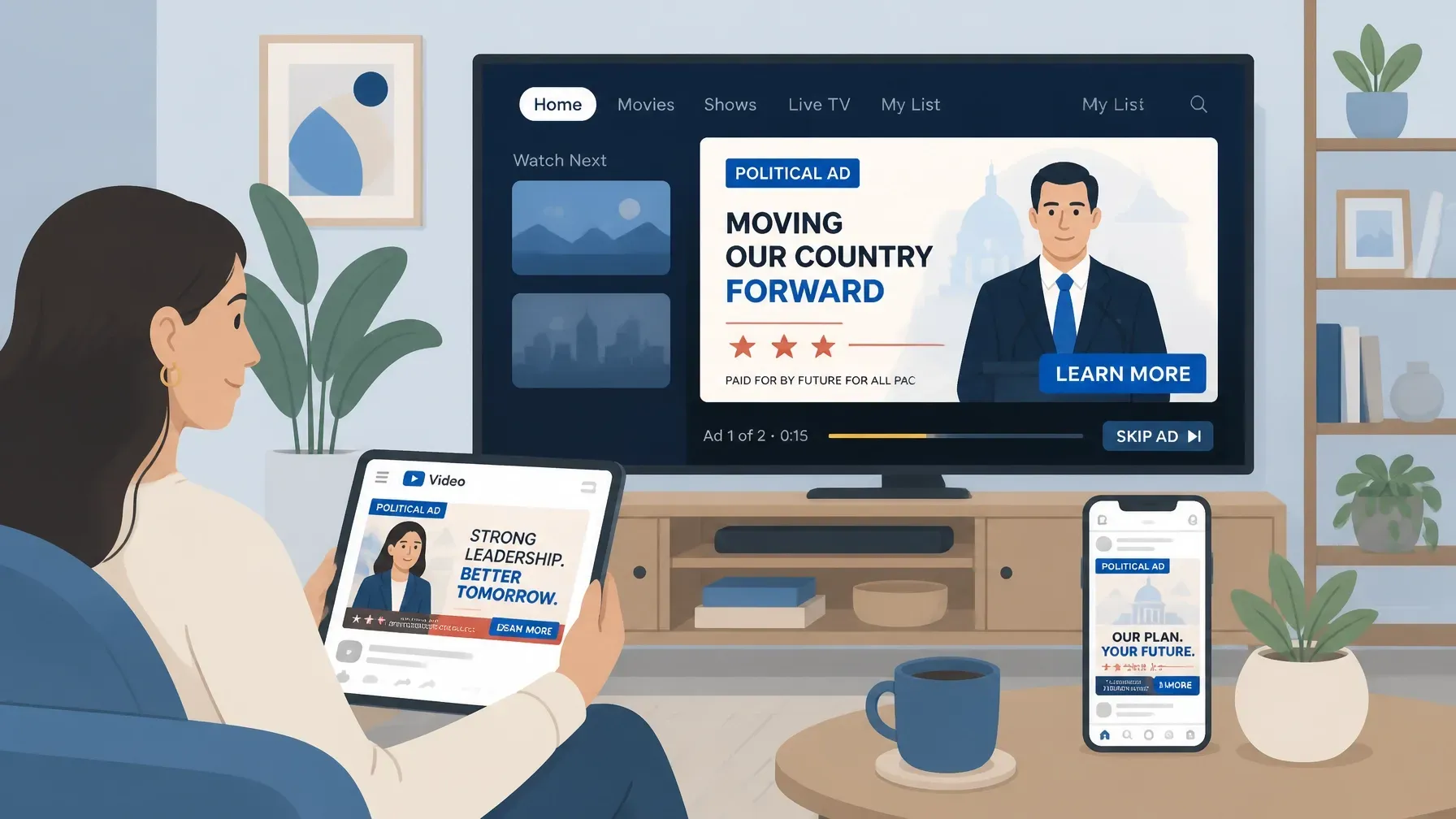
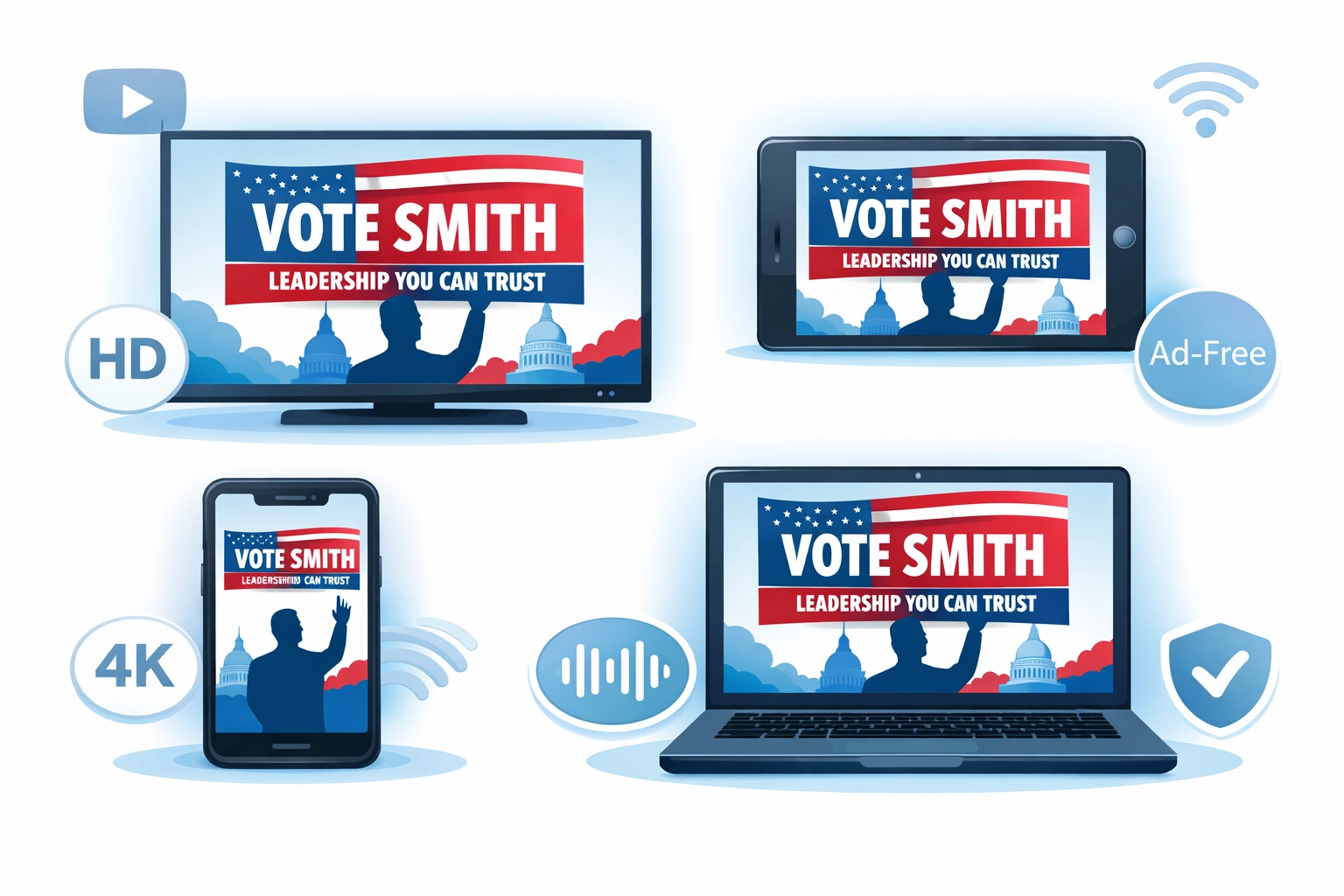
We're integrated directly with Hulu, Roku, Peacock, Paramount+, and dozens of premium streaming services. Your ads run in the same environment as national brands. Your city council candidate's spot plays right before the latest streaming series your voters are binge-watching.
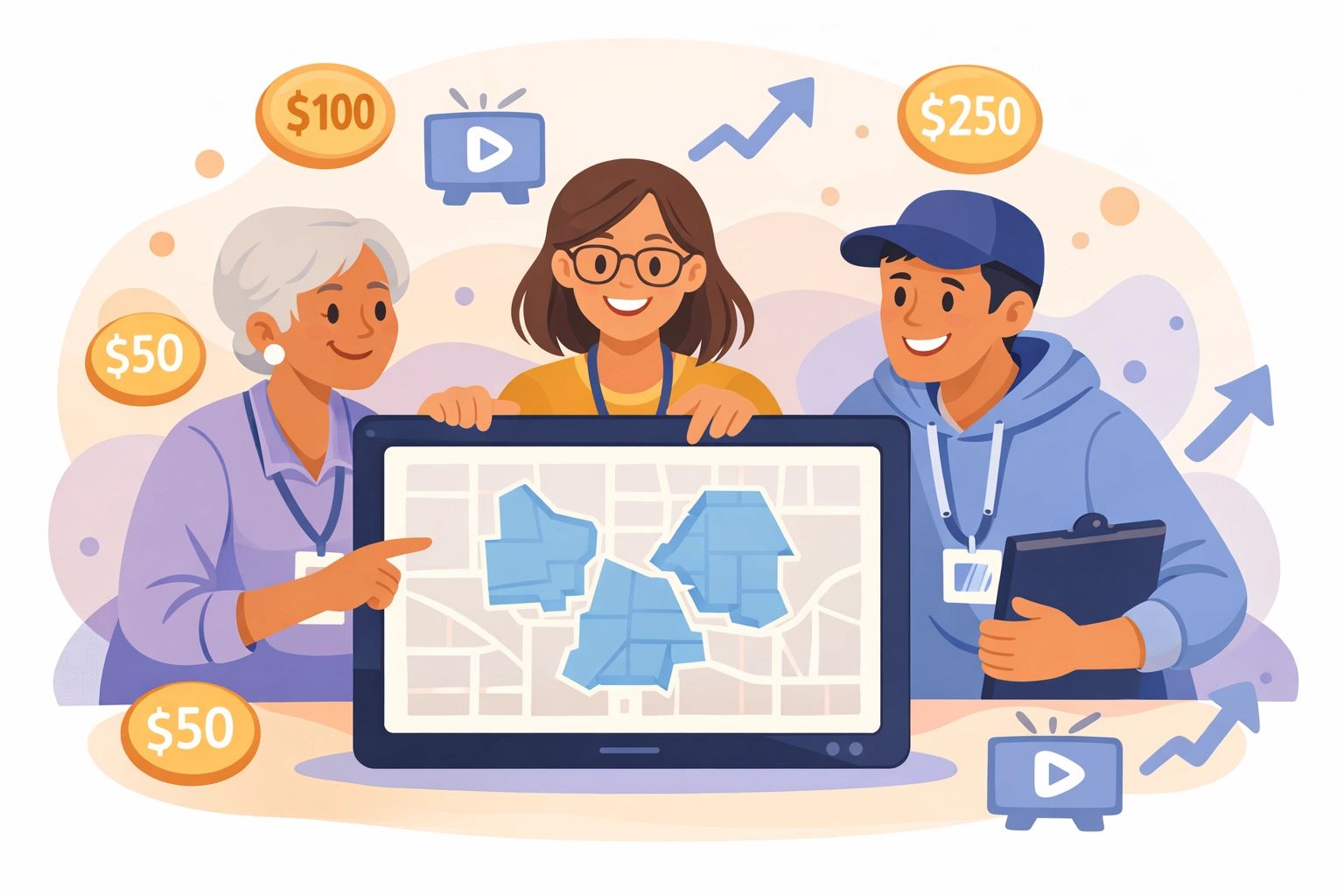
The difference? You're not paying a 15-20% agency commission. You're not waiting for a buyer to cobble together a plan. You're not wondering if you're getting the premium inventory or the remnant slots no one else wanted.
You log in. You select your inventory. You launch. The platform handles the technical integration with streaming services. You handle the strategy.
Data Partners That Were Previously Out of Reach
Traditional campaigns had to choose: hire an expensive consultant with access to voter data, or fly blind.
Self-serve platforms integrate with the same data partners the big campaigns use. We've partnered with TargetSmart, Tunnl and L2: the gold standard for Democratic campaigns. That means you can target:
- Voter registration history
- Turnout propensity
- Issue engagement scores
- Donor history
- Demographic profiles
This isn't consumer data guessing who might vote. This is actual voter file data layered with behavioral and demographic targeting. You're reaching likely Democratic voters who stream content, live in your district, and match your campaign's profile.
Previously, accessing this data meant hiring a firm that charged thousands of dollars just to build your audience. Now it's built into the platform. You select your criteria. The system builds your audience. You launch.
Who Self-Serve Political Advertising Is Actually For
Every Democratic campaign from city council to Congress. Period.
If you're spending $500 or $500,000, you deserve direct access to premium inventory, transparent pricing, and real performance data. The platform scales with your campaign.
City council candidates can run hyper-local streaming campaigns targeting their district, reaching cord-cutting voters traditional mailers can't touch.
State legislative campaigns can layer voter file data with streaming inventory to build frequency among persuadable voters.
Congressional and statewide campaigns can use self-serve programmatic ads for rapid-response creative testing and precise geographic targeting while going big on CTV for broader awareness and persuasion efforts.
The beauty of self-serve is that you're not locked into anyone else's timeline. You can launch a campaign Monday morning, review the data Tuesday afternoon, and adjust your strategy Tuesday evening. Try doing that with a traditional media buyer!
How to Actually Get Started
You don't need a business degree. You don't need agency experience. You need ad creative, a budget (starting at just $500), and a basic understanding of your target voter.
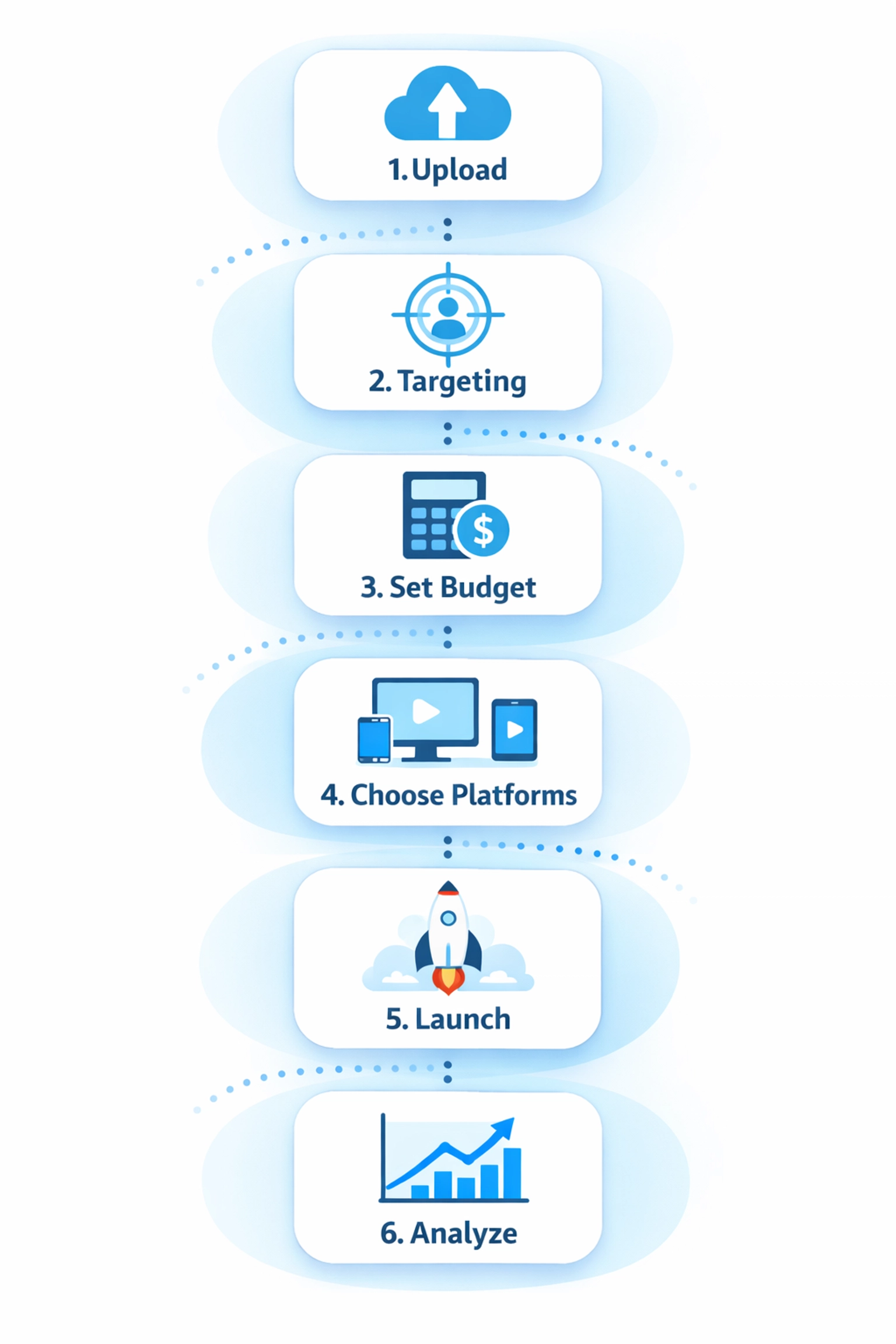
Here's the actual process on our platform:
1. Upload your creative. Video ads 15 or 30 seconds. We'll host and transcode for all streaming platforms. Don't have video yet? Check out our video production services designed specifically for political campaigns.
2. Define your audience. Select your geographic targeting (district, county, zip, precinct). Layer in demographic targeting (age, gender, income). Add voter file targeting through our Tunnl and L2 integrations. The platform shows you estimated reach in real time.
3. Set your budget and schedule. Start at $500 or scale to $50,000+. Run for three days or three months. The platform calculates your projected impressions, completion rates, and frequency.
4. Select your inventory. Premium streaming (Hulu, Peacock), open-web programmatic, FAST channels, or a mix. Our estimator tool recommends inventory allocation based on your audience and budget parameters.
5. Launch. One click. Your campaign is live within hours, not weeks.
6. Optimize. Watch real-time performance. Shift budget between platforms. Test creative. Adjust targeting. You're in control.
If you want guidance, our team (the same one that won the C&E Award for Best Political Service Team ) is available for onboarding and strategy consultation. But you're never waiting for someone else to execute. You can make changes yourself, instantly.
The Bottom Line on Self-Serve Political Advertising
The 2026 cycle is already seeing a massive shift. Campaigns that wait for traditional agencies to build ad plans are launching weeks after their opponents are already optimizing performance data.
Self-serve political advertising isn't about doing more with less. It's about doing the right things efficiently. It's about direct access to premium inventory, transparent pricing, sophisticated targeting, and real-time optimization.
The middlemen aren't coming back. The gatekeepers lost their keys. Streaming TV and premium digital advertising is now accessible to every campaign with a message, creative, and $500 to start.
Your opponent might already be running. Are you?
Get started with your self-serve campaign today or schedule a demo to see the platform in action. If you're an agency partner looking to offer self-serve solutions to your clients, check out our agency program.
Share this Content!