The Agency Cheat Sheet: 15 Ways to Sell Modern Media to Any Candidate or Cause
The Agency Cheat Sheet: 15 Ways to Sell Modern Media to Any Candidate or Cause
![[HERO] The Agency Cheat Sheet: 15 Ways to Sell Modern Media to Any Candidate](https://cdn.marblism.com/TterXdiLstv.webp)
You've been here before. The candidate wants broadcast. The treasurer thinks digital is "just Facebook ads." And you're stuck explaining why the media landscape changed while they were busy knocking doors.
Here's your cheat sheet. Fifteen ways to sell modern media: especially Connected TV: to any candidate, even the ones who still think "streaming" means Netflix and chill.
These aren't theoretical. They're tested lines that work in real campaign meetings. Use them.
The Foundation: CTV Is Table Stakes Now
Start here. Don't bury the lead.
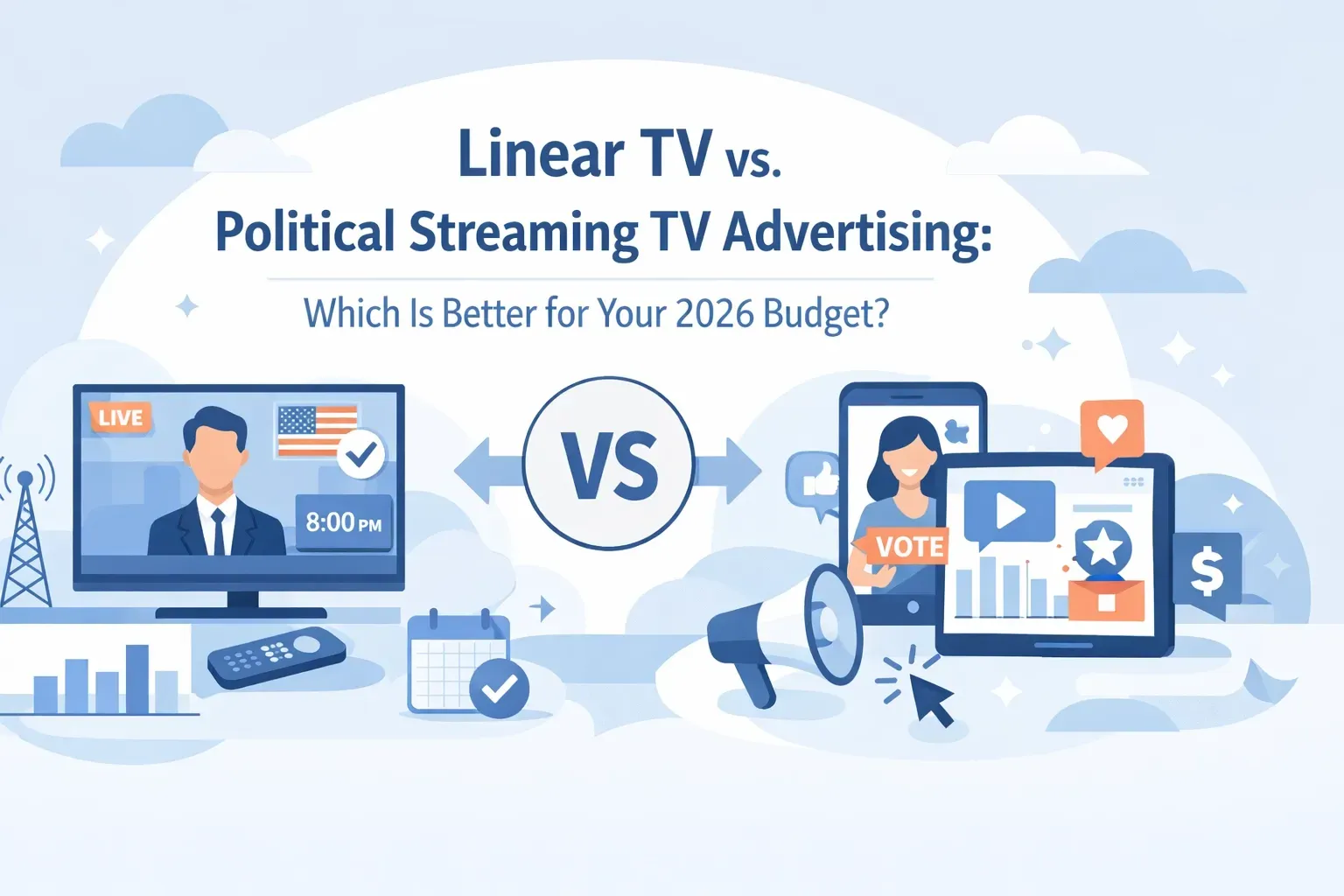
"Digital + CTV is now the majority of political ad spend." Over 50% of political dollars are going to digital and CTV. That's not experimental: that's where the market has landed. If a campaign sits this out, they're ignoring how most dollars get spent in competitive races.
"CTV is already bigger than broadcast in many races." In early 2026 spending, CTV already outpaces broadcast in competitive markets: and this is before the general election surge. The campaigns booking inventory now aren't testing CTV. They're leading with it.
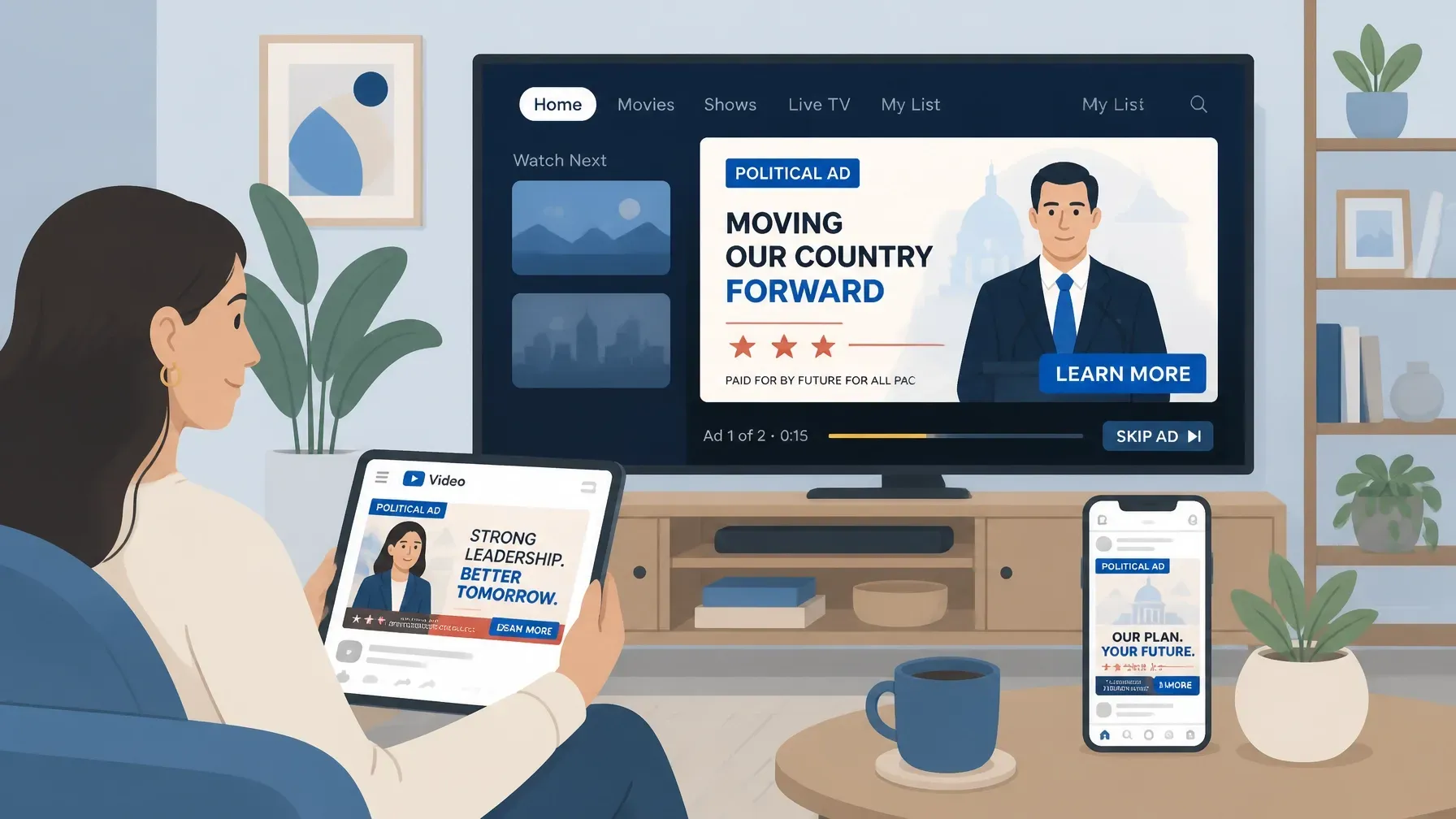
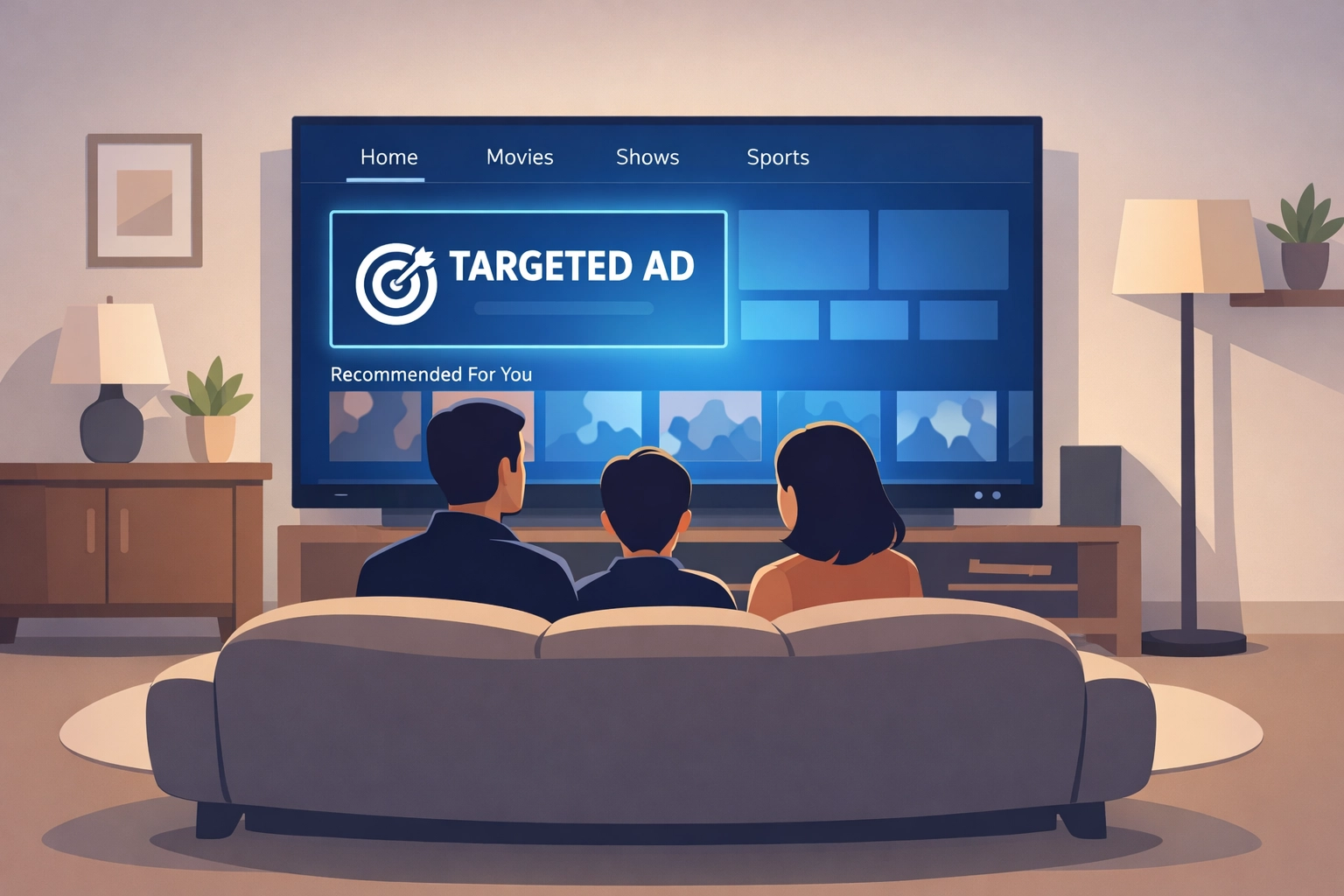
"TV has become targetable." Voters still watch TV every day, just differently. CTV lets us reach them on the big screen without paying broadcast rates or wasting impressions on non-voters. It's the television impact candidates understand, with the precision they need.
The Blind Spot Argument: Reaching Voters Earned Media Misses
This is where you win over candidates who think their Twitter mentions equal voter awareness.
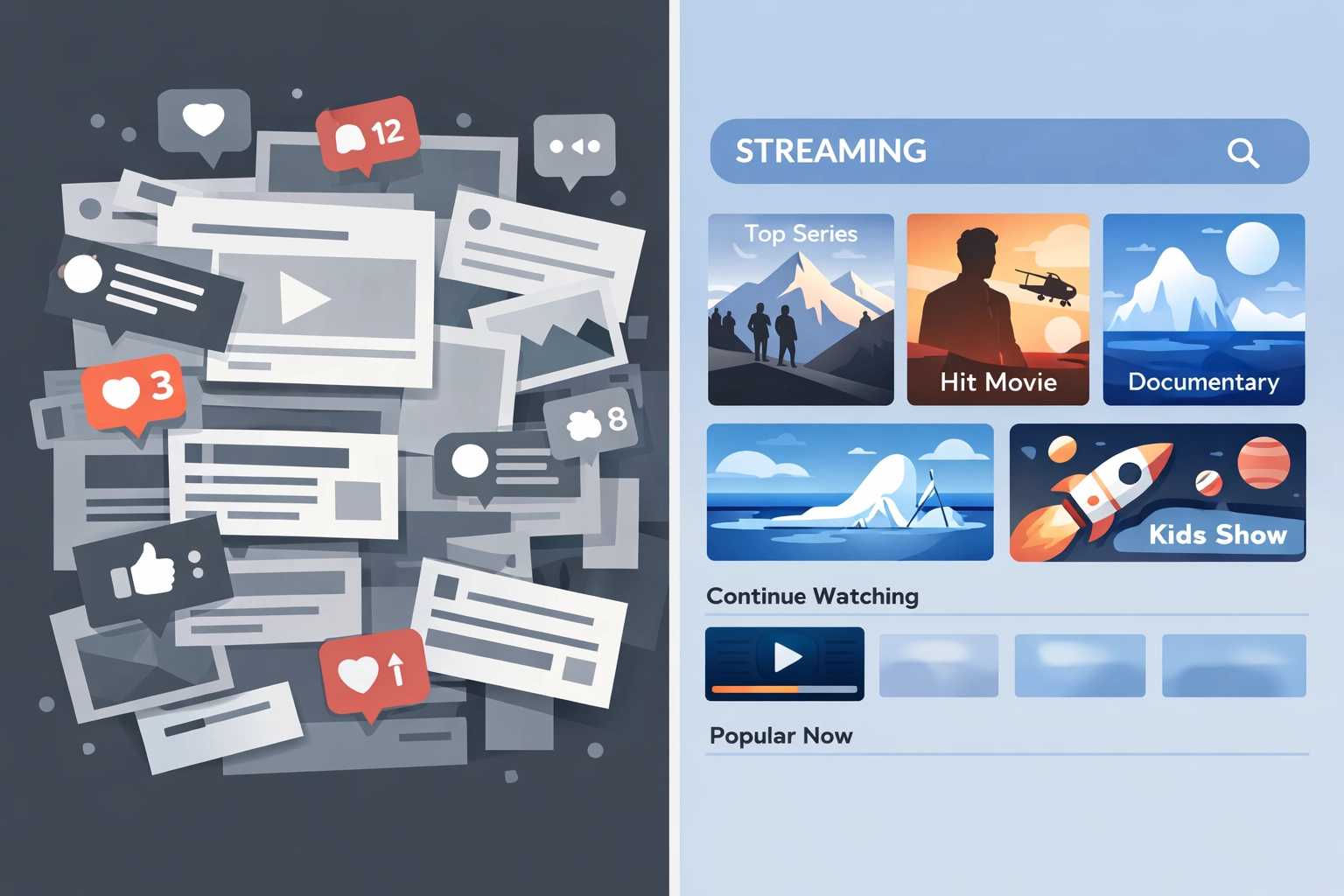
"Most voters don't live on political Twitter or Instagram." A large share of persuadable voters never see earned media or political feeds: but they do watch streaming TV nightly. If the campaign strategy assumes everyone follows politics online, it's missing the room.
"CTV reaches the voters earned media misses." CTV fills the blind spots: cord-cutters, low-engagement voters, and households that aren't algorithmically primed for politics. These voters aren't reading Politico. They're watching Yellowstone reruns on Paramount+.
"Earned media fades. Ads keep your message alive." Press hits and social spikes disappear in days. Paid media is how campaigns maintain continuity when attention moves on. A killer debate moment means nothing if no one remembers it two weeks later.
The Control Advantage: What CTV Lets You Do That Broadcast Doesn't
Candidates who came up in the broadcast era love the idea of "being on TV." Show them CTV gives them that—and more.
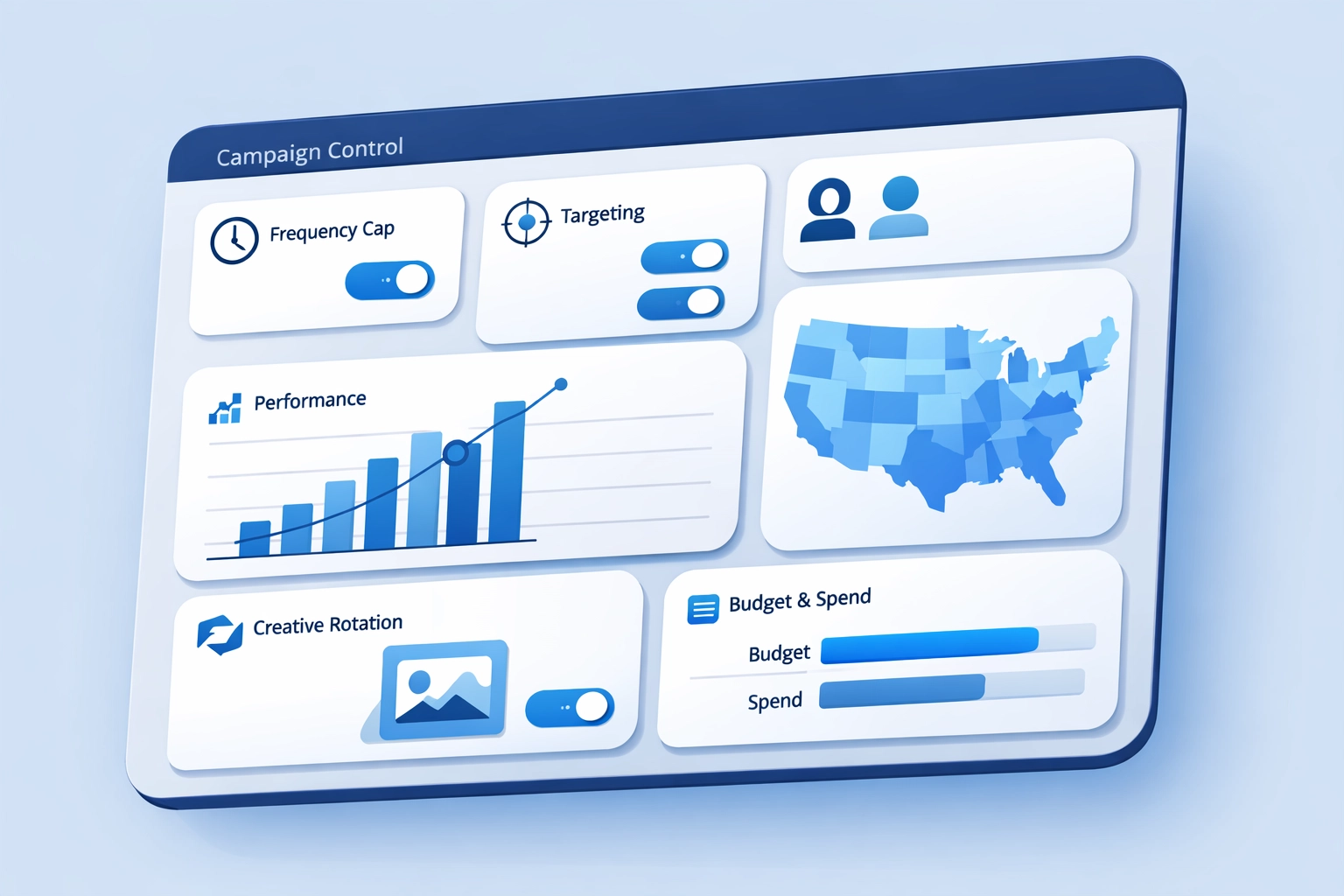
"You control frequency, geography, and message." Unlike broadcast, CTV lets campaigns cap exposure, rotate creative, and adapt instantly as narratives change. A new attack ad drops? Swap your creative in hours, not days. Opponent goes negative in one county? Adjust geo-targeting on the fly.
"High-attention environments matter more than impressions." CTV delivers longer attention windows than mobile or desktop. Viewers don't scroll past TV ads: they watch them. The 30 seconds you buy are 30 seconds you get.
"Issue messaging performs best on CTV." Healthcare, affordability, immigration, accountability: these messages land better with storytelling and tone, not banners. CTV gives you room to breathe, build emotion, and drive a real argument home.
The Market Reality: Why Search and Social Are Losing Ground
This is the "why now" argument. Timing matters.
"Search and Social are becoming less reliable." AI summaries and zero-click search reduce ad inventory. Social feeds are noisier and less brand-safe. Budgets are moving out because performance is getting harder to guarantee.
"CTV is insulated from AI disruption." Streaming content is premium, intentional, and human-made. That's why advertisers are reallocating budgets into CTV. While other channels deal with algorithm chaos and AI-generated junk, CTV stays clean.
The Persuasion vs. Repetition Shift
Candidates think ads need to change minds. Sometimes. But more often, ads need to stick.
"Ads today aren't just about persuasion—they're about repetition and burn-in." Voters don't need to be convinced of everything. They need to remember who you are and what you stand for. Repetition builds familiarity. Familiarity builds trust. Trust drives turnout.
This is especially true in low-information races. Voters aren't studying your policy deck. They're deciding based on who feels more credible in the 18 seconds they think about it before bubbling in their ballot.
The Measurement Argument: CTV Is Finally Accountable
Older candidates worry CTV is a black box. It's not anymore.
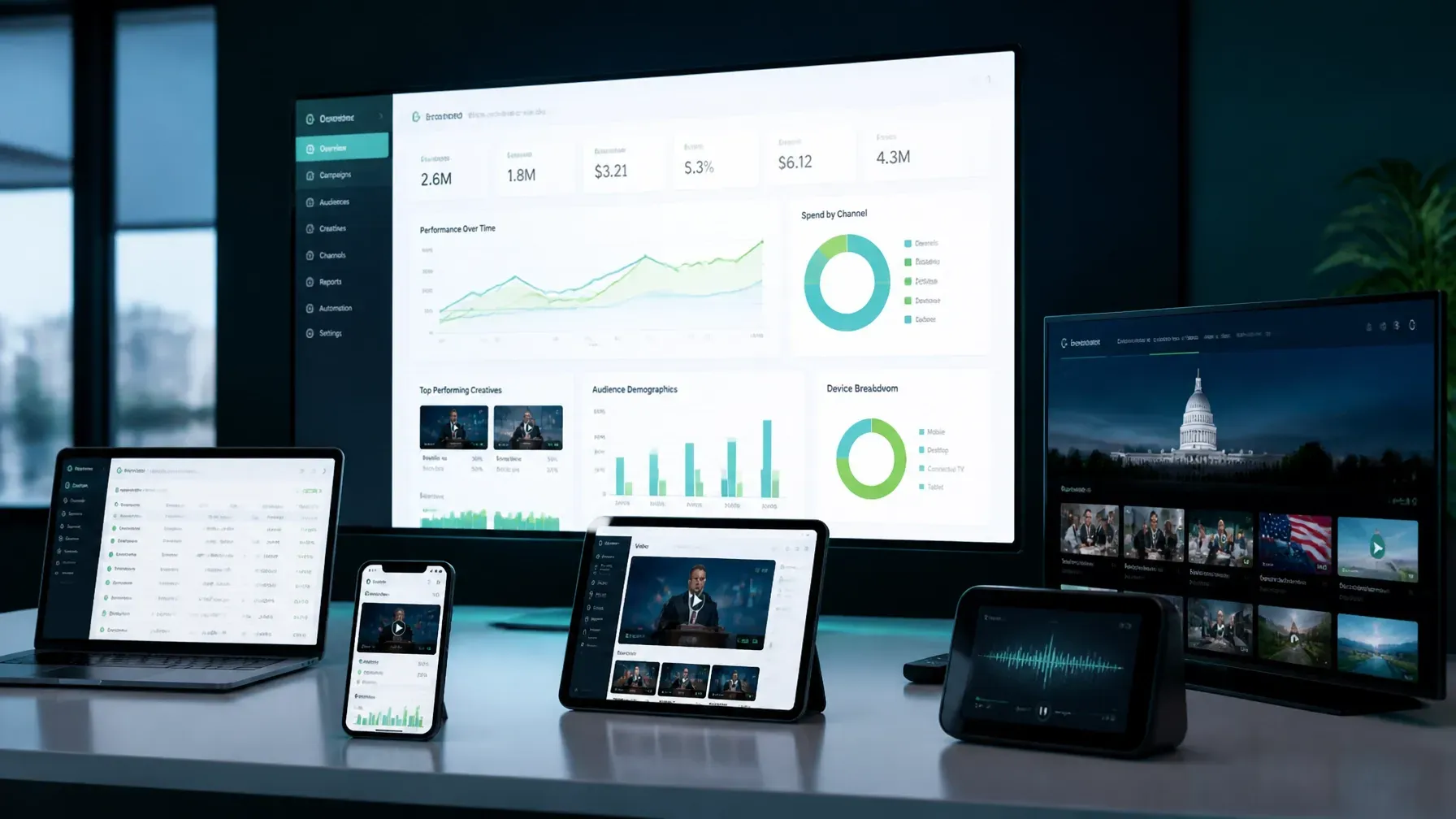
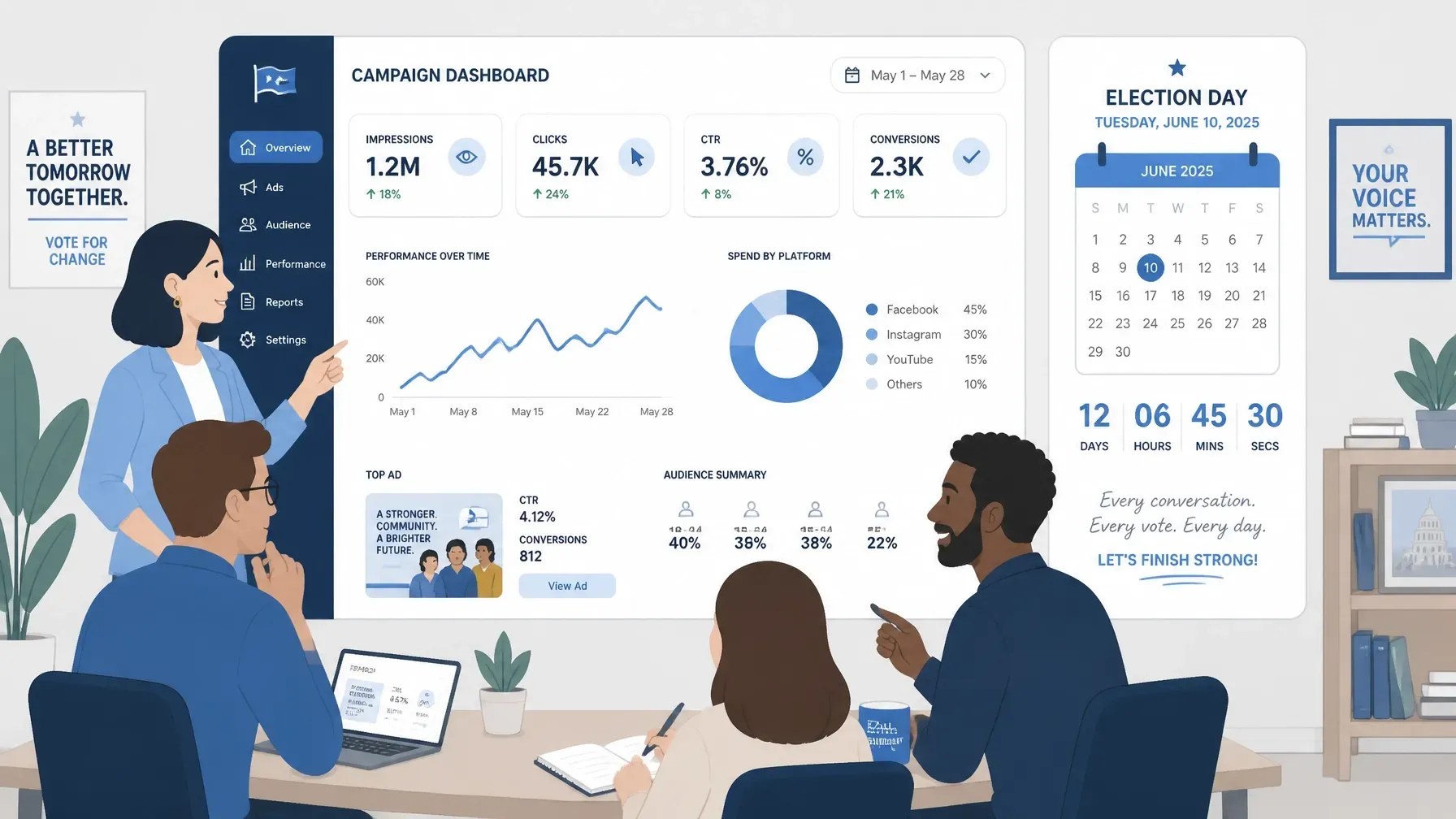
"CTV is finally measurable." Modern CTV connects exposure to site visits, donations, and signups: making it useful beyond pure awareness. You can track household reach, frequency, and downstream actions. That's performance, not just branding.
If the candidate is data-driven, this is your closer. Show them the dashboard. Walk them through conversion tracking. Prove the platform isn't just "hoping it works."
The Budget Flexibility Point
Here's where you handle the "we don't have millions" objection.
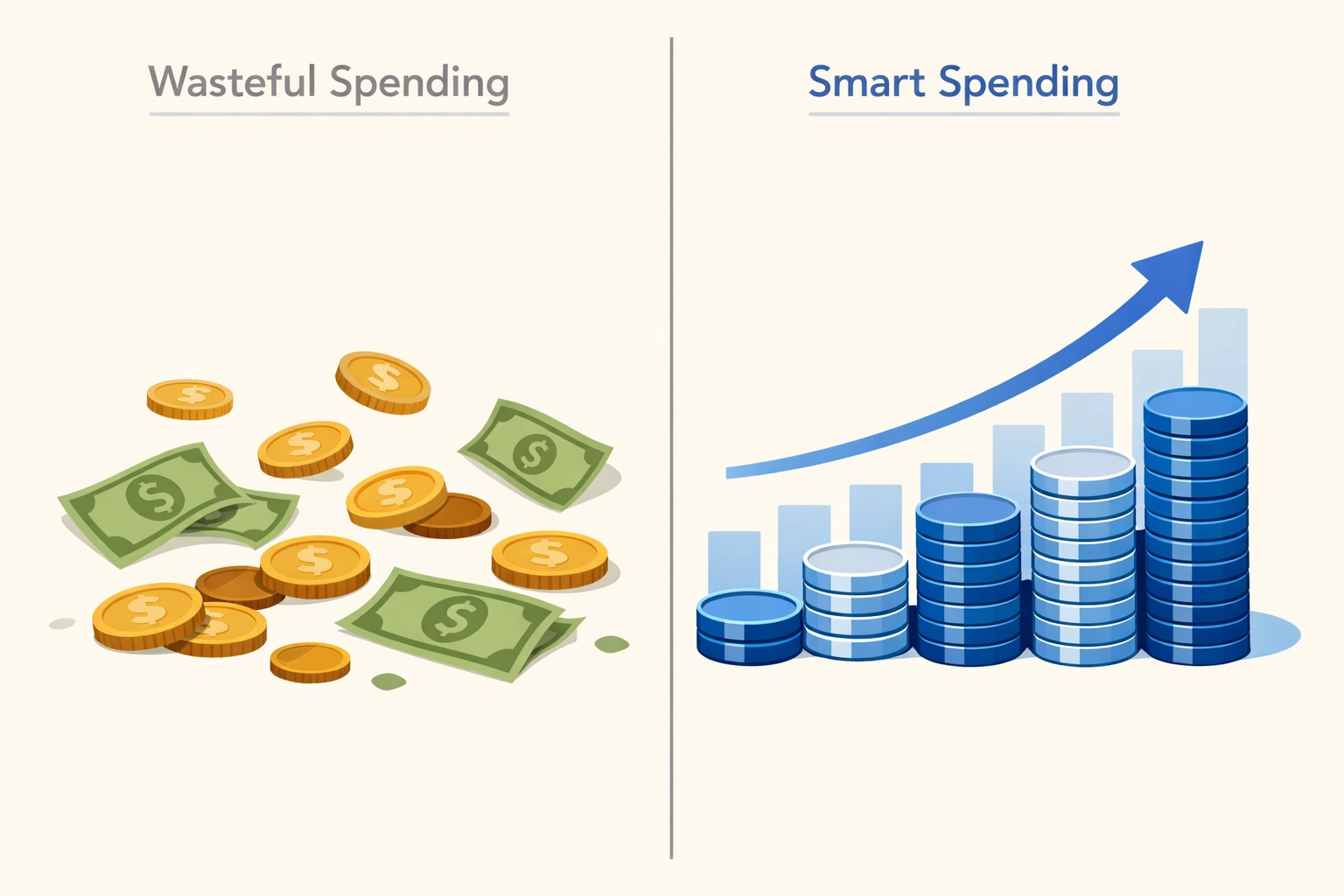
"You don't need a huge budget: you need discipline." A focused CTV + digital program behind a clear message often outperforms scattered spending across traditional channels. Campaigns compete on budget, sure: but efficiency and targeting make smaller budgets more powerful on modern platforms.
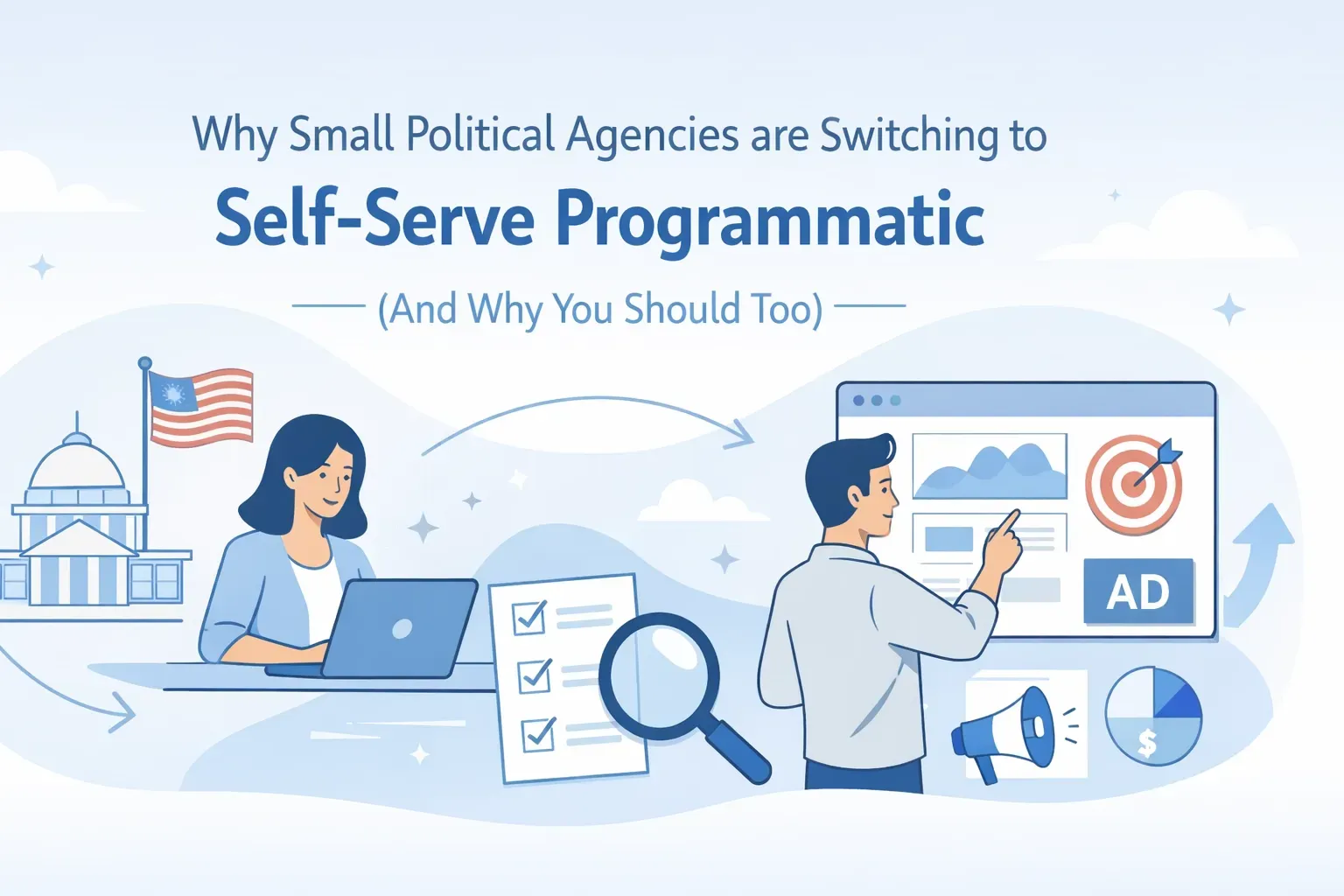
With Turn It Blue Ads, you can launch a political programmatic advertising platform campaign for as little as $500. You're not buying waste. You're buying reach that matters, in the markets that matter, at the frequency that moves numbers.
"The smartest campaigns hedge their media mix." Even campaigns strong in earned media use paid digital and CTV as insurance against volatility. News cycles shift. Opponents go dark. Paid media is the floor you control when everything else is unpredictable.
The Closer: What This Looks Like in Practice
So what does a modern media plan actually look like?
It starts with CTV as the anchor: building reach and message retention on the biggest screen in the house. Then you layer in display, pre-roll, and native ads to reinforce the message across devices. You use voter file targeting and how to run political ads that actually connect with the right households, not just spray and pray.
You set frequency caps so you're not burning out voters who've already seen your ad eighteen times. You rotate creative as the race evolves. You measure conversions: donations, volunteer signups, web traffic: so the candidate sees ROI, not just "impressions."
And you do it all on a digital ads platform platform built for speed, transparency, and control. Turn It Blue Ads delivers an 85% win rate for clients using the platform, and we were named Best Political Service Team by Campaigns & Elections Magazine in 2025. That's not luck. That's discipline.
Bottom Line
Your job isn't to convince the candidate that TV is dead. Your job is to show them TV evolved: and they can't afford to ignore where it went.
Use these talking points. Adapt them to your candidate's concerns. Lead with the data that CTV is now the majority play, not the experimental one. Close with control, measurement, and budget flexibility.
And if they still want to dump the whole budget into broadcast? Show them the CPM comparison and let the numbers do the work.
Ready to build a modern media plan that actually wins? Schedule an agency demo or explore how CTV ads political campaigns are changing the game at Turn It Blue Ads.
Share this Content!