The 2026 Outlook: Why CTV is Eating Broadcast's Lunch (and What It Means for Your Campaign)
The 2026 Outlook: Why CTV is Eating Broadcast's Lunch (and What It Means for Your Campaign)
![[HERO] The 2026 Outlook: Why CTV is Eating Broadcast's Lunch (and What It Means for Your Campaign)](https://cdn.marblism.com/1bn5x1lunYW.webp)
The 2026 cycle is already breaking records. $1.05 billion has been spent across political races and issue advocacy: and we're not even in the heat of the general election yet. But here's what matters more than the total dollar figure: where that money is going, and why.
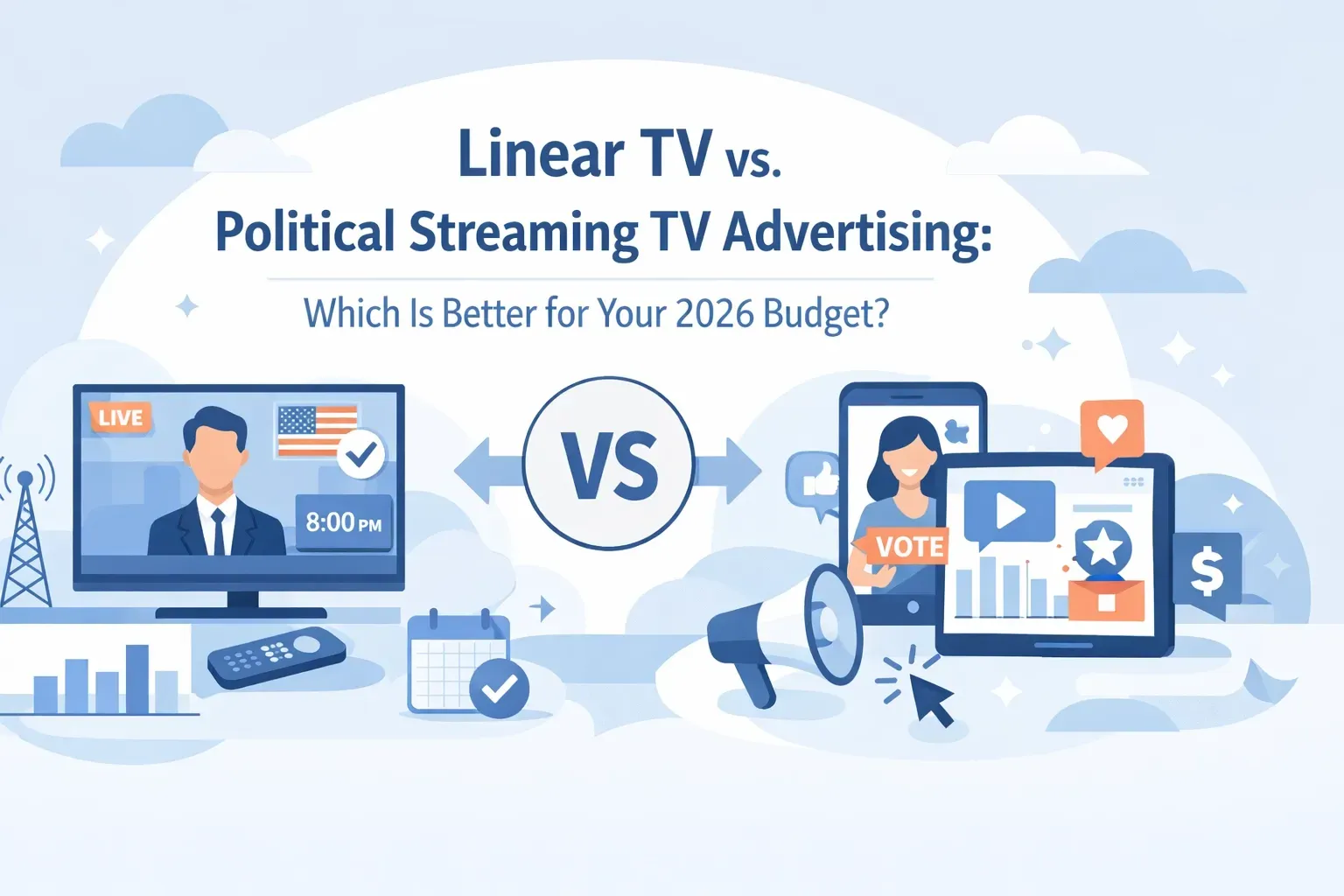
For the first time in modern political advertising, Connected TV (CTV) has overtaken broadcast television in share of spend. CTV now represents 22% of all political ad dollars, compared to broadcast's 19%. Digital overall accounts for 34%, with cable at 21% and radio trailing at 3%.
This isn't a trend. It's a tectonic shift in how campaigns reach voters: and if you're still treating CTV as an experimental add-on to your broadcast buy, you're already behind.
The Big Picture: Voters Aren't Where They Used to Be
Here's the reality: voters no longer sit through linear TV the way they did even four years ago. They don't "tune in" at 7 PM for the evening news. They stream. They binge. They watch YouTube on their 65-inch living room screens.
YouTube alone now represents nearly 13% of all TV viewing time. Creator-led content on Roku grew 80% year-over-year. The average U.S. adult watches more than two hours of CTV daily: and that number is expected to grow 25% by the end of 2026.
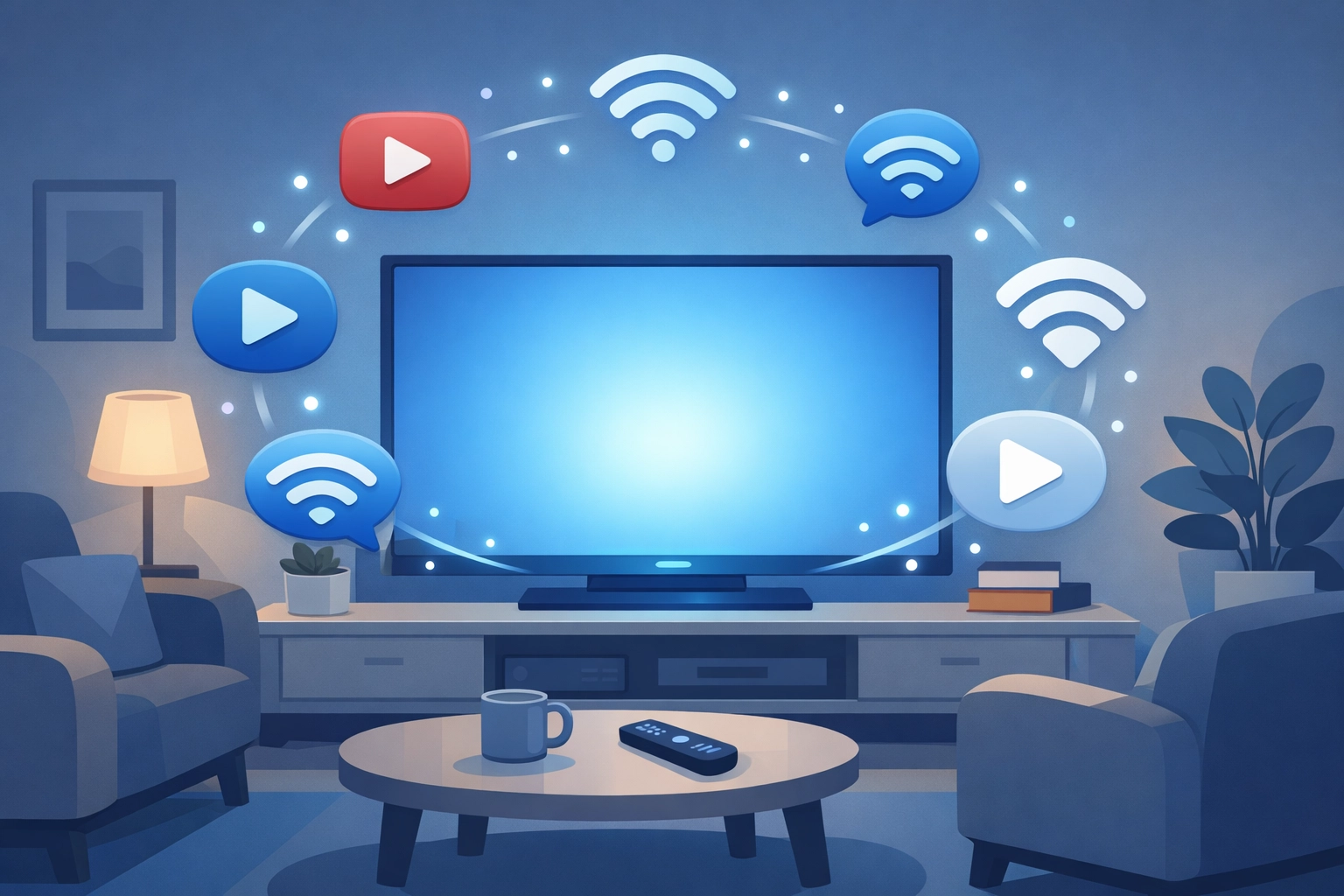
The big screen isn't dead. It's just smarter.
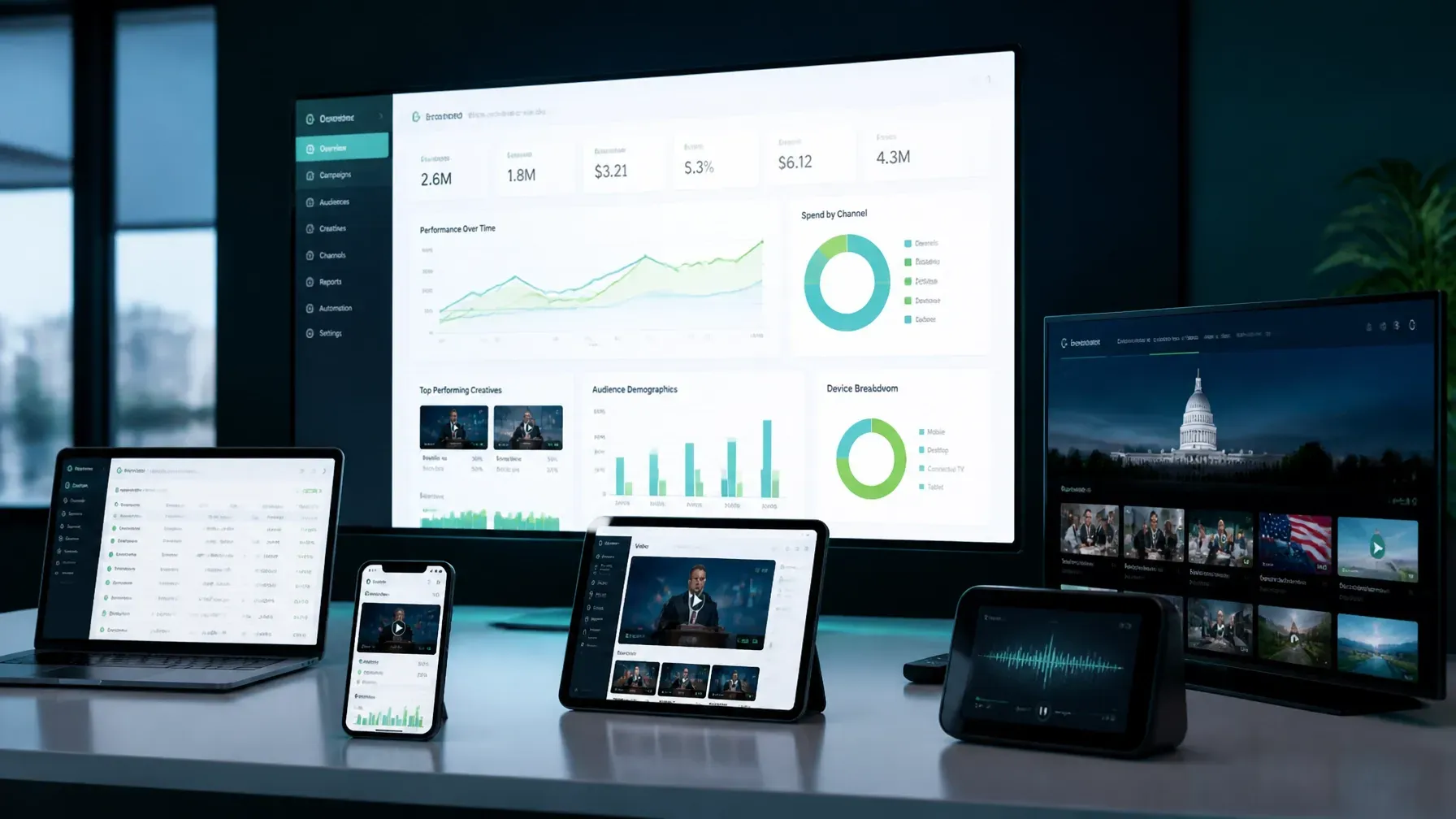
Viewers still gather in living rooms. They still watch high-quality content on televisions. But the delivery mechanism has fundamentally changed, and with it, the rules of the game. CTV combines the impact of television with the targeting and measurement of digital. That's not marketing speak: it's the functional reality of how political streaming TV advertising works in 2026.
Why Advertisers Are Fleeing Search and Social for CTV
There's another force driving this shift, and it's not just about where voters are watching. It's about where advertisers don't want to be anymore.
Search and social media: once the darlings of digital advertising for political campaigns: are under serious pressure:
- AI-powered search summaries mean fewer clicks and fewer ads. Google's AI overviews are answering questions directly in search results, eliminating the need for users to click through to websites. That means fewer impressions and less inventory for advertisers.
- Social feeds are increasingly flooded with low-quality, AI-generated content. Voters are scrolling past "AI slop": generic, mass-produced posts that erode trust and attention. Brand safety concerns are rising fast, especially for political advertisers who can't afford to appear next to conspiracy theories or misinformation.
- Reach is collapsing on organic social, and paid performance is getting expensive. Algorithm changes, platform fatigue, and competition for attention mean campaigns are paying more for less.
The numbers back this up: 36% of advertisers are moving dollars from social to CTV, and 32% are reallocating budgets from paid search to CTV. That migration is expected to accelerate dramatically in Q3 and Q4 of 2026 as campaigns ramp up and competition intensifies.
Why CTV? Because it solves the problems search and social can't.
What Makes CTV Different (and Why It Wins)
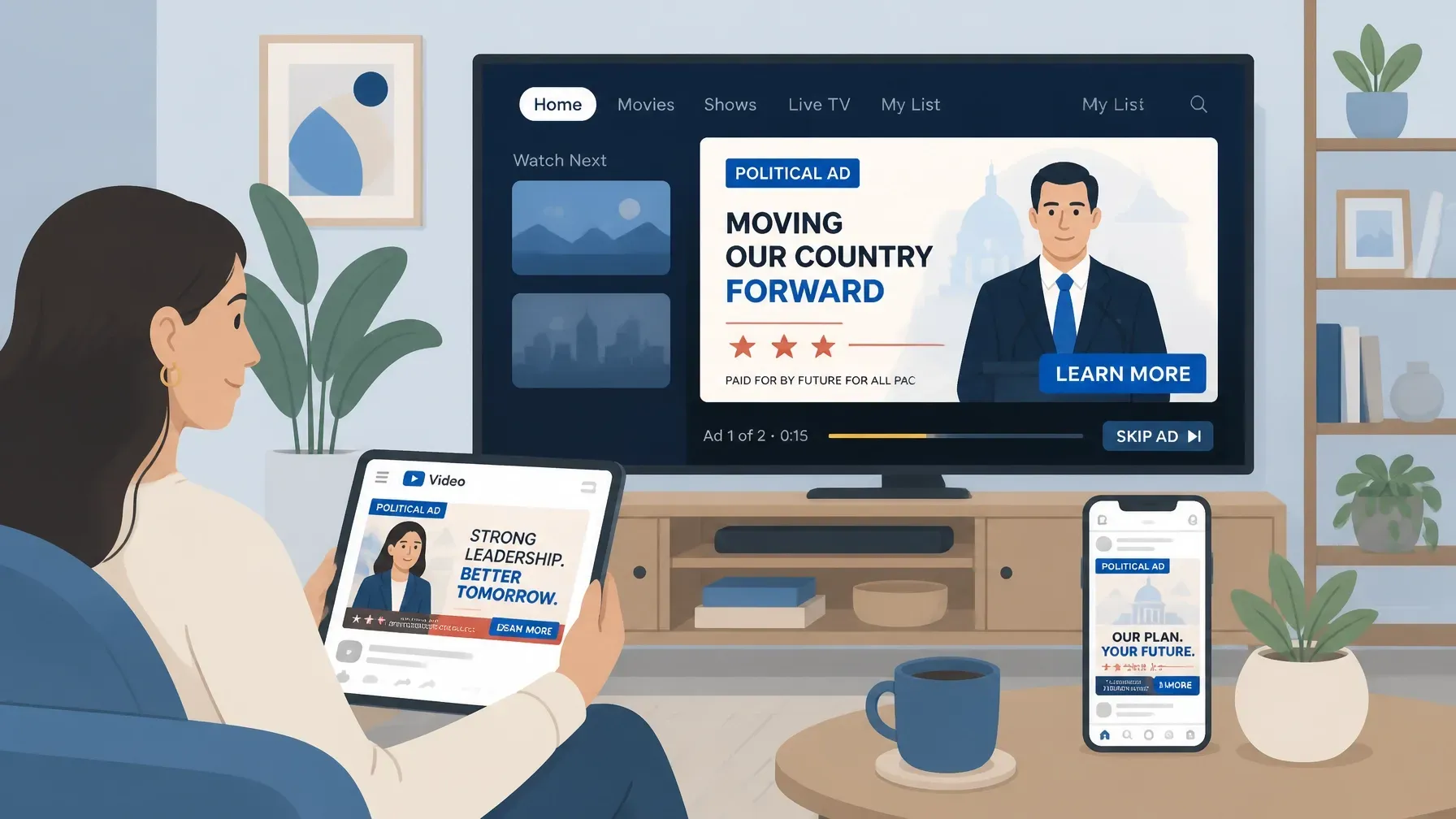
CTV ads run alongside premium, professionally produced content: the kind voters choose to watch. They don't scroll past. They don't skip. Video completion rates on CTV average over 95%, compared to skippable pre-rolls on YouTube or interruptive mid-rolls on social platforms.
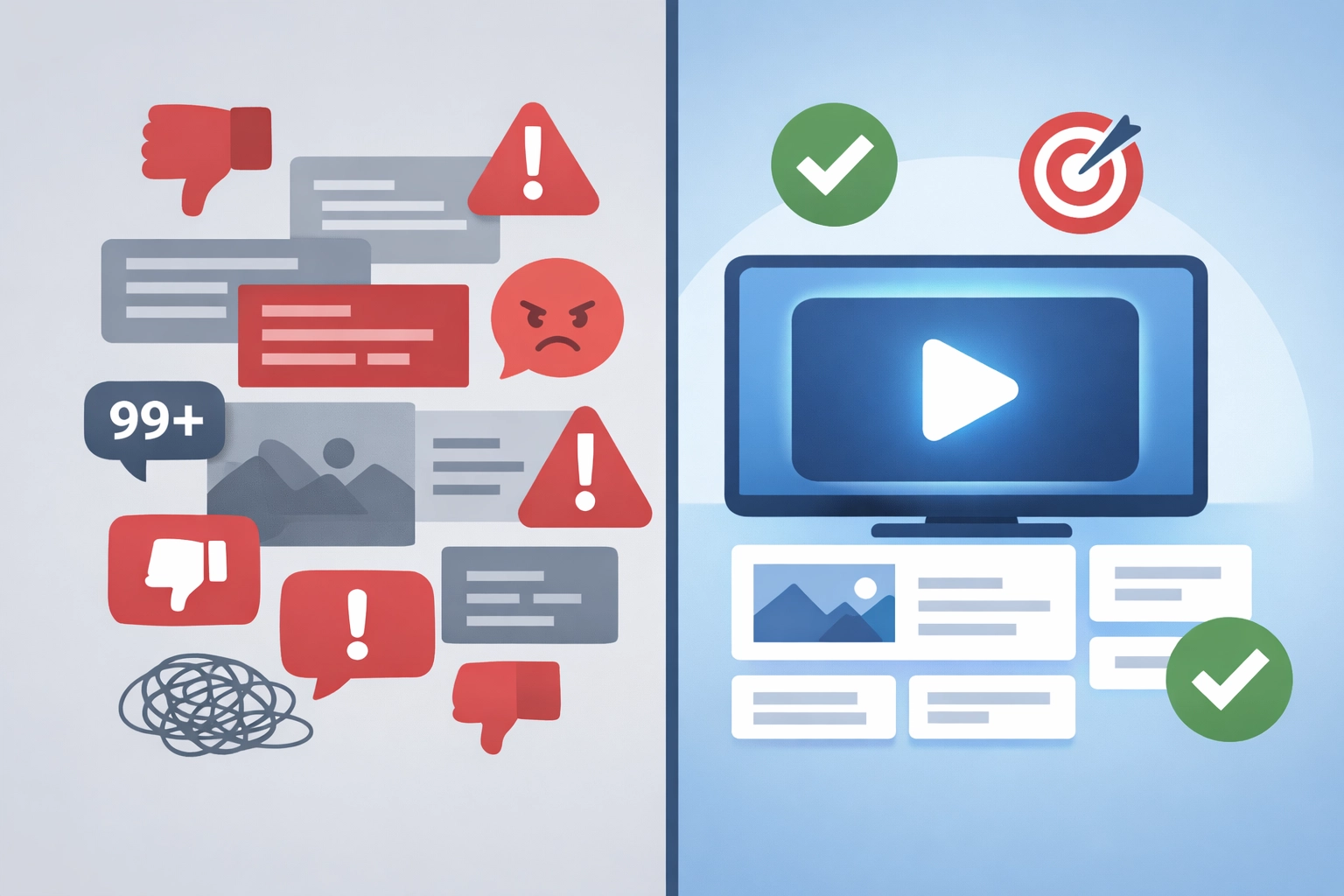
CTV delivers three things traditional broadcast and struggling digital channels can't match:
1. Precision Targeting Without the Guesswork
Broadcast buys are blunt instruments. You're buying dayparts, programs, and demographics: hoping your audience is watching. CTV ads political campaigns can target by geography, voter file data, issue interest, household traits, and behavioral models. You're not guessing. You're reaching the voters you need to reach.
2. Real Measurement and Attribution
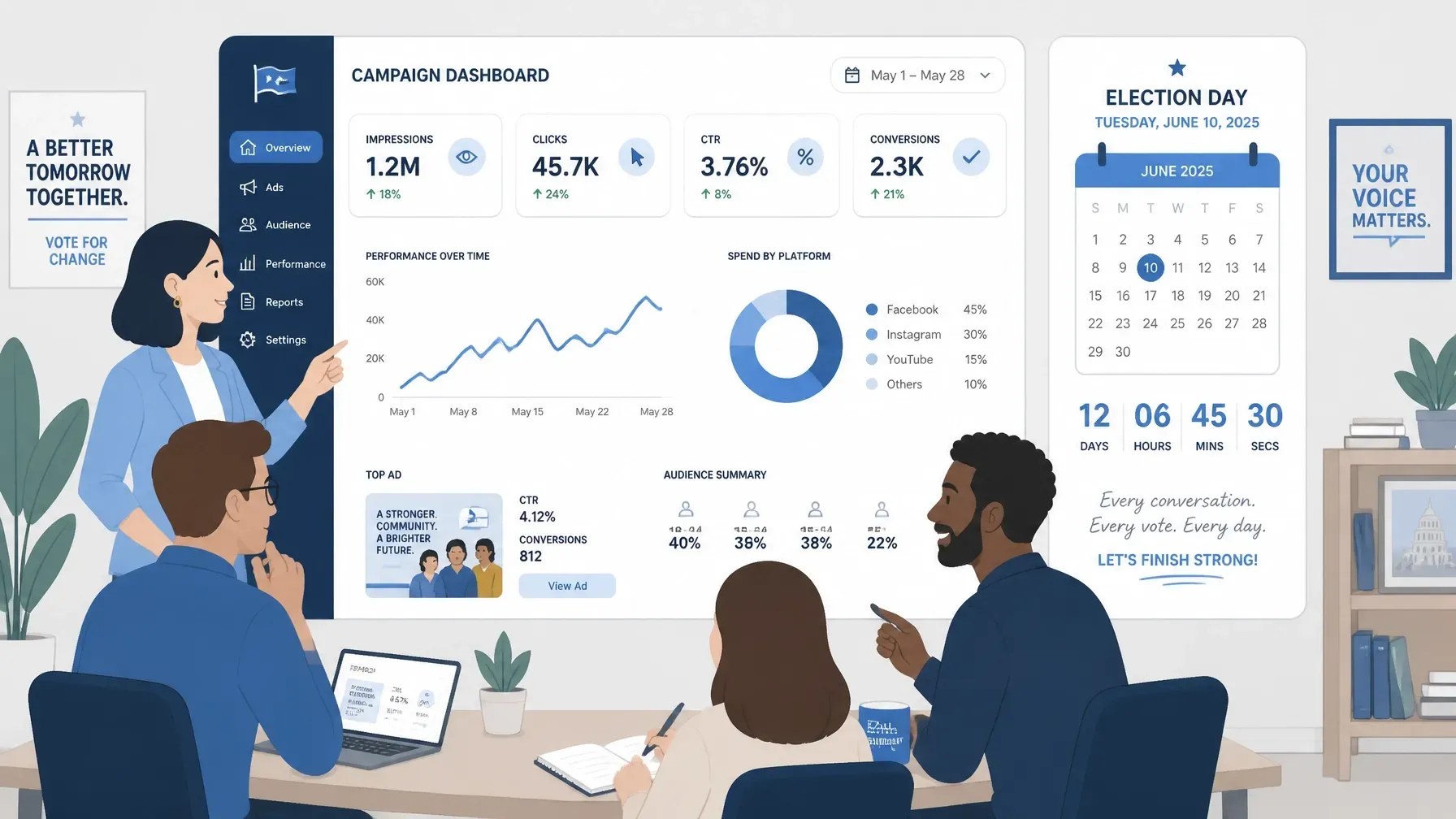
Modern CTV platforms allow campaigns to measure household reach, control frequency, and connect ad exposure to site visits, donations, and sign-ups. This makes CTV viable not just for awareness, but for performance. You can optimize creative mid-flight. You can A/B test messages. You can see what's working in real time.
That's the level of accountability voters: and donors: expect in 2026.
3. Brand Safety and High-Attention Environments
CTV ads appear in premium streaming environments. No "AI slop." No placement next to low-quality user-generated content. No risk of your contrast ad appearing next to conspiracy theories or extremist rhetoric. Voters are leaned back, engaged, and attentive: not doom-scrolling through a feed at 11 PM.
This is why self-serve programmatic advertising platforms built specifically for political campaigns are seeing explosive growth. Campaigns want control, transparency, and the ability to move fast without getting bogged down in traditional broadcast contracts or waiting on insertion orders from middlemen.
The Strategy Shift: From Broadcast-First to CTV-First
Here's what this means for your campaign in plain English: the old playbook is broken.
The traditional approach: build a broadcast TV plan, then "sprinkle in" some digital and maybe test CTV if there's budget left: doesn't reflect how voters consume media anymore. It's like planning your ground game around landlines when everyone has a cell phone.
The new reality looks like this:
- Lead with CTV and digital. These channels should anchor your paid media strategy, not complement it.
- Use broadcast selectively. There are still moments when broadcast makes sense: high-profile debates, marquee events, local news adjacencies in media markets where linear viewership holds. But those buys should be strategic, not reflexive.
- Prioritize flexibility and speed. The campaigns that win in 2026 will be the ones that can pivot messaging, test creative, and reallocate budget in real time. CTV and programmatic infrastructure make that possible. Broadcast contracts don't.

Issue-focused advertising is dominating the cycle: 83% of all political ad spend so far has come from issue groups, not candidate committees. That makes sense. Issue advertisers need precision, speed, and scalability. They need to reach persuadable voters with nuanced messages about healthcare, immigration, cost of living, and accountability. CTV excels at longer-form storytelling and emotional resonance in ways that six-second mobile pre-rolls and static banner ads can't match.
Independents, in particular, are highly responsive to issue framing and contrast messaging. If your campaign is trying to move swing voters or soft partisans, CTV should be a core channel, not an afterthought.
What This Means for Your Campaign Right Now
Let's get tactical. If you're planning media for 2026, here's what you need to do:
Stop waiting. CTV CPMs are rising as more campaigns enter the market. The advertisers who lock in inventory early will pay less and perform better. Waiting until Q3 to "figure out" your streaming strategy means you'll be competing for scraps at premium prices.
Differentiate through creative quality, not just frequency. As streaming platforms expand ad inventory, CPMs are flattening due to growing supply. Competing purely on frequency won't cut it. Invest in high-quality creative. Test new formats like pause ads, interactive placements, and dynamic product ads that let viewers take action directly from their TV screens.
Measure for outcomes, not just awareness. In 2026, CTV needs to connect to engagement, influence, and measurable business outcomes. If your CTV vendor can't show you attribution to site visits, sign-ups, or donations, you're flying blind. Expect the same level of precision and validation from CTV that you demand from search and social.
Allocate budget dynamically. Don't lock yourself into fixed splits. Shift spend to CTV as linear reach declines. Preserve traditional TV presence where it remains cost-effective: live sports, major events, local news in key markets. But make those decisions based on data, not tradition.
Here's the bottom line: there's a 14-point gap between the percent of time U.S. adults spend with CTV daily and the percent CTV makes up of total ad spending. The advertisers who align their investment with viewership now will have a massive competitive advantage before the broader market catches up.
Why Turn It Blue Ads Exists for This Moment
Turn It Blue Ads was built specifically for this environment. We're not a broadcast buyer trying to bolt on a streaming product. We're not a traditional digital agency figuring out CTV on the fly. We're a self-serve programmatic platform designed from the ground up for modern political campaigns and issue groups.
That means:
- CTV, streaming, and digital under one roof. No coordination headaches. No conflicting attribution. One platform.
- Rapid deployment and transparent reporting. Launch campaigns in minutes, not weeks. See exactly where your dollars are going.
- Tools built for persuasion, contrast, and accountability messaging. This isn't consumer brand advertising. It's political combat, and the platform reflects that.
- Support when you need it. We're not a tech platform that disappears after onboarding. We help campaigns win. That's why Campaigns & Elections Magazine awarded us Best Political Service Team in 2025, and why our clients have an 85% win rate using our platform.
You don't need a million-dollar budget to run effective CTV. You need smart targeting, strong creative, and the right infrastructure. Campaigns on Turn It Blue Ads can launch with as little as $500, and we've seen small-budget races outperform traditional broadcast campaigns by focusing on efficiency and precision over brute-force reach.
The 2026 Environment Rewards Speed and Adaptability
CTV isn't experimental anymore. It's foundational. The campaigns that treat it that way: who lead with streaming, who test and optimize aggressively, who connect their CTV investment to measurable outcomes: will outperform the campaigns still clinging to the old playbook.
Broadcast isn't dead. But its dominance is over. CTV is eating broadcast's lunch, and the campaigns that adjust now will win in November.
Ready to build a CTV-first strategy? Let's talk.
Share this Content!