The Advocacy Advantage: Why Self-Serve Programmatic is the Secret Weapon for Non-Profits
The Advocacy Advantage: Why Self-Serve Programmatic is the Secret Weapon for Non-Profits
![[HERO] The Advocacy Advantage: Why Self-Serve Programmatic is the Secret Weapon for Non-Profits](https://cdn.marblism.com/LQtGaJBPVvB.webp)
It's 3 PM on a Tuesday, and breaking news just dropped. A bill you've been fighting against for months is suddenly moving to a vote, in just a few days time. Your advocacy organization needs to mobilize supporters now , push legislators tonight , and drive urgent donations before the window closes.
Traditional media buyers? They'll get back to you in 2-3 business days.
That's the reality most nonprofits, advocacy groups, and PACs face. You're playing a high-stakes game where timing is everything, but you're stuck using tools built for slow-moving corporate campaigns with bottomless budgets and months of lead time.
Here's the truth: The organizations winning policy fights and building real movements aren't the ones with the biggest budgets, they're the ones that can move fastest with the smartest targeting. And that's exactly what self-serve programmatic advertising delivers.
The Old Model Is Killing Your Impact
Let's talk about how advocacy advertising used to work, and still works for most organizations.
You've got a cause that matters. Maybe you're a 501(c)(4) pushing for healthcare reform, a PAC supporting down-ballot progressives, or a 501(c)(3) driving awareness around environmental policy. You know exactly who your supporters are, and you know what message will move them.
But to reach them? You need to call an agency. Wait for a proposal. Navigate minimum spend requirements that eat half your quarterly budget. Hope they understand your mission. Cross your fingers that they'll be available when news breaks and you need to pivot immediately.
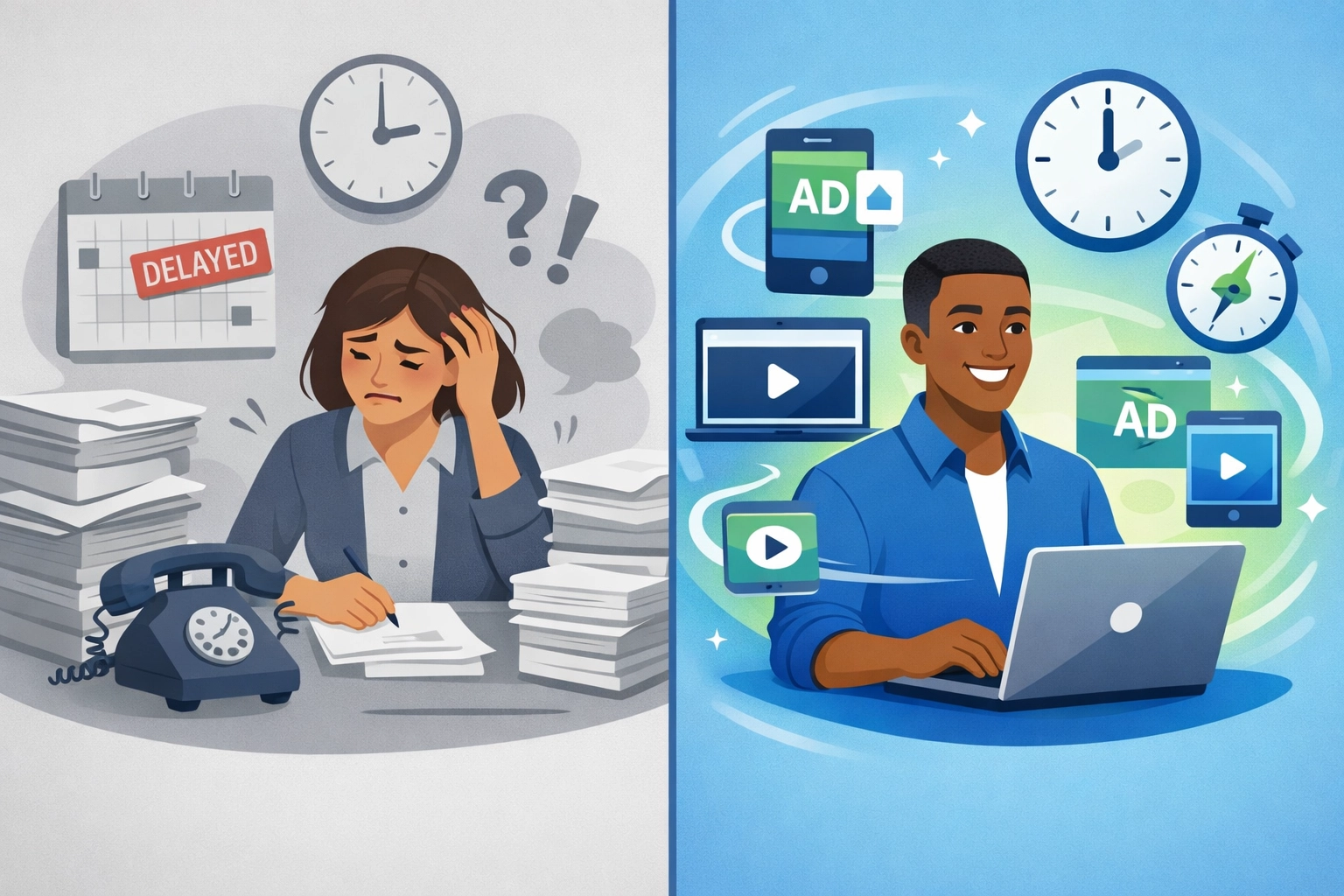
By the time your ads are live, the news cycle has moved on. Your opponents have already framed the narrative. And you've spent thousands on a middleman who can't respond at the speed your mission demands.
This isn't just inefficient, it's a competitive disadvantage. In advocacy work, you're not competing on who has the most money. You're competing on who can reach the right people with the right message at exactly the right moment.
Why Self-Serve Changes Everything for Advocacy
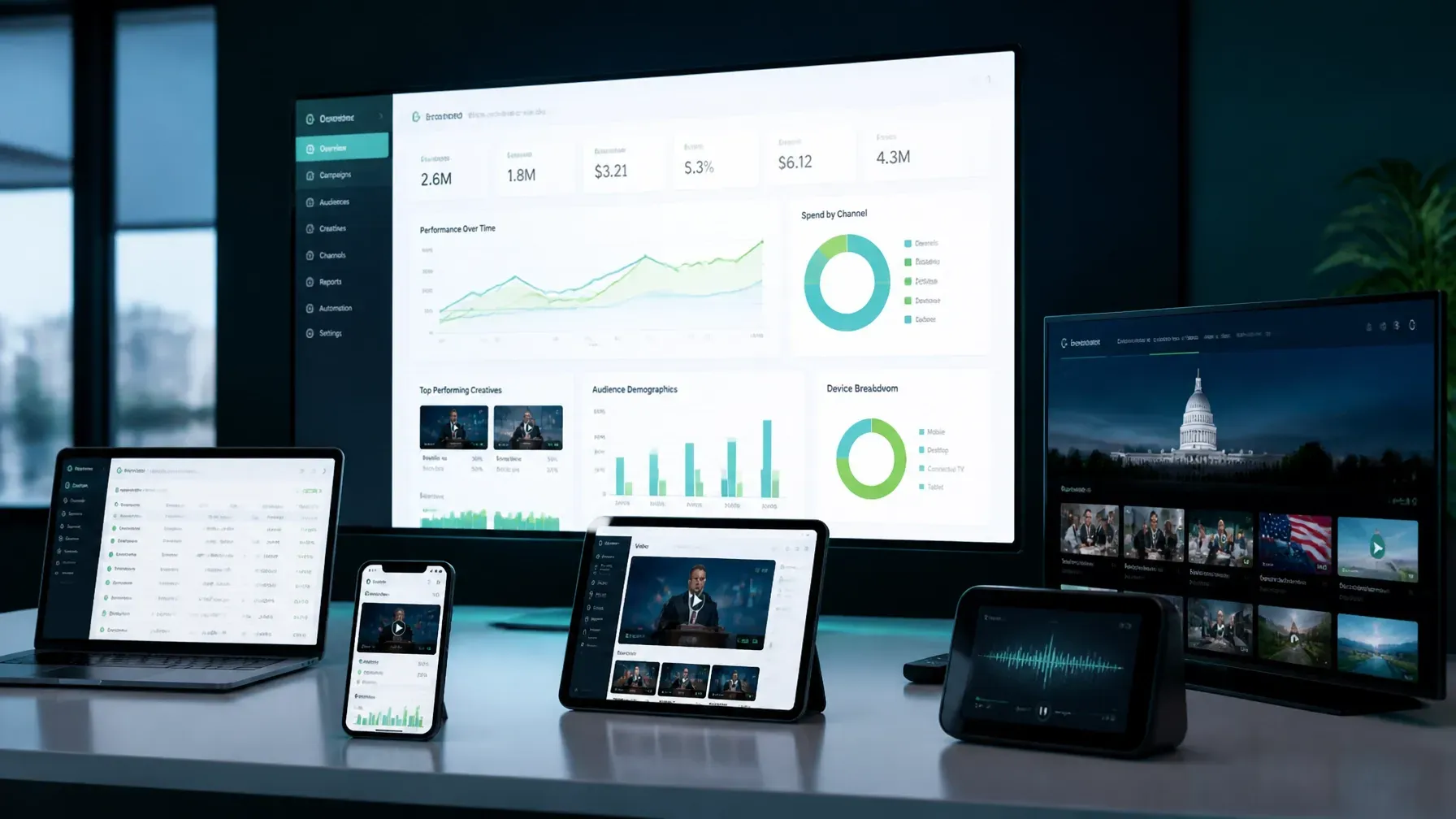
Self-serve programmatic advertising flips the entire script. You get the same enterprise-level technology that major brands use, display, video, Connected TV, mobile, audio, but you control it directly. No agency gatekeepers. No minimums that price out smaller organizations. No waiting days for someone else to make changes you could make in minutes.
Here's what that means in practice:
You can launch in hours, not weeks. News breaks at 2 PM, and you've got ads live by 5 PM targeting legislators' districts before they leave for the evening. That's not hypothetical, that's how advocacy organizations using Turn It Blue Ads operate every day.
You pay only for what you use. Traditional agencies have $10K, $25K, even $50K minimums. Self-serve platforms like ours? You can launch with just $500 and scale up as donations come in. Every dollar goes directly to reaching your audience, not padding an agency's overhead.
You maintain complete control. When the opposition drops a misleading attack ad, you don't need to schedule a call to discuss strategy. You update your creative, adjust your targeting, and push back, immediately. You own the timeline.
And here's where it gets really powerful: You get access to the same premium data that political campaigns use to win elections.
The Data Advantage: Know Your Audience Better Than They Know Themselves
Traditional nonprofit advertising is basically throwing darts blindfolded. You buy some Facebook ads, maybe sponsor a podcast, hope for the best. You're paying to reach everyone, including the people who'll never care about your cause.
Self-serve programmatic with premium data partners changes that calculation completely.
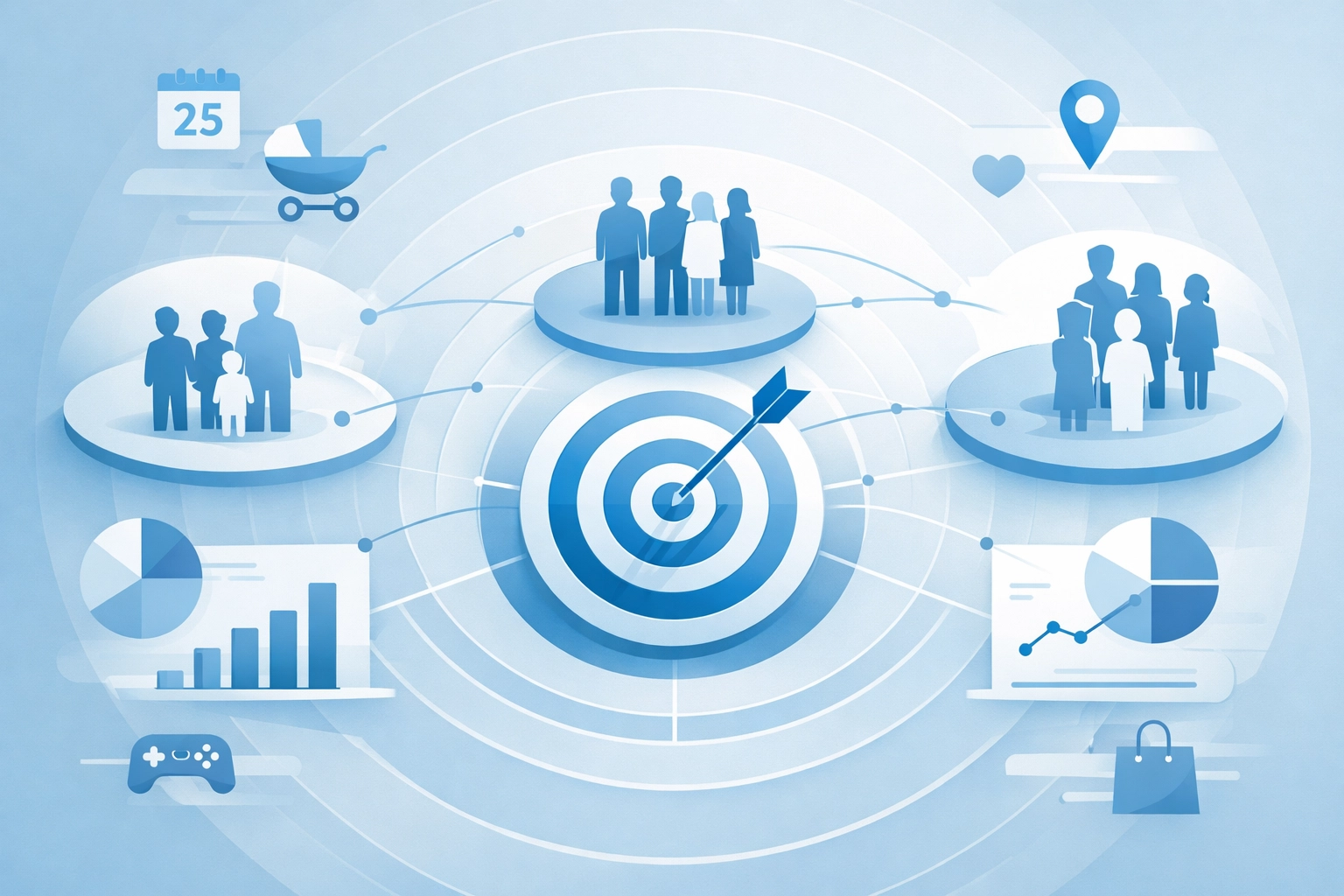
Through platforms like Turn It Blue Ads, you get access to L2, TargetSmart, and Tunnl, the same voter data and psychographic intelligence that powers winning political campaigns. Our clients using these tools have an 85% win rate, and we were recognized with the 2025 Award for 'Best Political Service Team' by Campaigns & Elections Magazine. This isn't amateur-hour targeting. This is precision.
L2 gives you the foundation: voter registration data, demographic information, consumer behavior, and voting history. You can target active voters in specific legislative districts, occasional voters who need mobilization, or never-voters who might care about your single issue.
Tunnl adds the behavioral layer and brings the psychographic intelligence: propensity modeling and Issue-based audience segments built on polling data and media consumption habits. You're not guessing who cares, you're using data science to find who's likely to donate, volunteer, or take action based on past political engagement. them. Want to reach "Healthcare Reform Advocates" or "Climate Action Supporters" specifically? Tunnl identifies them across 30+ policy areas with one click.
Combine these together, and you can build audiences like:
- Women ages 25-45 in swing districts who've donated to progressive causes in the past 18 months and score high on healthcare reform importance
- Republican-leaning voters in conservative districts who support criminal justice reform
- Inactive voters under 30 with high environmental concern scores who live within 5 miles of a planned pipeline
That level of precision means every dollar works harder. You're not paying to reach everyone. You're paying to reach the people who'll actually move your cause forward.
Agility Is Your Competitive Weapon
Here's what makes self-serve programmatic especially powerful for advocacy work: You can respond to the news cycle in real-time.
Policy fights don't follow neat quarterly planning cycles. They explode overnight. A court decision drops. A committee vote gets scheduled with 48 hours' notice. An opponent makes a false claim that's going viral.
Traditional advertising can't keep up with that pace. But self-serve can.
When you control your own platform, you can:
- Launch rapid response campaigns within hours when news breaks in your favor or against you
- Test multiple messages simultaneously to see what's resonating and double down on winners
- Adjust targeting on the fly as the legislative landscape shifts and you need to pressure different decision-makers
- Scale spending up when you're gaining momentum and donations are flowing
- Scale spending down when you need to conserve resources for the next fight
This agility isn't just convenient, it's often the difference between winning and losing a policy battle. Your opponents with big agency contracts are stuck in their quarterly plans. You're moving at the speed of the news cycle.
Three Ways Self-Serve Programmatic Drives Real Results
Let's get specific about how advocacy organizations are using this approach:
1. Policy Influence and Pressure Campaigns
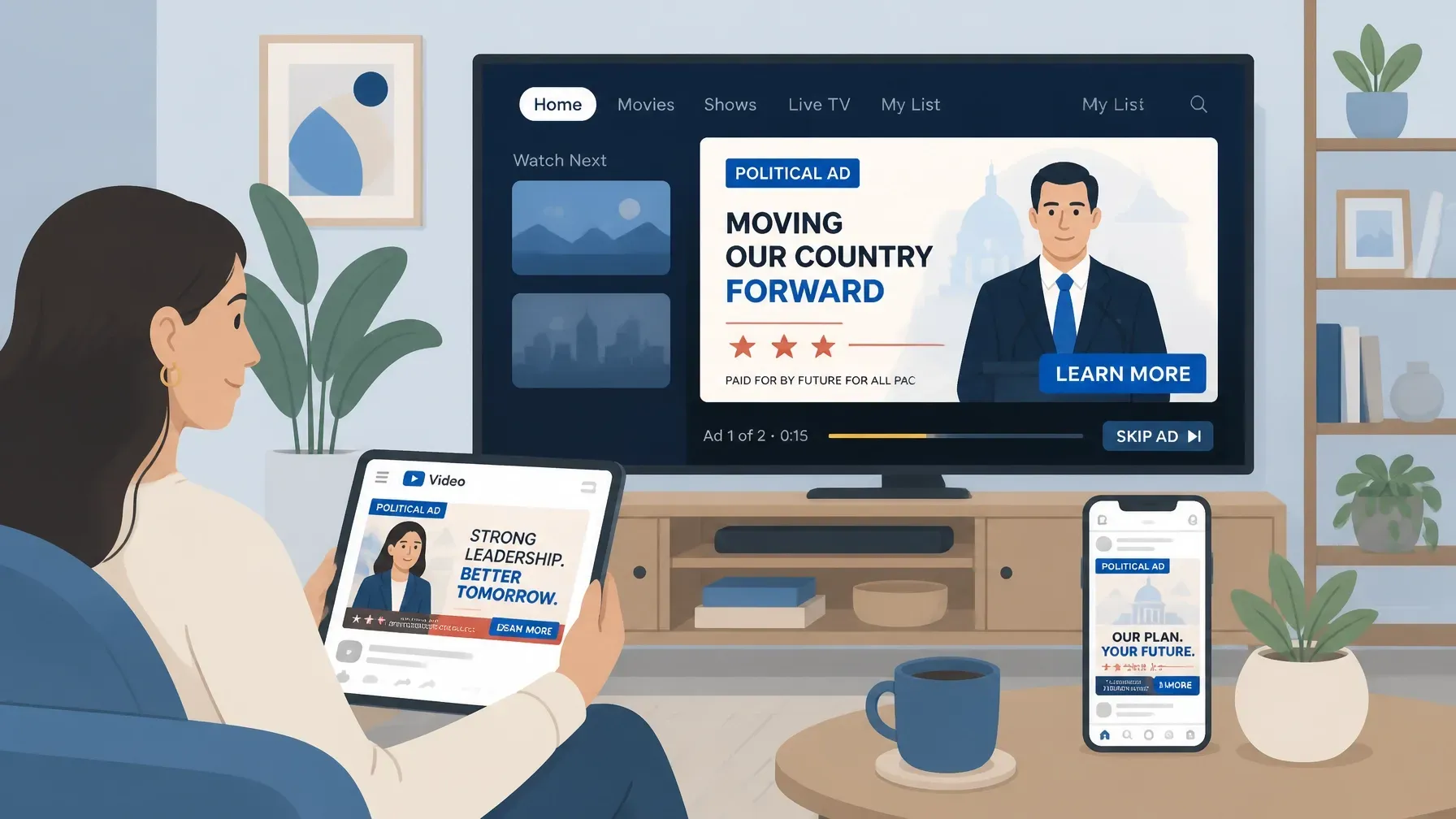
You need to move legislators on a specific vote. With self-serve programmatic and district-level targeting, you can run ads specifically to their constituents, in their district, during the week before the vote, with messages tailored to local concerns. Add Connected TV, and you're reaching them in their living rooms during local news. Layer in display ads, and you're following them around the web. The legislator's office starts getting calls. That's influence.
2. Supporter Mobilization and Grassroots Actions
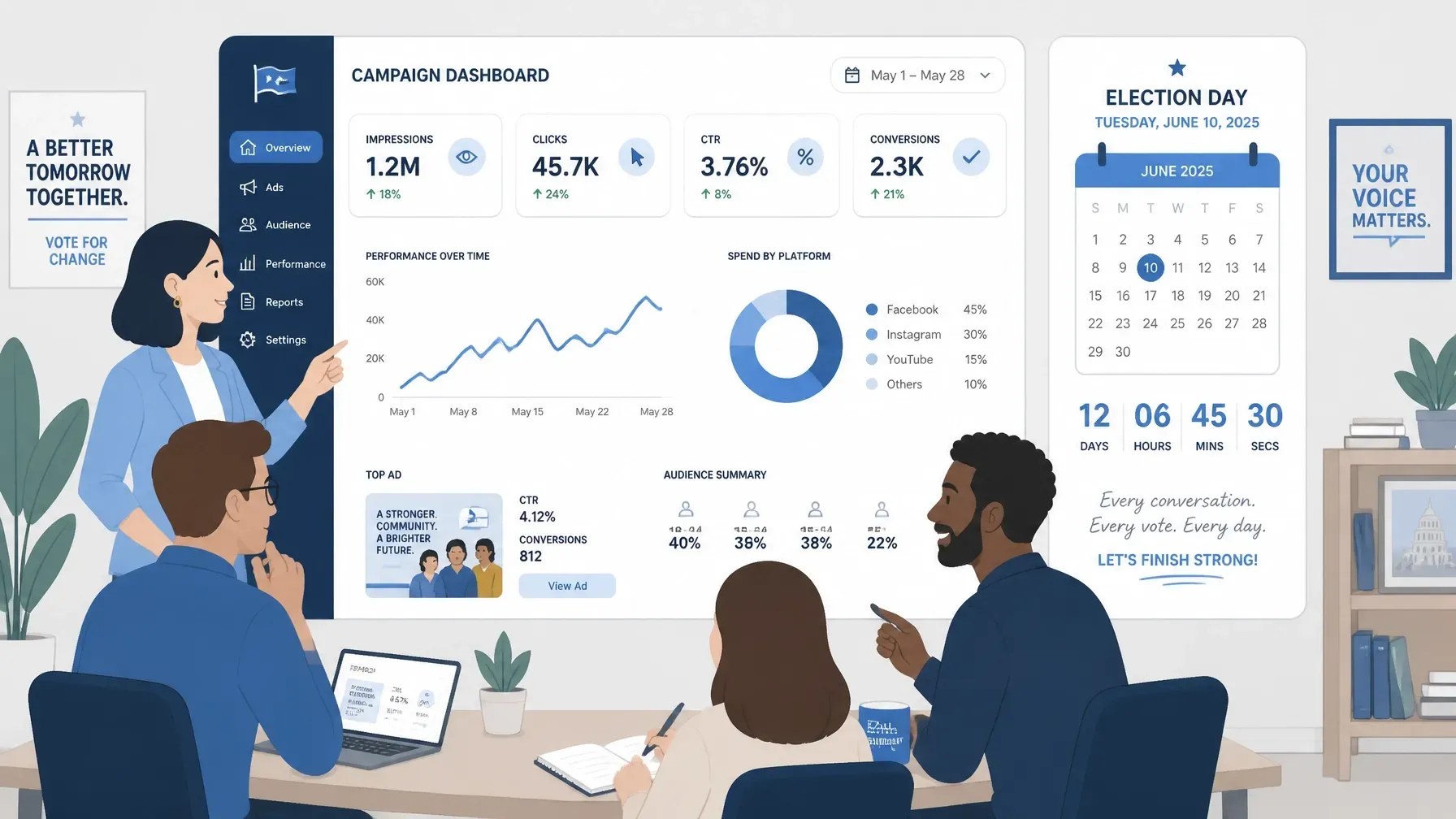
You've got a petition, a rally, or a call-to-action campaign. Self-serve programmatic lets you target your likely supporters with video ads explaining why this moment matters, display ads with a clear call-to-action, and mobile ads that make it dead simple to take action right now. Track conversions in real-time, see what's working, and adjust your approach instantly.
3. Fundraising and Donor Acquisition
Every advocacy organization runs on donations. Self-serve programmatic makes donor acquisition dramatically more efficient. Use data partners to identify people with a history of political giving, target them with compelling video content about your mission, retarget them with specific asks, and track which creative and messaging drives actual donations. You pay for performance, not promises.
The Budget Reality: Efficiency Beats Big Spending
Let's address the elephant in the room: budget.
Yes, some organizations have more money to spend than others. That will always be true. But here's what's changed: You don't need a million-dollar budget to be effective anymore. You need efficiency and targeting.
A $5,000 campaign targeting exactly the right 10,000 people with a compelling message will outperform a $50,000 campaign scattering ads to anyone and everyone. That's not theory: that's what happens when you combine self-serve control with premium data targeting.
With Turn It Blue Ads, you can launch with just $500. That's it. No agency minimums. No long-term contracts. You get the same data partnerships, the same ad placements, the same technology as organizations spending 100x that amount.
Bottom Line: Speed Plus Precision Equals Impact
The advocacy landscape has changed. News cycles move in hours, not days. Audiences are fragmented across dozens of channels. Attention is scarce, and competition for it is fierce.
Traditional advertising models: agencies, minimums, slow turnarounds: were built for a different era. They can't deliver the agility and precision that modern advocacy demands.
Self-serve programmatic advertising with premium data partners gives you both: the speed to respond to breaking developments and the precision to make every dollar count. You get enterprise-level technology without enterprise-level overhead. You get campaign-quality data without campaign-level budgets. And you get complete control without needing to become a media buying expert.
Your opponents are already moving fast. The news cycle waits for no one. And your mission is too important to be held back by outdated advertising models.
Ready to see what's possible when you combine speed, precision, and control? Take a look at what Turn It Blue Ads can do for your organization or schedule a demo to see the platform in action.
The advocacy advantage is real. It's time to claim it.
Share this Content!