The 'Trump-District' Digital Playbook: Messaging That Flips Seats
The 'Trump-District' Digital Playbook: Messaging That Flips Seats
![[HERO] The 'Trump-District' Digital Playbook: Messaging That Flips Seats](https://cdn.marblism.com/BqYiUbSf8BI.webp)
You’re standing at the edge of a district where the yard signs are ten-to-one against you. The local diners are filled with voters who haven’t seen a Democratic candidate show up in person for a decade. The national pundits have already moved your race into the "Safe Republican" column.
It feels like an uphill battle in a landslide. But here’s the reality: Red districts aren’t monoliths.
Beneath the surface of a "Trump +20" district lies a complex ecosystem of voters, disaffected moderates, healthcare-focused parents, and young workers who feel ignored by the political establishment. Winning in these areas isn't about spending more money than the GOP incumbent; it’s about targeting smarter.
At Turn It Blue Ads, we’ve seen the data. We know that when you stop shouting at the wind and start talking to the right people with the right message, the map starts to change. In fact, our clients have an 85% win rate because they stop guessing and start executing.
Winning in red districts isn't about spending more, it's about targeting smarter.
The "Unicorn" Voter: Finding Persuadables with Tunnl and L2
In a deep-blue city, you can throw a digital rock and hit a base voter. In a red district, that same strategy is a recipe for burning through your war chest with zero ROI. You cannot afford to waste impressions on voters who will never, under any circumstances, bubble in your name.
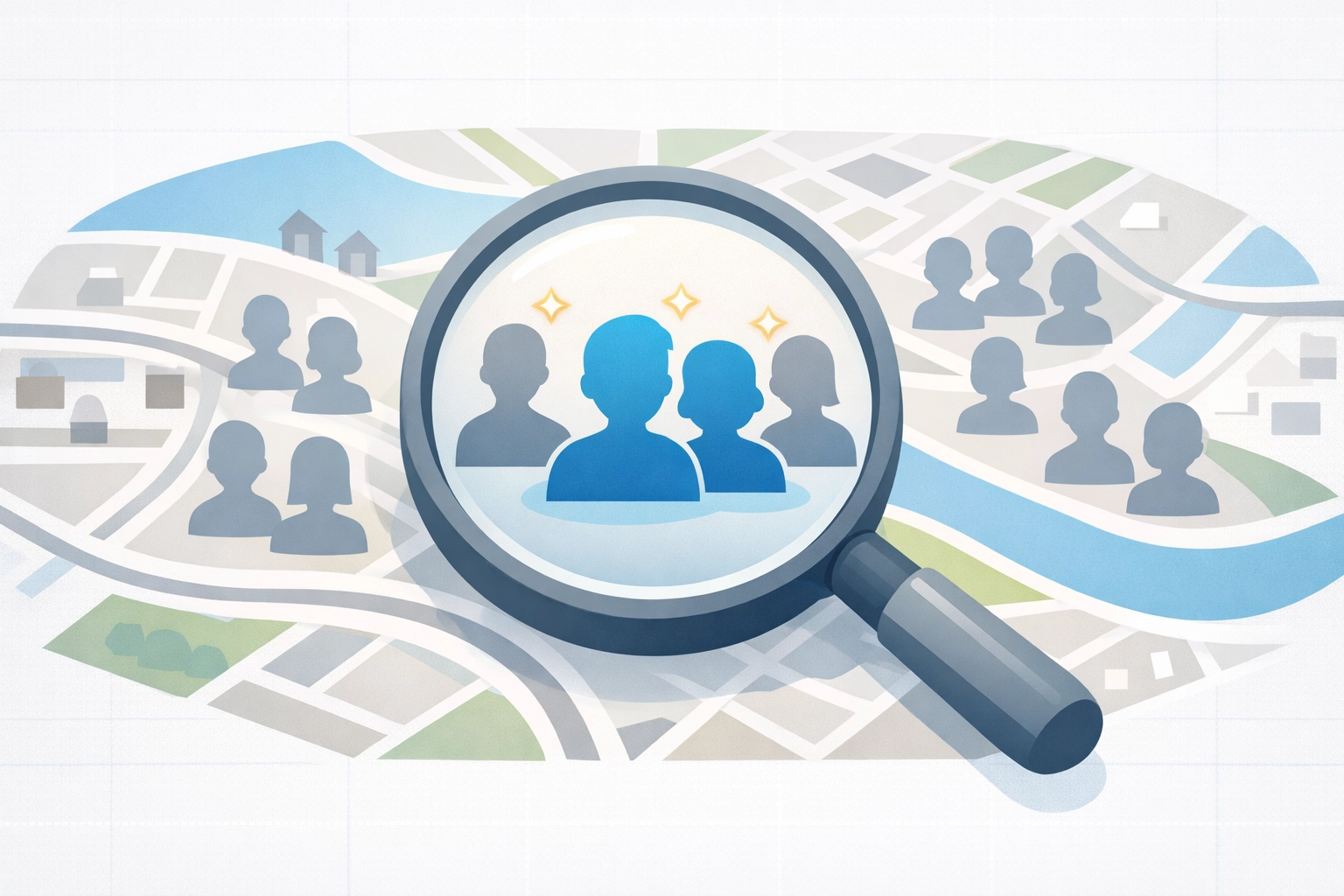
This is where data integration becomes your superpower. Most platforms give you "Democrat" or "Republican." That’s not enough. You need to find the "persuadable" voters hidden in Republican strongholds.
Through our integrations with Tunnl and L2 , we allow you to layer high-fidelity data over your digital buy. We aren't just looking at party registration; we’re looking at issue-based modeling.
- Who is a registered Republican but consistently supports environmental conservation?
- Who is an Independent voter concerned about rural hospital closures?
- Who is a "Double Hater" who voted for Trump but is exhausted by the chaos?
By identifying these micro-segments, you can serve ads to the 15% of the district that actually has the potential to flip. If you can move 5% of the GOP base and turn out 10% of the infrequent Democratic voters, the "Safe Red" seat becomes a toss-up.
Creative That Doesn't Trigger the "Red" Reflex
Here is a hard truth: If your ad looks like it was designed by a D.C. consultant who hasn’t left the Beltway in five years, it will fail in a red district. The moment a voter sees a "polished" political ad with stock footage of a diverse city they’ve never visited, they tune out. Or worse, they get angry.
To flip a seat, your creative must feel local, authentic, and non-partisan.
1. The "Kitchen Table" Lens
Stop talking about national "threats to democracy" and start talking about the bridge on Main Street that’s been closed for three years. In red districts, voters are often motivated by pragmatism over ideology. Highlight how the incumbent voted against local infrastructure or healthcare funding.
2. Use "Voter-to-Voter" Aesthetics
High-production value can actually be a liability. We often recommend using micro-influencer content
or "selfie-style" videos from actual constituents. A video of a local farmer explaining why they are crossing party lines to vote for you is worth ten "attack ads" narrated by a scary voiceover artist.
3. Avoid the Blue Branding
Sometimes, the best way to win a blue vote in a red district is to stop looking so "blue." Experiment with neutral color palettes, greens, oranges, or earthy tones, that don't immediately trigger the "us vs. them" partisan reflex.
The Meta-DSP Advantage: Be Everywhere They Are
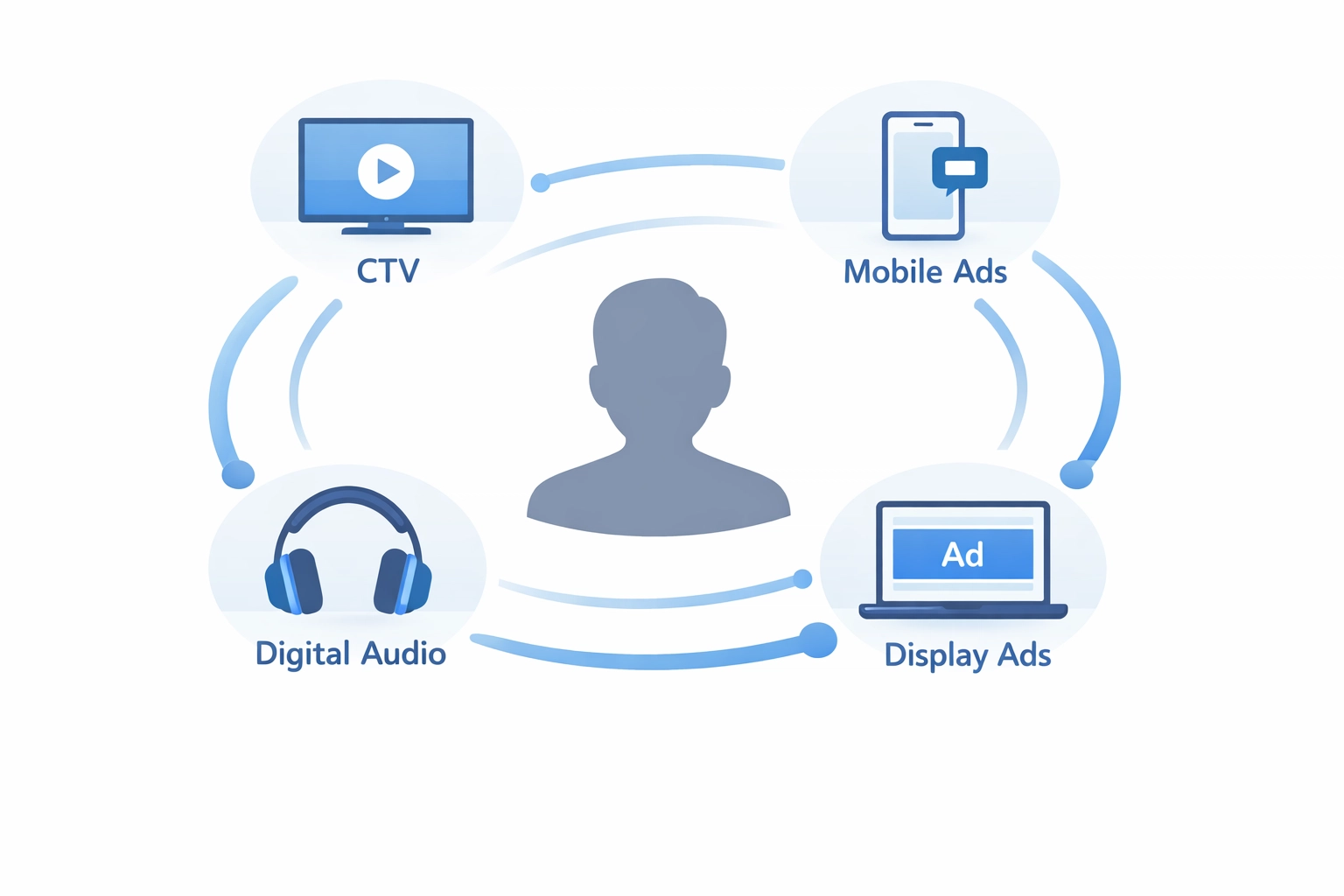
In rural or deep-red districts, voters aren't just scrolling Twitter (X) or watching MSNBC. They are on local news sites, weather apps, streaming sports on CTV, and listening to country or classic rock on digital audio platforms.
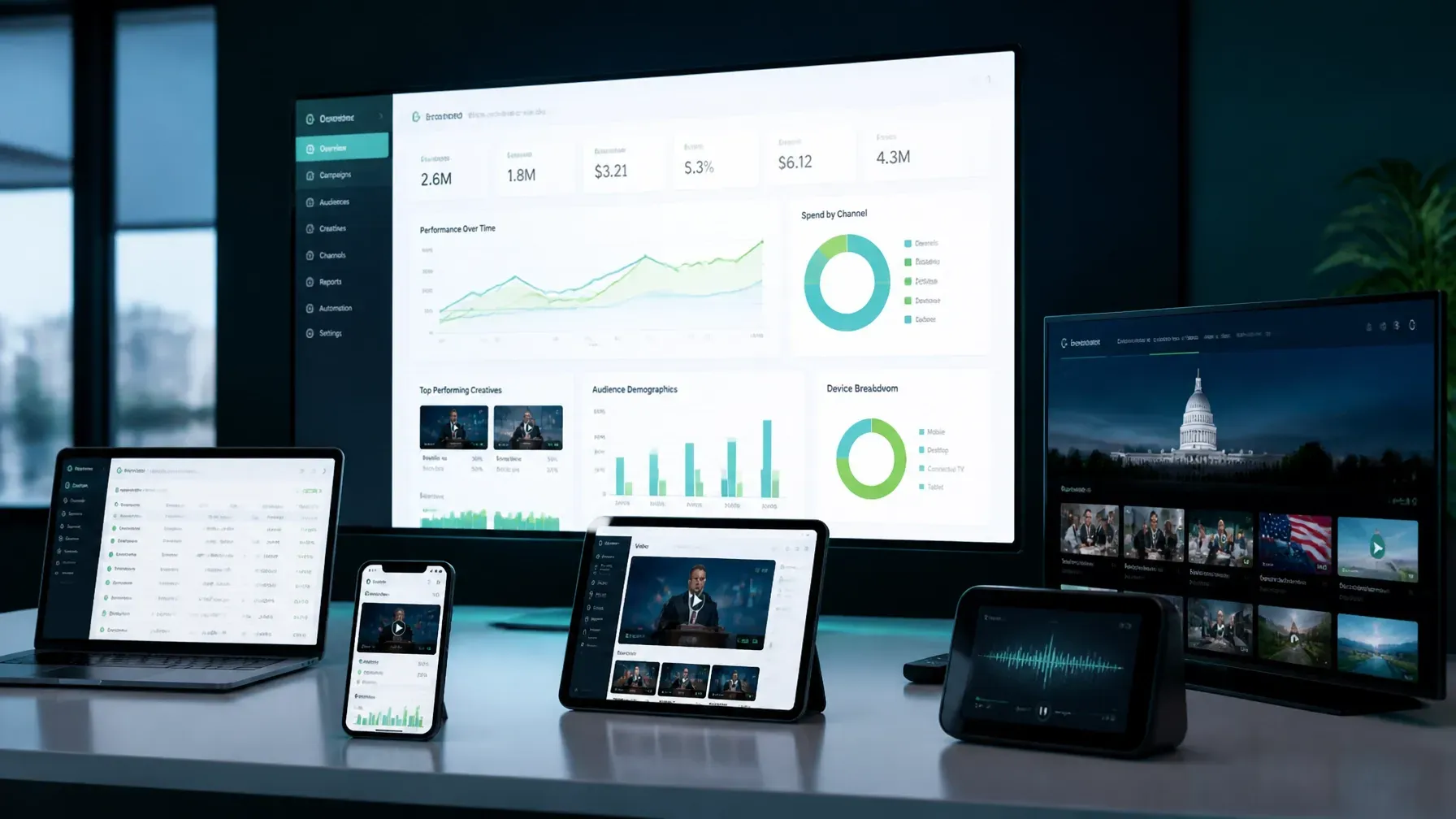
If you only focus on Facebook, you’re missing the "Digital Desert." You need a meta-DSP (Demand Side Platform) approach. Turn It Blue Ads doesn't just put you on one exchange; we give you access to the entire programmatic ecosystem.
- Display Ads: Stay top-of-mind on the local high school football score page.
- Online Video (OLV): Run 15-second unskippable ads before YouTube tutorials or news clips.
- Digital Audio: Reach voters during their morning commute on Spotify or iHeartRadio.
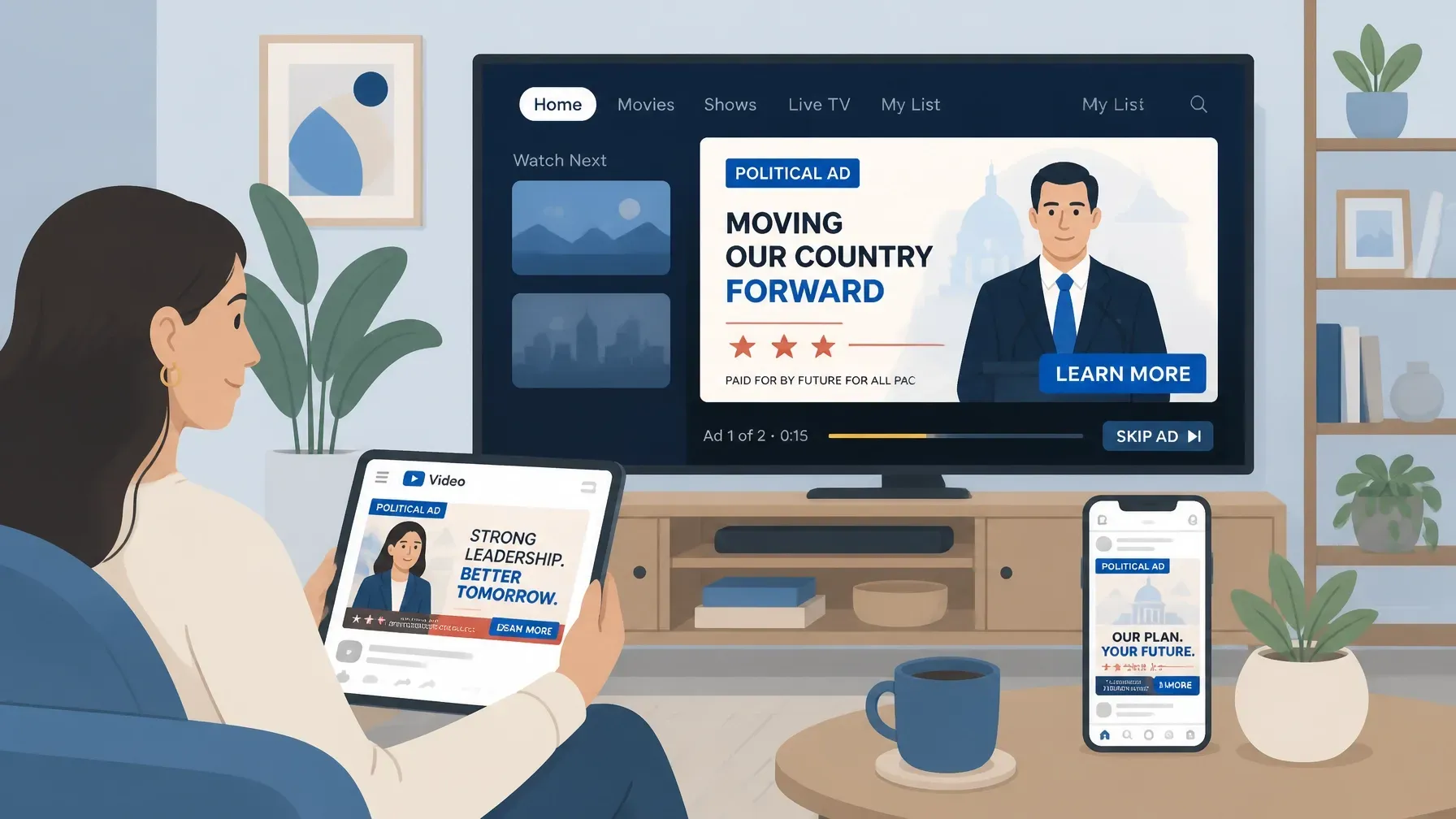
- Connected TV (CTV): As we’ve noted before, CTV is now outspending broadcast for a reason. It allows you to target a specific household in a red precinct without paying for the entire expensive media market.
Bottom line: Frequency wins races. When a persuadable voter sees your face on their TV, hears your voice on their podcast, and sees your banner on their local news site, you become a legitimate choice, not just a name on a ballot.
Efficiency Over Excess: The Budget Reality
We get it. You’re likely being out-raised. Your opponent has PAC money falling out of their pockets. But digital advertising is the great equalizer.
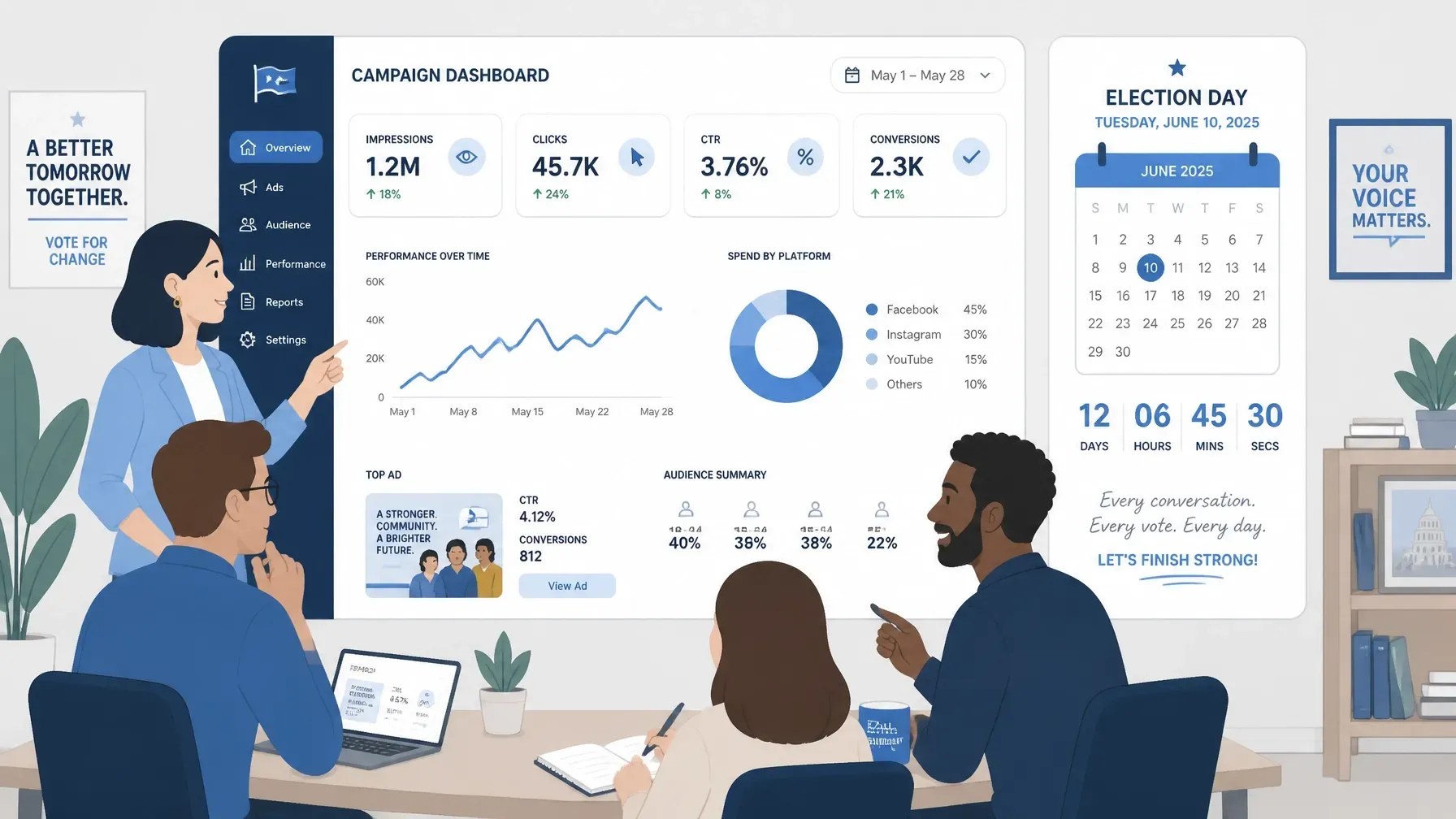
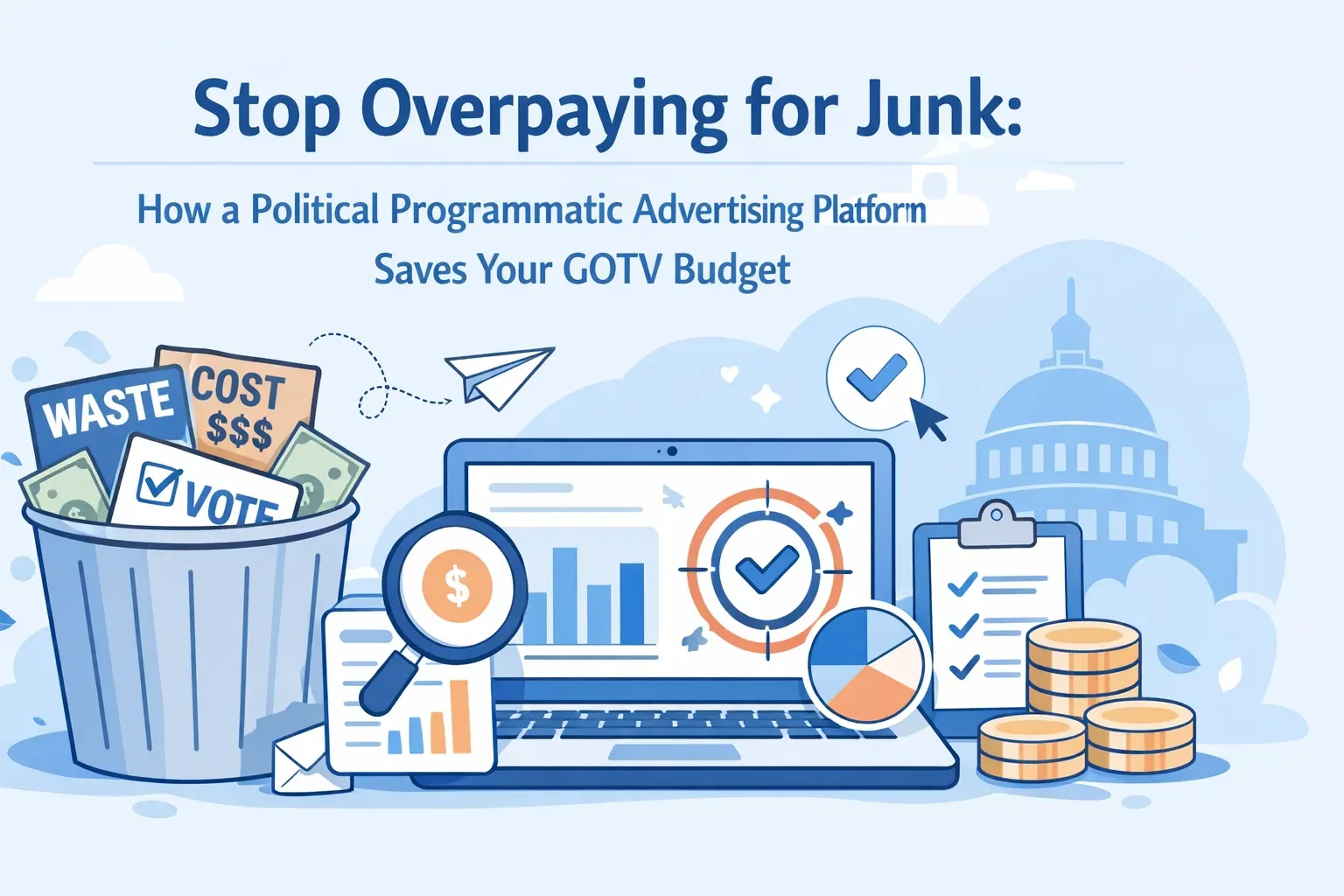
While your opponent wastes $50,000 on a billboard that 80% of people ignore or a broadcast buy that reaches three neighboring districts you aren't even running in, you can be hyper-efficient. On our platform, you can launch a highly targeted campaign with as little as $500.
This isn't about being cheap; it’s about avoiding wasted impressions. Every dollar you spend on Turn It Blue Ads is optimized to reach a specific person identified by Tunnl or L2 as a high-value target.
Why It Works: Proven Success in "Unwinnable" Areas
We don't just talk the talk. Turn It Blue Ads was recognized with the 2025 Award for 'Best Political Service Team' by Campaigns & Elections Magazine (C&E) because we help campaigns navigate these exact complexities.
Our 85% win rate isn't just because we work with front-runners. It’s because we provide the tools for underdogs to fight back. We bridge the gap between "big data" and "local boots on the ground."
If you are running in a district that people say is "too red to flip," remember that no seat is safe when the messaging is precise and the data is accurate.
Key Takeaway: Stop trying to out-shout the GOP in red districts. Use data to find the cracks in their base, use local-first creative to build trust, and use our meta-DSP to ensure your message follows them across every device they own.
Ready to Flip Your District?
Don't wait until the final three weeks of the cycle to start your digital outreach. The work of persuasion happens now. Whether you have a $5,000 budget or a $500,000 budget, our tools are designed to make sure every cent moves the needle.
Get Started Today and Launch Your First Campaign!
Share this Content!