How CTV Retargeting Works in 2026 (Without Cookies): The Cross-Device Playbook Every Campaign Manager Needs
How CTV Retargeting Works in 2026 (Without Cookies): The Cross-Device Playbook Every Campaign Manager Needs
![[HERO] How CTV Retargeting Works in 2026 (Without Cookies): The Cross-Device Playbook Every Campaign Manager Needs](https://cdn.marblism.com/sPvYX3Amqug.webp)
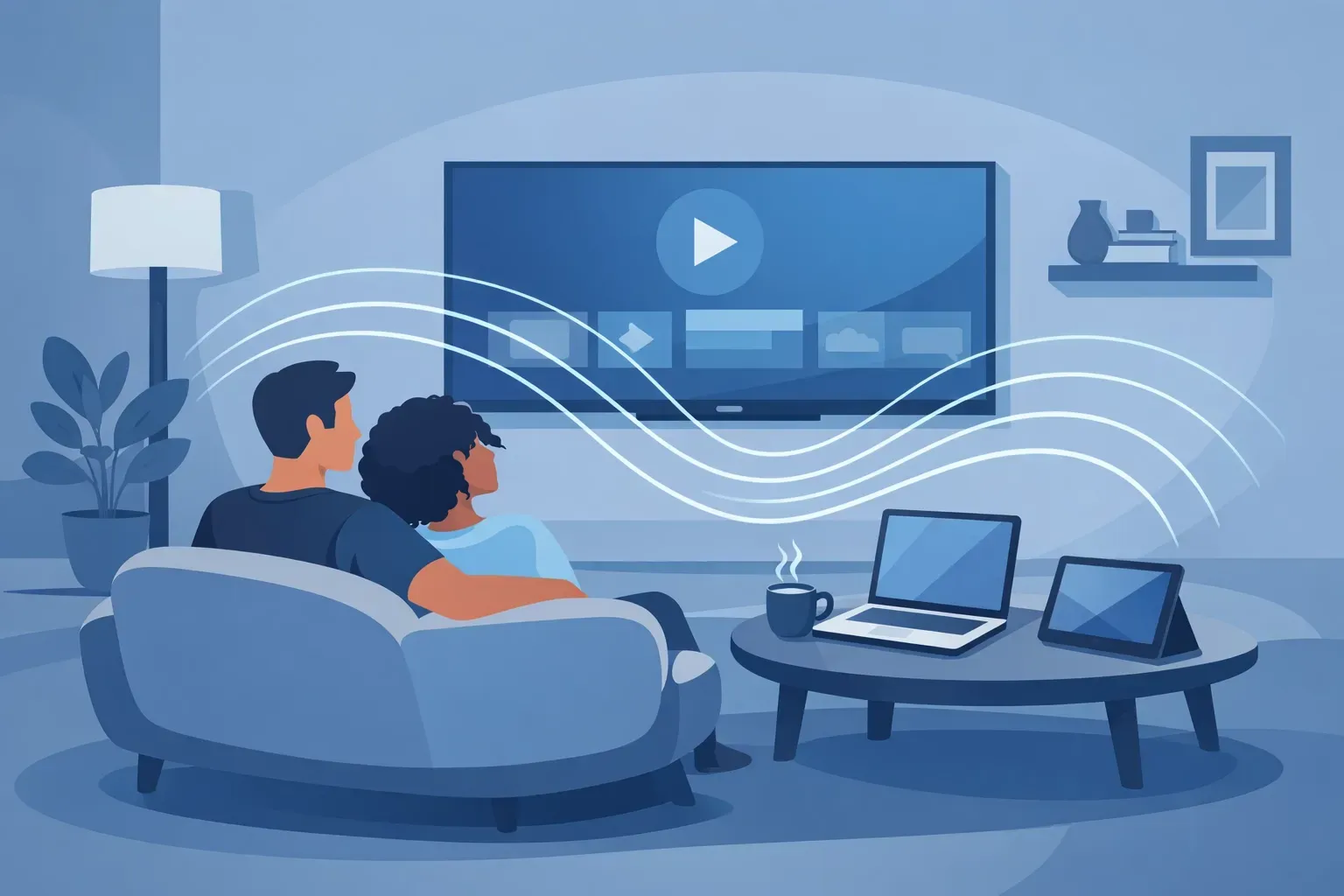
It’s 8:30 PM on a Tuesday. Your target voter is sitting on their couch, watching a live sports stream on their 65-inch Roku TV. Your 30-second spot rolls: it’s high-impact, emotional, and visually stunning. They see it, they hear it, and they lean in. But they don't click. Why would they? People don't click on their televisions.
In the old days of digital advertising, that would be the end of the line. If they didn't remember your name and manually search for you later, that impression was a "one-and-done." But in 2026, the game has fundamentally changed. The cookie is dying, but the connection is more alive than ever.
As a campaign manager, you face a daunting reality: limited resources and unlimited goals. You need to know exactly how to follow that voter from the "big screen" in the living room to the "small screen" in their pocket where the actual conversion: the donation, the sign-up, the vote: happens.
This is the cookieless cross-device playbook. Here’s how we do it at Turn It Blue Ads.
The Death of the Cookie and the Birth of the Identity Graph
By now, you’ve heard the eulogy for the third-party cookie a thousand times. For digital ads for political campaigns , this initially felt like a catastrophe. How do you track a voter's journey across devices without that little piece of tracking code?
The answer lies in Household Identity Graphs.
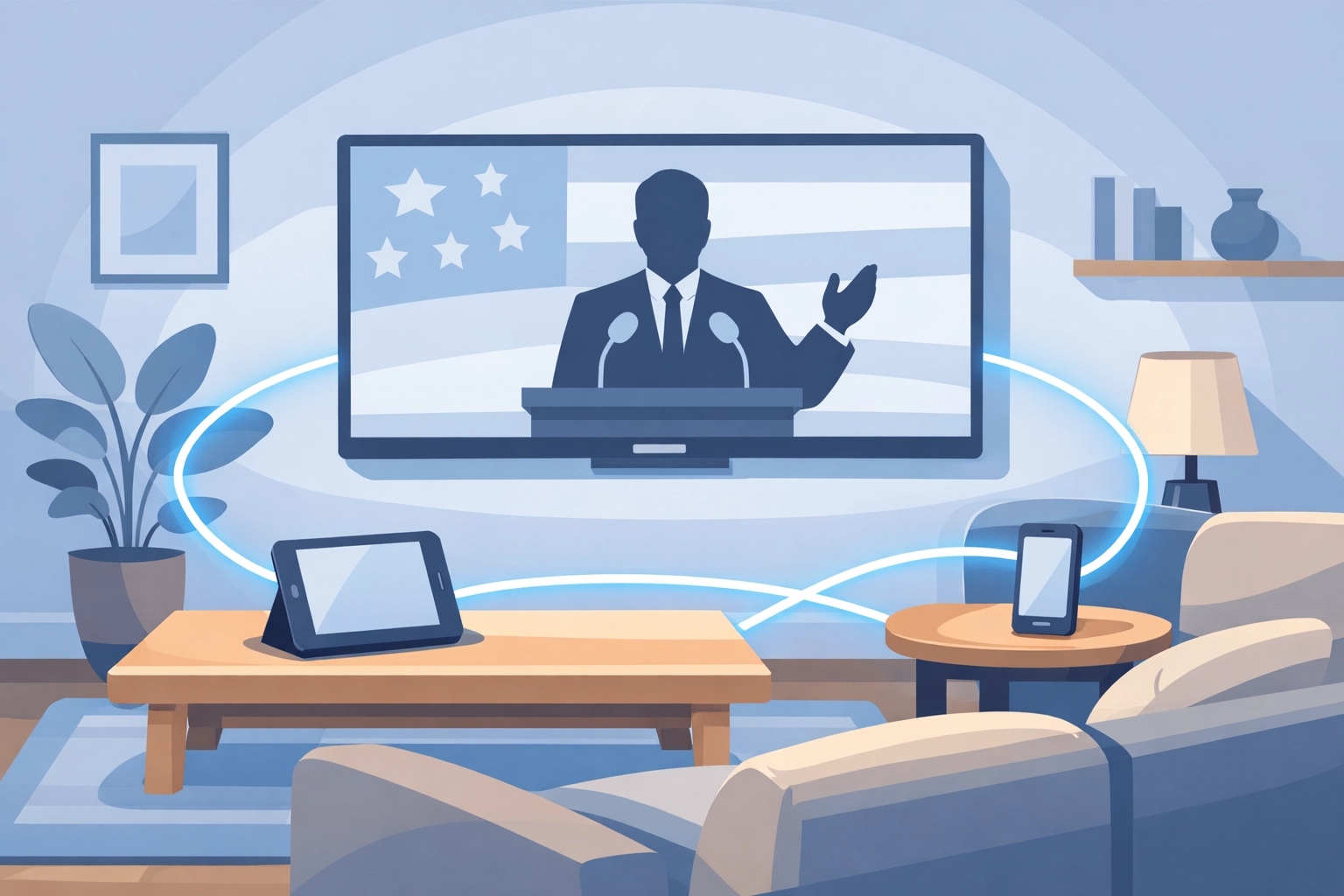
Instead of following a browser, we follow a household. When we run political streaming tv advertising , we aren't just throwing ads into the void. We are targeting specific households based on voter targeting data from elite partners like L2 and Tunnl.
When that CTV ad plays, our system identifies the unique IP address and device ID associated with that household. Because we use deterministic matching: connecting known voter files to physical households: we don't need a cookie to know who is sitting on that couch.
Here’s Why: The Big Screen/Small Screen Logic
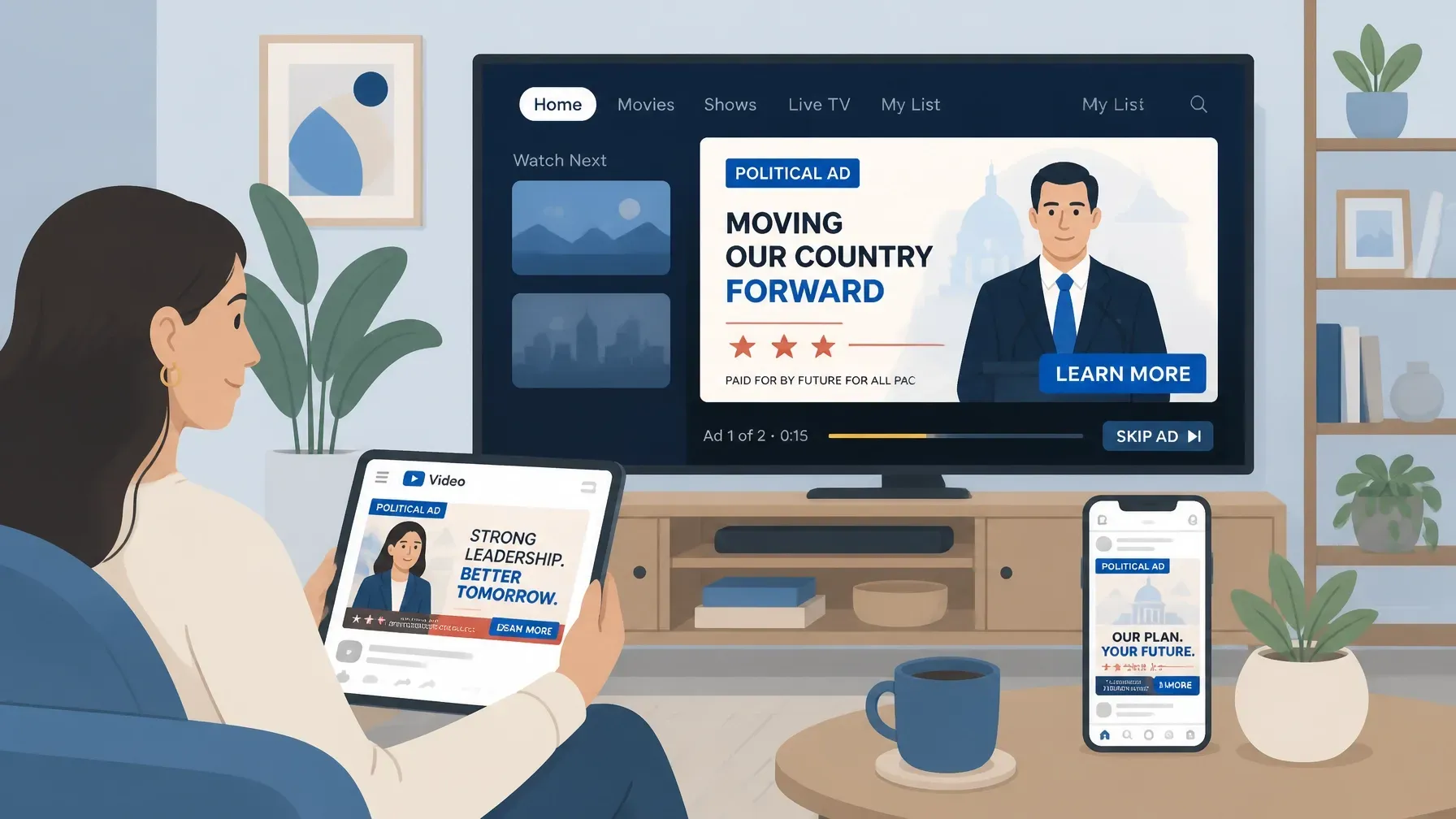
Think of CTV as your "handshake" and mobile retargeting as your "ask."
CTV provides the highest brand recall in the industry. It’s unskippable, full-screen, and immersive. It establishes authority. But it’s terrible for direct response. You can't easily fill out a volunteer form using a TV remote.
This is where the playbook kicks in:
- The Anchor (CTV): You serve a high-quality ad on premium political streaming tv advertising inventory (think Hulu, Peacock, or live sports).
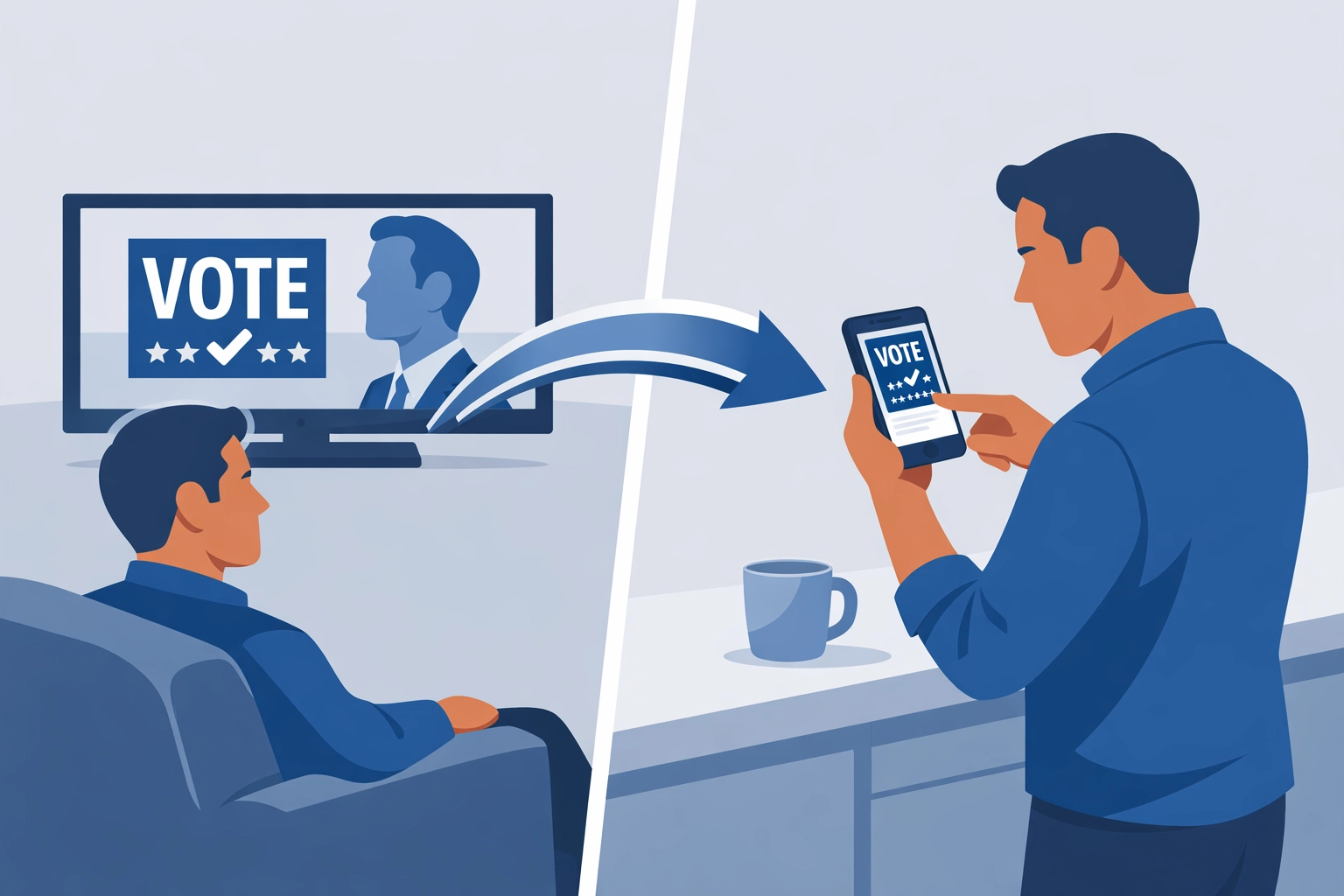
- The Shadow (Mobile/Desktop): Within hours of that TV impression, our platform automatically triggers display or video ads to every other device associated with that same household IP.
- The Conversion: The voter sees a "Remind Me to Vote" or "Donate Now" banner while scrolling news on their phone or laptop. The familiarity is already there. The friction is gone.
Bottom line: You are moving the voter down the funnel without them ever having to search for you.
Building Your Playbook: 3 Steps to Cross-Device Success
You don't need a million-dollar budget to execute this. At Turn It Blue Ads, we’ve seen campaigns win with as little as a $500 minimum to launch. The key isn't the size of the check; it’s the intelligence of the sequence.
1. Start with Deterministic Voter Data
Don't waste money on "probabilistic" guessing. We plug directly into L2 and Tunnl to ensure your voter targeting data is surgical. Whether you’re looking for "Persuadable Independents in Precinct 12" or "Lapsed Donors," your campaign starts with a verified list. This ensures that your connected tv advertising for candidates is only reaching the people who can actually vote for you.
2. Set Your Frequency Caps
The biggest mistake in ott advertising for political campaigns ? Over-saturation. You want to be persistent, not annoying.
- CTV Frequency: 6-8 times per week.
- Cross-Device Retargeting: 8-12 times per week.
This creates a "surround sound" effect. The voter feels like your campaign is everywhere, which builds the perception of momentum and viability.
3. Match Your Creative to the Device
Don't just chop up your TV ad for a banner.
- On CTV: Focus on the "Why" narrative. Why are you running? What's at stake?
- On Retargeting: Focus on the "What." What do you want them to do? "Click here to find your polling place" or "Contribute $5 to help us stay on the air."
The Technical Reality: How We Connect the Dots in 2026
You might be wondering: "If cookies are gone, how does Turn It Blue Ads actually know that the phone in the kitchen belongs to the person watching the TV in the den?"
It comes down to three core technologies:
IP Matching & Household Sync
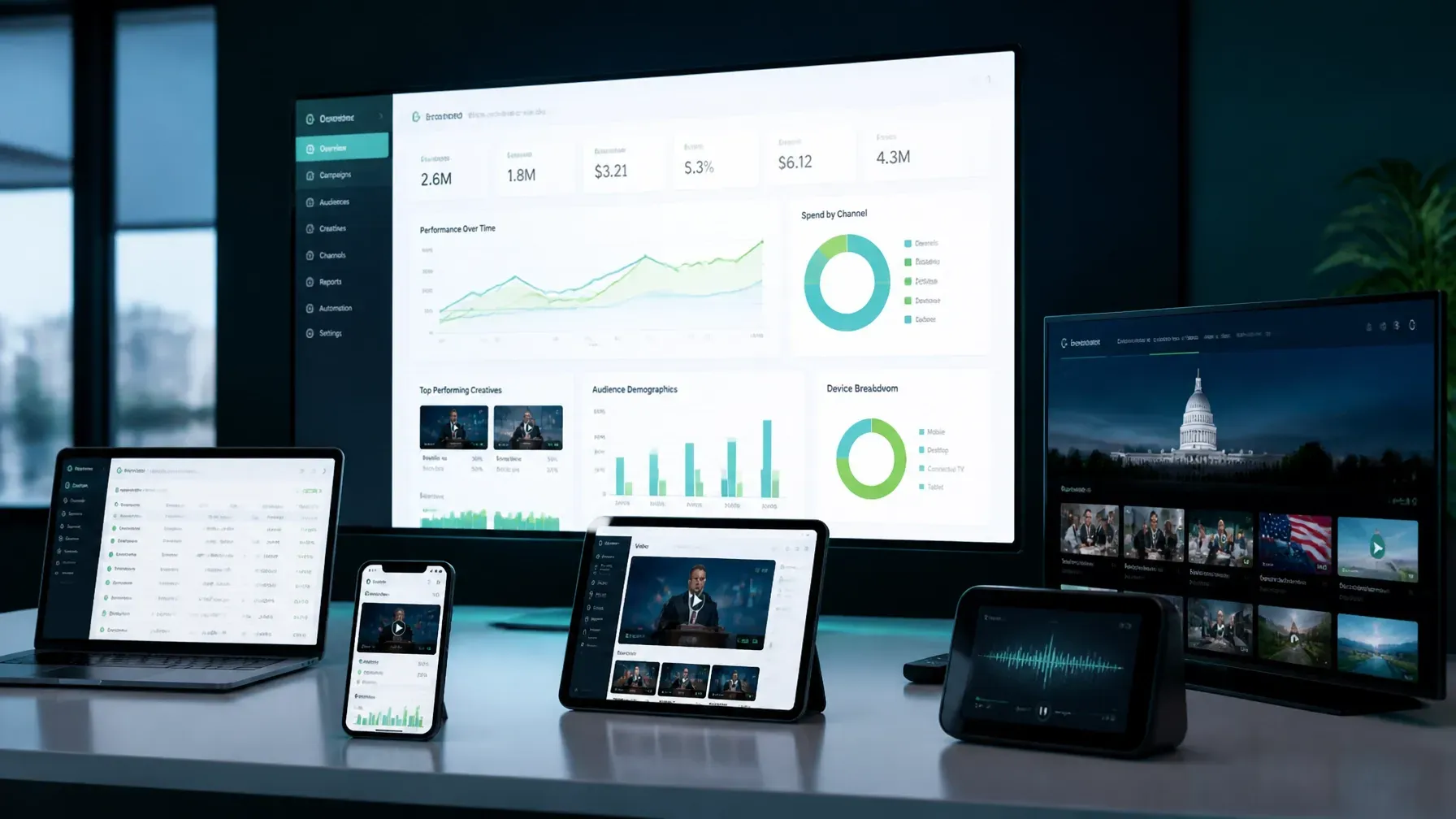
Every home has a unique digital signature. Our meta-DSP (Demand Side Platform) maps the devices that consistently connect to that signature. When a CTV ad is delivered via Server-Side Ad Insertion (SSAI), we receive a signal. We then "sync" that household, allowing us to serve display ads to the other devices on that same network.
CRM Uploads (First-Party Data)
You already have a list of supporters, donors, and warm leads. We upload that CRM data directly into our platform. This bypasses the need for web-based tracking entirely. We match your list to the Identity Graph, ensuring your digital ads for political campaigns are reaching your base across all their screens.
Verified Reach vs. Long-Tail Waste
In 2026, "cheap" inventory is often a trap. If you’re buying remnant "long-tail" inventory on obscure apps, your retargeting data will be garbage. We focus on premium, verified placements. This ensures that when we retarget, we are retargeting a real human in a real home, not a bot in a server farm.
Why This Matters for Your 2026 Strategy
The political landscape is more fragmented than ever. Voters are skipping commercials on YouTube and using ad-blockers on their browsers. But they're watching more streaming TV than ever.
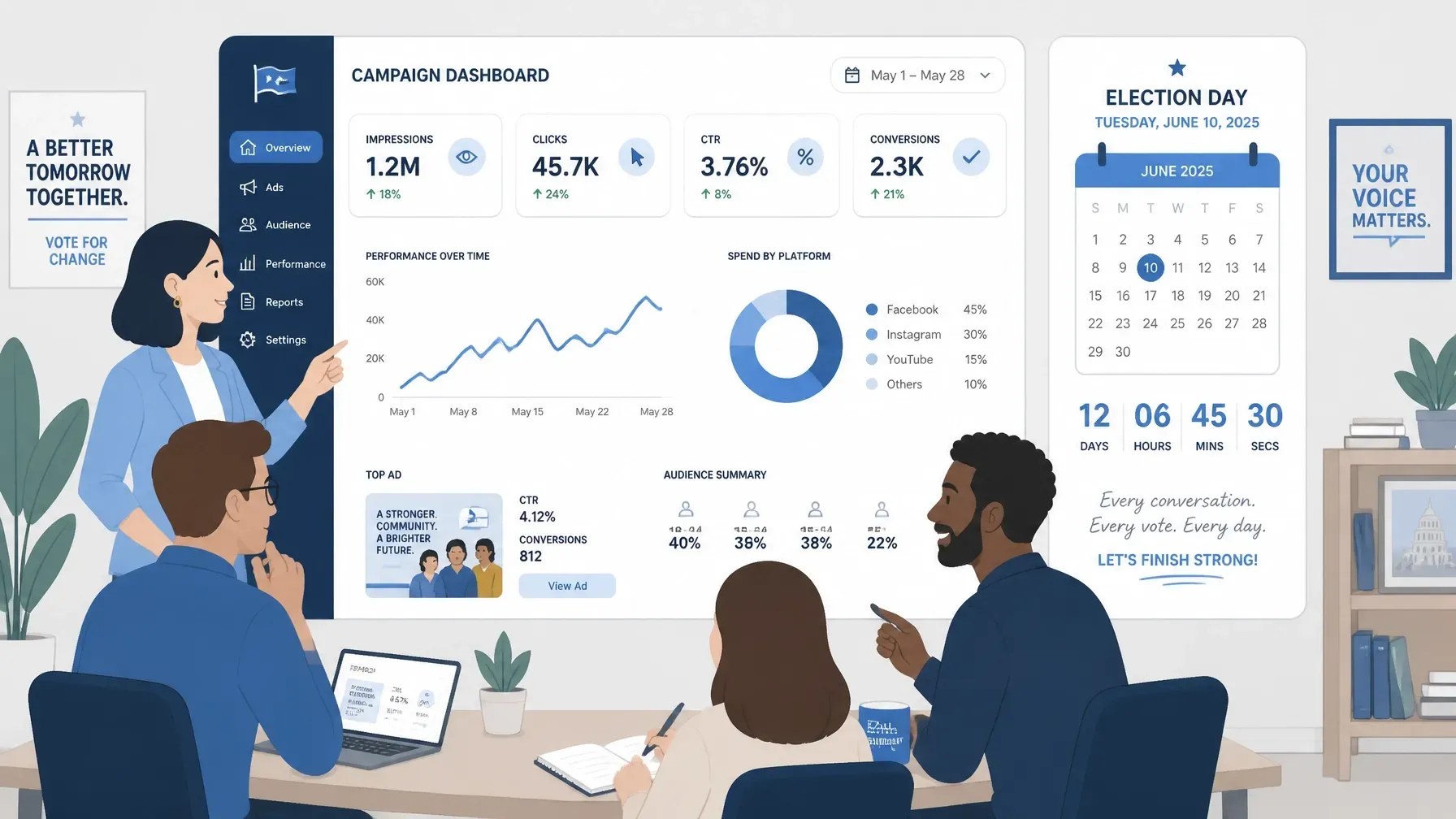
If you aren't using a cross-device strategy, you're paying for "ghost impressions": ads people see but can't act on. By bridging the gap between the TV and the smartphone, you maximize every dollar of your budget.
Remember: In a close race, the margin of victory is often found in the efficiency of your media buy.
At Turn It Blue Ads, we are proud of our 85% win rate for clients using our platform. That success isn't an accident. It’s the result of using the same high-level technology as Fortune 500 brands, but tailored specifically for the unique needs of Democratic campaigns and advocacy groups. Our team was even recognized with the 2025 Award for 'Best Political Service Team' by Campaigns & Elections Magazine (C&E), specifically because we help campaign managers navigate these technical shifts without needing a PhD in data science.

Common Pitfalls to Avoid
- Don't ignore the "October Rush": CTV inventory gets expensive and crowded in the final weeks. Start your cross-device sequencing early (August/September) to build that initial household match before the prices spike. You can read more about this in our 2026 Political Ad Spend Guide.
- Don't skip the "Call to Action" on retargeting: A banner ad that just has your name and a photo is a wasted opportunity. Give them a button to click.
- Don't forget about privacy compliance: With laws like California’s Delete Act in full swing, ensure your data partners (like ours) are fully compliant. You don't want a legal headache in the middle of a primary.
Ready to Launch Your Playbook?
The tech might be complex, but your experience shouldn't be. You don't need a massive agency or a six-figure monthly retainer to access these tools. Whether you’re running for School Board or State Senate, you can harness the power of cookieless retargeting so your message sticks.
Key Takeaway: CTV builds the flame; retargeting pours the gasoline. Together, they create a campaign presence that is impossible to ignore.
Want to see how your specific voter list maps out across CTV and mobile? Start your digital ad plan today and let’s put the 2026 cross-device playbook to work for you.
💥 Pro-Tip: Check out our Agency Cheat Sheet for 15 ways to explain these modern media strategies to your candidate or board members. 💥
Let's win this. Get Started Today!
Share this Content!