The Always-on Advantage: Why Your Campaign Shouldn't Wait Until October to Start Advertising
The Always-on Advantage: Why Your Campaign Shouldn't Wait Until October to Start Advertising
![[HERO] The Always-on Advantage: Why Your Campaign Shouldn't Wait Until October to Start Advertising](https://cdn.marblism.com/Qa7Jq1zgj41.webp)
Picture this: It's October 2026. Your candidate finally has budget to spend on digital ads. You launch your campaign with excitement: only to discover that CPMs have tripled, inventory is scarce, and every other campaign in your state is fighting for the same eyeballs. Your carefully planned budget that should've reached 500,000 voters? It's now reaching 150,000. And worse, those voters are seeing your candidate's face for the first time just weeks before Election Day.
This is the "burst" model: and it's killing campaigns.
The October Rush Is a Trap
Here's the uncomfortable truth: waiting until the final weeks to start advertising isn't strategic. It's reactive, expensive, and puts you at the mercy of the market when demand is highest.
When every campaign floods the zone in October, several disastrous things happen simultaneously. Ad inventory becomes scarce as platforms struggle to serve all the competing campaigns. CPMs skyrocket: we're talking 200-300% increases compared to spring rates. Your targeting becomes less precise because everyone's competing for the same audiences. And perhaps most critically, you're asking voters to make a decision about a candidate they've never heard of while being bombarded by dozens of other political messages.
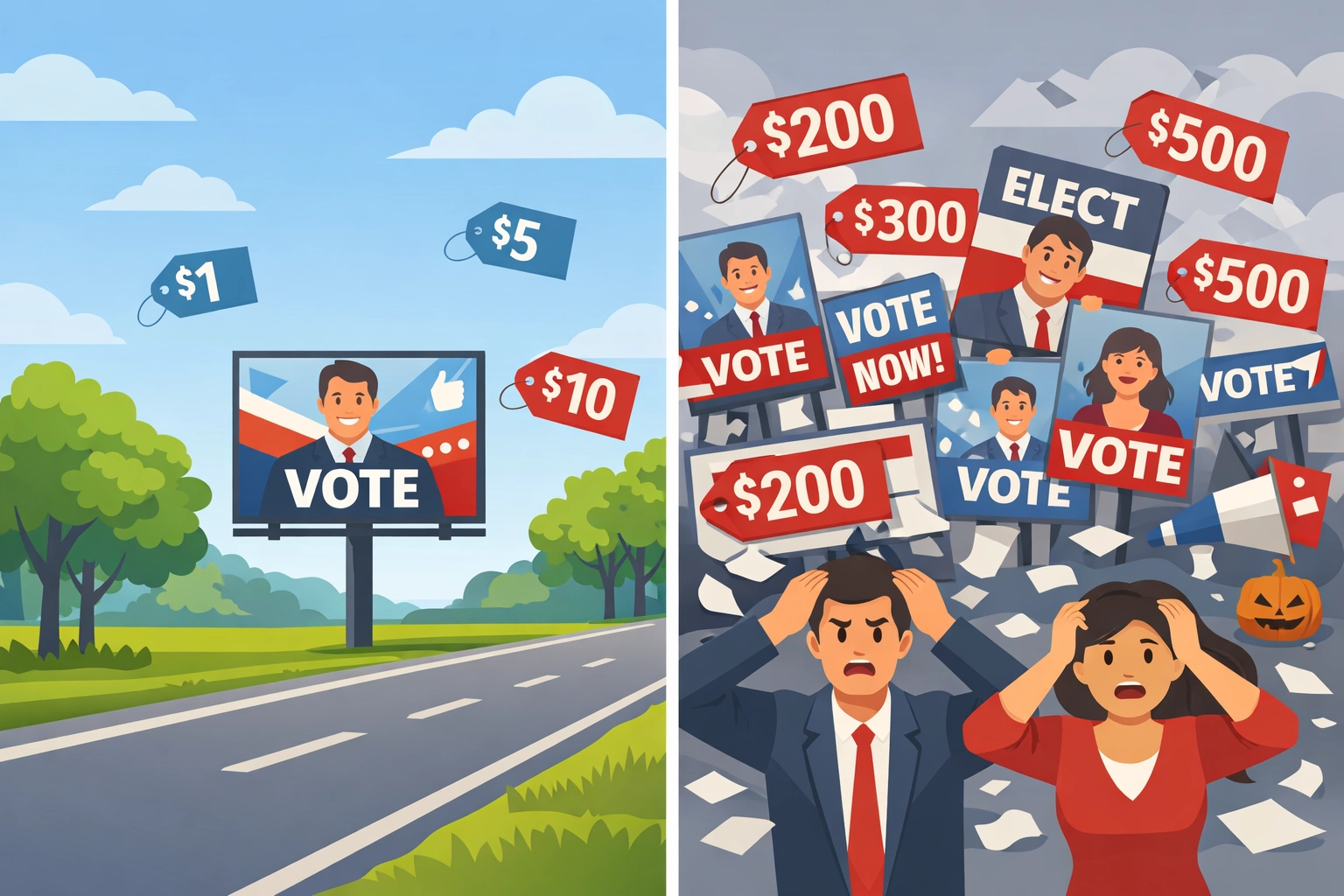
The burst model made sense in a different era: when TV was king and campaigns had limited ways to reach voters early. But digital advertising changed everything. You can now maintain a presence with voters year-round without breaking the bank. Yet too many campaigns still operate like it's 1996, hoarding their budget for a final October blitz.
The data tells a stark story. Campaigns that start building name recognition in spring and summer have significantly higher voter recall by Election Day. They've had months to shape the narrative about their candidate. They've tested messaging, refined their targeting, and built genuine awareness. Meanwhile, October-only campaigns are starting from zero while paying premium prices.
What Always-On Actually Means
Always-on advertising doesn't mean spending your entire budget in February. It means maintaining consistent, strategic visibility with your target voters throughout the campaign cycle.
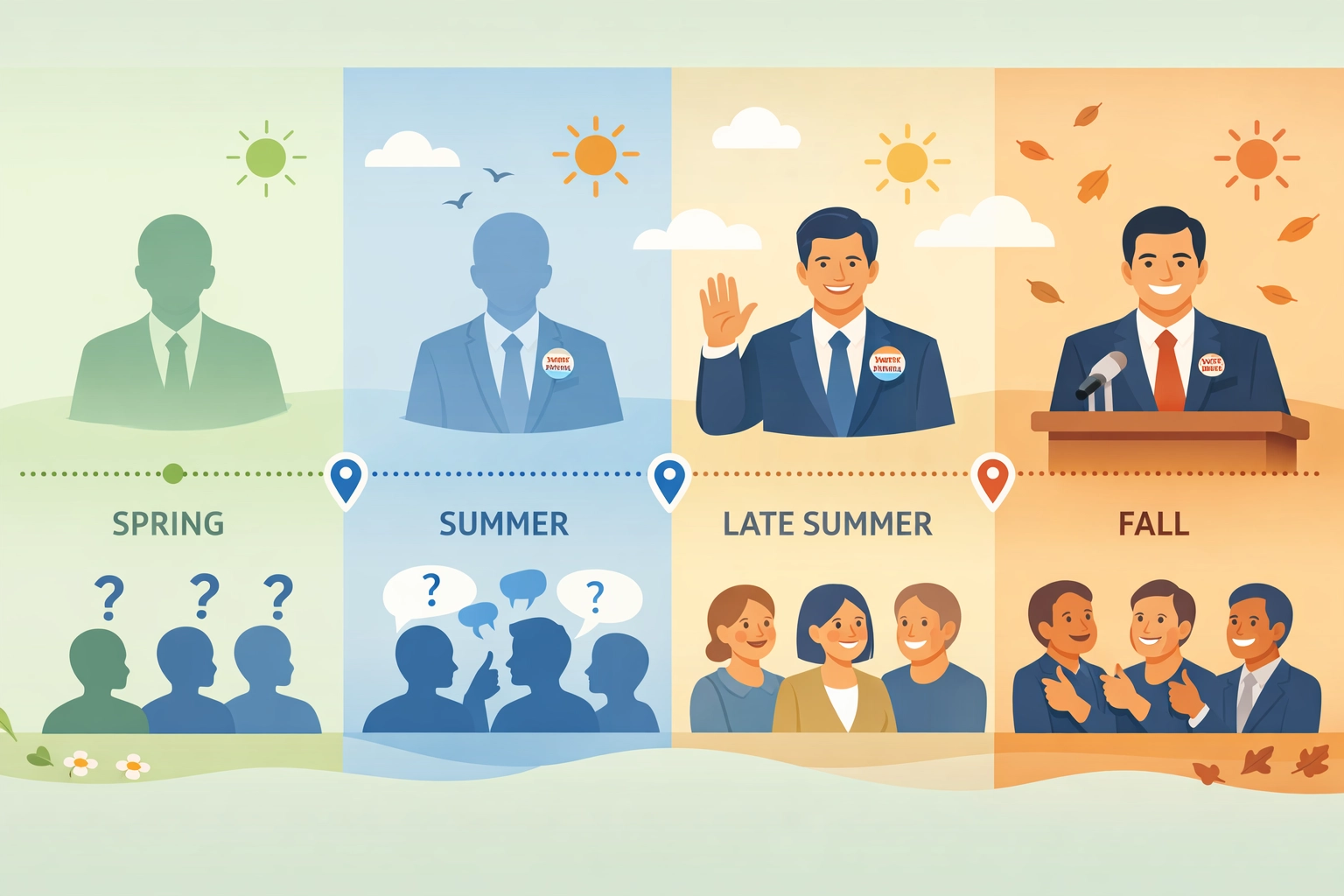
Think of it like this: Would you rather have 8-12 meaningful touchpoints with a voter over six months, or try to cram 3-4 desperate impressions into the final two weeks? The answer should be obvious: but the burst model is still how most campaigns operate.
An always-on approach builds name ID steadily over time, allowing voters to become familiar with your candidate before the chaos of the final stretch. This isn't just theory. Campaigns using our platform with an always-on strategy achieved an 85% win rate in 2025: and that success earned Turn It Blue Ads the 'Best Political Service Team' award from Campaigns & Elections Magazine.
Here's how always-on campaigns win:
Building Recognition Early- Starting your digital presence in spring means voters recognize your candidate's name by summer. When October hits and everyone else is introducing themselves, you're already reinforcing a known quantity.
Testing and Optimizing- Early campaigns let you test messaging, creative, and targeting with real voters. You learn what resonates, what falls flat, and who your real persuadable audience is: then you optimize throughout the cycle instead of guessing in October.
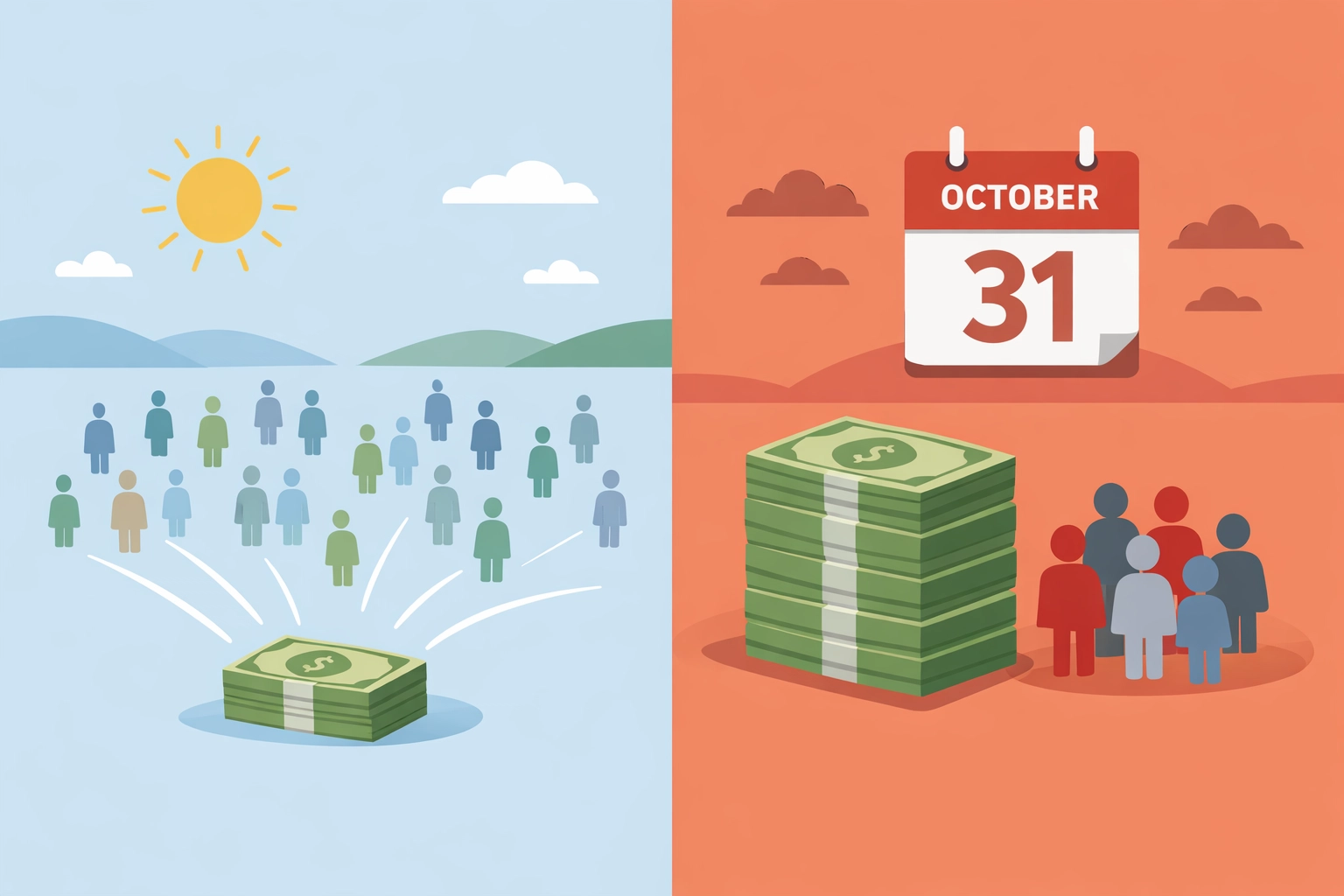
Locking in Lower CPMs- Spring and summer CPMs are a fraction of October rates. The same budget that reaches 100,000 voters in October might reach 300,000 voters in June. That's not exaggeration: that's the reality of political advertising seasonality.
Creating Voter Relationships- Multiple touchpoints over months create familiarity and trust. Voters who've been seeing your candidate's message since spring feel like they know them. October-only campaigns feel like strangers asking for something.
The Cost Reality Nobody Talks About
Let's get specific about the financial advantage of always-on campaigns.
In March through July, display CPMs for political campaigns typically run $3-8. CTV sits around $15-25. These are manageable rates that allow your budget to work efficiently. Come October? Those same placements jump to $10-25 for display and $40-80+ for CTV. You're paying 3-4x more for the same impression.
This means a $10,000 October budget delivers roughly the same reach as a $3,000 June budget. Let that sink in. By waiting, you're essentially throwing away two-thirds of your buying power.
And it's not just about CPMs. October inventory gets picked over fast. The premium placements, the high-value audiences, the contextually relevant sites: they're already booked by campaigns that started early. You're left fighting for scraps at premium prices.
Our AI optimization becomes even more critical in this environment. When you're running always-on campaigns through Turn It Blue Ads, our technology is constantly analyzing performance and shifting budget to what's working. Over months, this creates massive efficiency gains that October-only campaigns simply can't achieve.
"But We Don't Have Budget Until Fall"
We hear this constantly: and it's exactly why we built our platform the way we did.
You don't need a $50,000 war chest to start an always-on campaign. Our $500 minimum means even the smallest local campaigns can maintain visibility year-round. And with no long-term contracts, you have complete flexibility to scale up or pause as your fundraising allows.
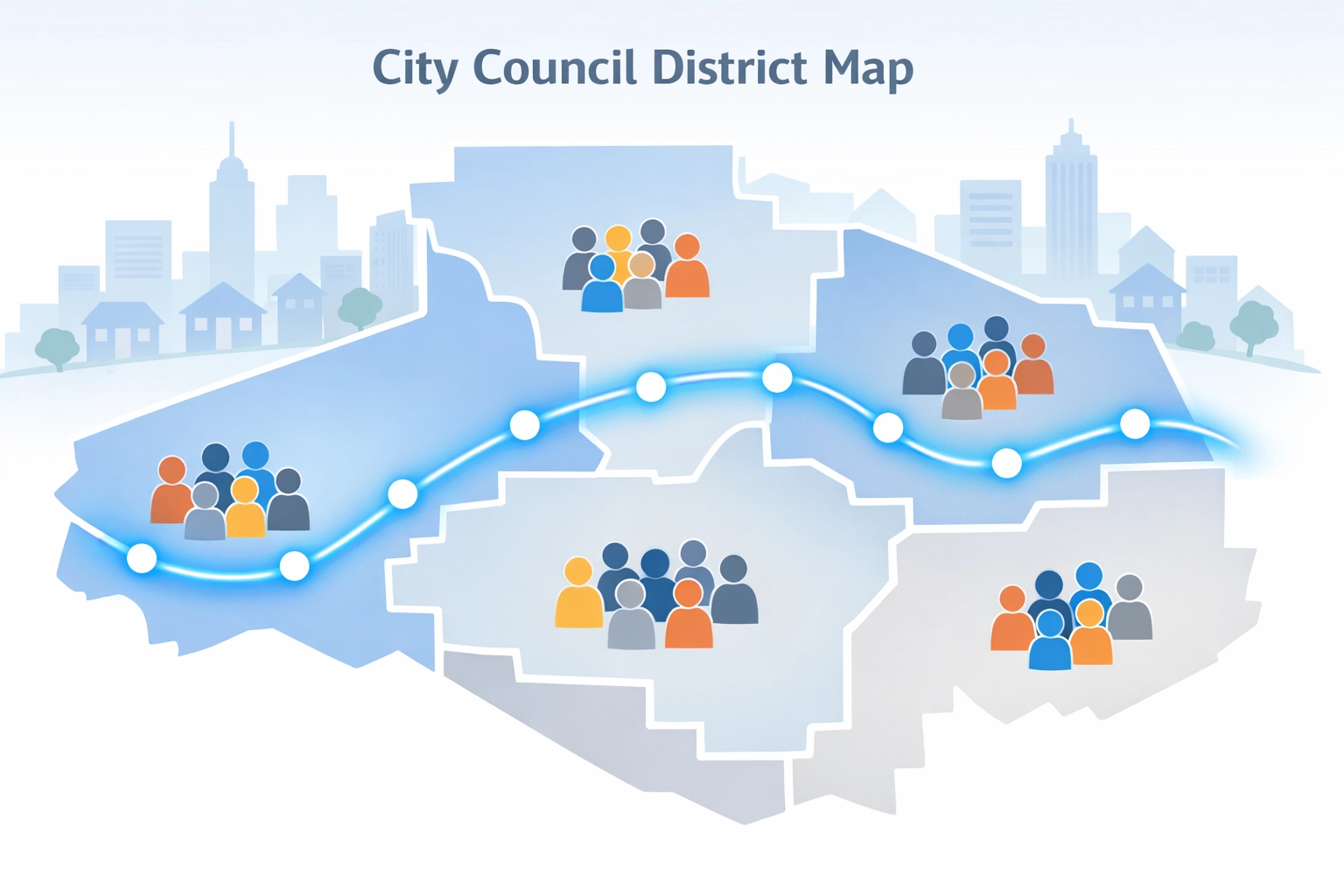
Here's a realistic scenario: A city council campaign starts with $500/month in May. That's $3,000 total before October: but it buys consistent presence with local voters over five months. Come fall, they scale up to $3,000/week for the final push. Total spend isn't higher than an October-only campaign, but the impact is dramatically greater because you've built foundation awareness.
This isn't about having unlimited resources. It's about using limited resources strategically. The campaigns that win aren't always the ones with the biggest budgets: they're the ones that maximize efficiency and timing.
Remember: You're competing on strategy and targeting, not just raw dollars. A well-targeted always-on campaign with modest budget will outperform a poorly planned October blitz with twice the money. Our platform's AI optimization makes smaller budgets punch way above their weight by ensuring every dollar goes to the highest-performing placements and audiences.
Making Always-On Work for Your Campaign
Starting an always-on approach doesn't require rebuilding your entire campaign strategy. Here's how to make the shift:
1. Start with Core Messaging- Even if you only have $500-1,000 to spend monthly in the early months, use it to establish your candidate's core message and values. Name recognition with your base is the foundation everything else builds on.
2. Focus on Your Universe- Don't try to reach everyone early. Target your likely voters and persuadables with precision. Broad reach comes later: early months are about building relationships with the voters who matter most to your pathway to victory.
3. Let AI Do the Heavy Lifting- Our platform's optimization means you're not constantly managing campaigns manually. Set your targets, provide creative, and let the technology find the most efficient ways to reach voters. It learns and improves continuously over the campaign cycle.
4. Scale Strategically- Plan a budget curve that maintains presence year-round but scales significantly in the final months. Think of it as a steady baseline with an October crescendo: not silence until October chaos.
5. Test Everything Early- Use lower-cost early months to A/B test creative, messaging, and calls-to-action. By October, you'll know exactly what works instead of guessing when CPMs are highest.
The Competitive Edge You Can't Ignore
Here's what happens when your opponent runs October-only and you've been running always-on:
They spend October introducing themselves to voters who already know and recognize your candidate. They're building name ID at 3x the cost while you're reinforcing an established narrative. They're testing messaging blind while you're optimizing based on six months of performance data. They're hoping their ads break through the October clutter while your candidate is already part of the voter's consideration set.
The always-on advantage isn't subtle: it's the difference between being known and being invisible until it's too late.
And with modern political campaigns, you can't afford to miss this opportunity. Digital advertising made year-round visibility accessible to campaigns at every level. The technology exists. The targeting capabilities exist. The affordable entry points exist. The only question is whether you'll use them strategically or stick with the old October-burst model that wastes money and opportunity.
Get Started Before Your Opponent Does
The best time to start an always-on campaign was three months ago. The second best time is today.
With Turn It Blue Ads, you can launch with just $500 and no long-term commitment. Our AI-powered platform handles the optimization complexity while you focus on winning votes. And you'll be working with the 2025 C&E Award-winning team that helped campaigns achieve an 85% win rate.
Don't let October catch you flat-footed with sky-high CPMs and zero name recognition. Start building your always-on advantage now: because your opponent might already be three months ahead.
The campaigns that win in 2026 won't be the ones that spend the most in October. They'll be the ones that spent smart all year long.
Share this Content!