

7 Measurement Mistakes You're Making with Political CTV Ads (and How to Fix Them)
7 Measurement Mistakes You're Making with Political CTV Ads (and How to Fix Them)
![[HERO] 7 Measurement Mistakes You're Making with Political CTV Ads (and How to Fix Them)](https://cdn.marblism.com/V-EBhDxECqb.webp)
You’ve spent weeks perfecting the creative. You’ve got a powerful message about reproductive rights or economic justice that moves people. You hit "launch" on your Connected TV (CTV) campaign, and then... you wait.
For many Democratic and progressive campaigns, running CTV ads feels a lot like shouting into a very expensive, very high-definition void. You know the ads are running, but are they reaching the right people? Are they actually moving the needle, or are you just "nickel and diming" your budget into the pockets of media middlemen?
In the 2026 cycle, where total political ad spend is projected to hit $10.8B—and CTV accounts for approximately $2.5B of that, you can't afford to guess. At Turn It Blue Ads, we’ve seen what happens when campaigns get measurement right: and we’ve seen the disastrous waste when they don't. Our team was honored with the 2025 Reed Award for Best Political Service Team by Campaigns & Elections , and that’s because we focus on the data that actually wins races. Want the full breakdown? Check out our guide: The 2026 Political Ad Spend Guide: Why Programmatic + CTV are Dominating a $10.8B Cycle.
If you want to join the 85% of campaigns that win by starting early and measuring correctly, you need to stop making these seven common mistakes.
1. Relying on "Stale" Voter Data
The biggest mistake you can make in 2026 is using a voter file that hasn't been updated since the midterms. People move, their priorities change, and their political leanings shift. If you are targeting based on a static list from six months ago, you are wasting money on households that no longer exist or voters who have already moved into the "decided" column.
The Fix: Prioritize high-velocity data. We prioritize Tunnl data and targeting because it allows you to reach voters based on current issues and real-time sentiments rather than just a party registration from four years ago. Tunnl’s micro-targeting ensures you’re talking to the people who are actually moveable today, not the version of them that existed in 2022.

2. Ignoring the "Frequency Skew"
Have you ever been watching a game and seen the same political ad during every single commercial break? By the fourth time, you aren't persuaded: you’re annoyed. Research shows that in recent cycles, 20% of households received over 80% of all political ad impressions.
This is a failure of frequency capping. If you aren't measuring and controlling how often a specific household sees your ad, you are effectively burning your budget to harass your most loyal supporters while ignoring the swing voters you actually need.
The Fix: Set frequency caps across your entire buy. Our meta-DSP technology allows you to manage frequency across multiple streaming apps and devices, ensuring your message stays fresh without becoming a nuisance. Our ad platform automatically sets frequency caps for the user to ensure the best reach and frequency metrics best practices.
3. Measuring Success via CPM Alone
A low CPM (Cost Per Thousand impressions) looks great on a spreadsheet, but it’s often a "vanity metric." If you’re paying $15 CPM for "broad reach," you might be showing ads to people who can't even vote in your district.
Here’s the reality: Cheap impressions are usually cheap for a reason. They often lack the premium placement or the targeting precision required for a political win.
The Fix: Shift your focus from "how cheap are these ads?" to "how effective is this reach?" You need a CTV CPM reality check to understand what quality inventory actually costs. It’s better to pay a slightly higher CPM for a 100% verified voter in a swing precinct than a rock-bottom CPM for a "random viewer" who might be a teenager or a non-citizen.
4. Treating CTV as an Isolated Island
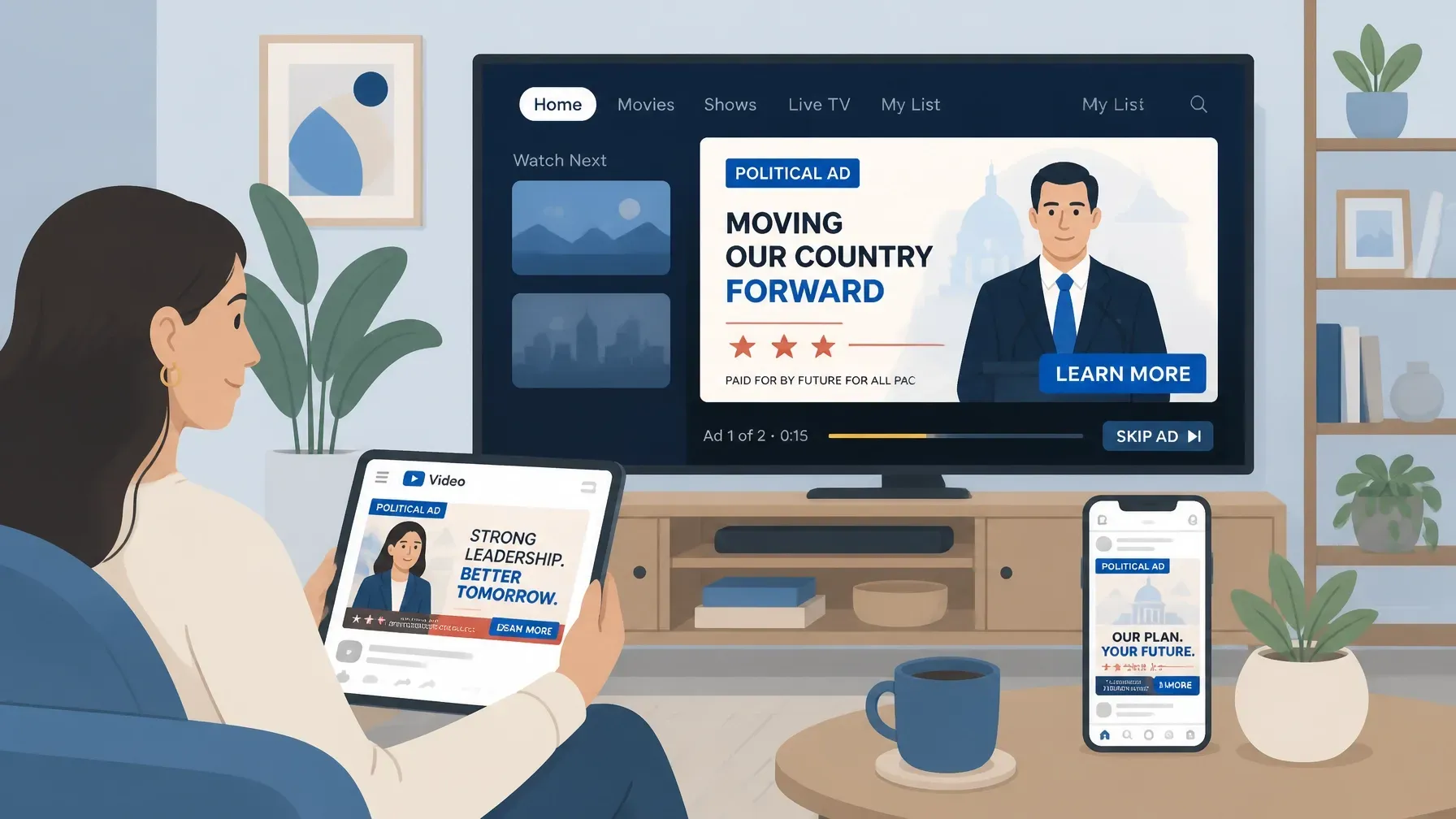
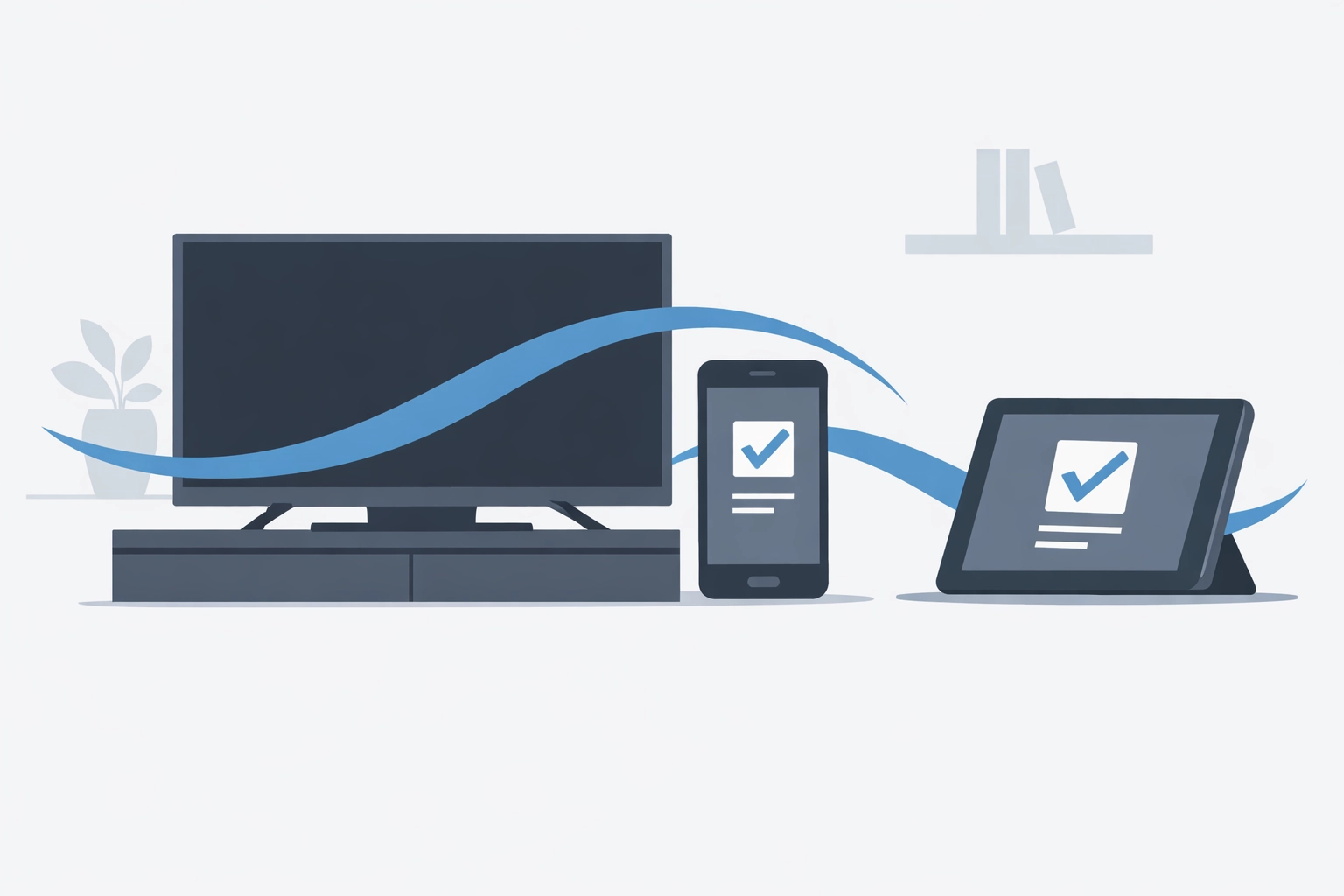
Voters don’t live on just one screen. They see your ad on their 65-inch Roku, then they browse the news on their phone, and then they check their email on a laptop. If you are measuring your CTV performance in a vacuum, you’re missing the "halo effect" that digital advertising provides.
The Fix: Use a cross-device playbook. We look at how CTV retargeting works in tandem with mobile and desktop ads. When a voter sees your CTV ad, they should be retargeted with a follow-up display ad or a YouTube pre-roll to reinforce the message. Measurement should track the entire journey, not just the first click.
5. Waiting for "Post-Campaign" Reports
If you receive a PDF report of your campaign’s performance two weeks after the election, it’s a post-mortem, not a strategy. Too many agencies treat reporting as a chore to be completed once the money is spent. In a fast-moving political cycle, if you wait until the end of the month to see what worked, you’ve already lost.
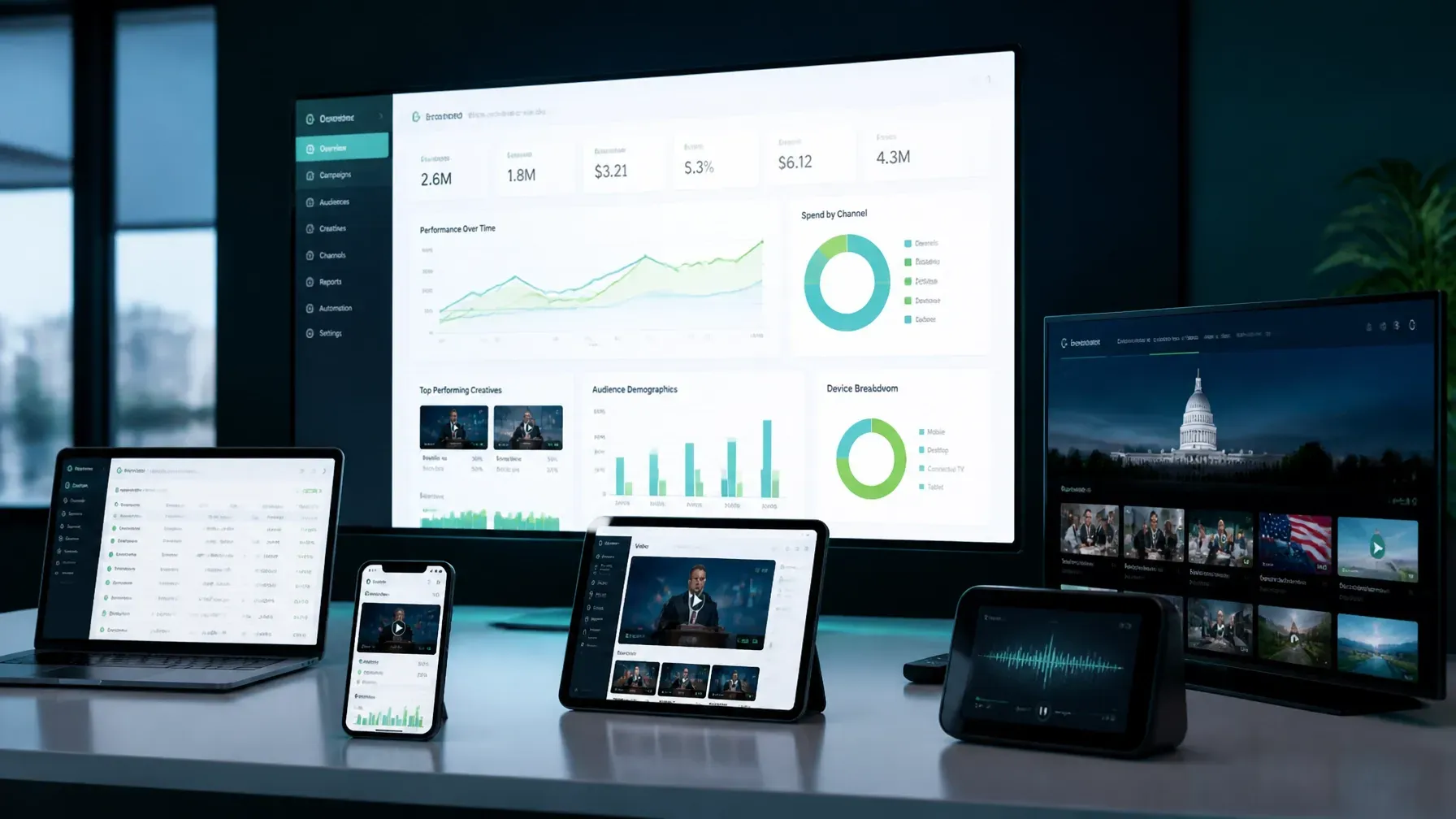
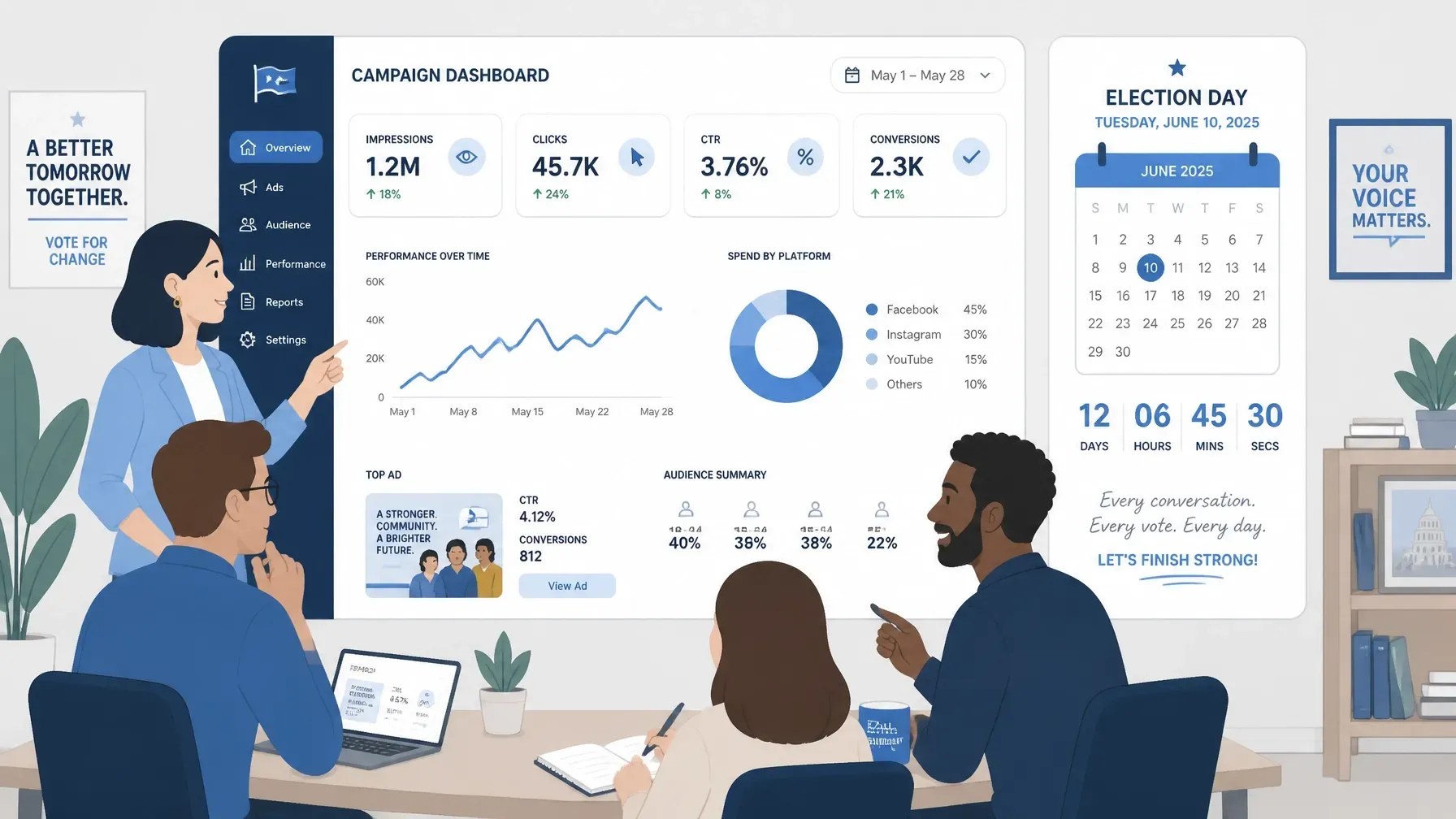
The Fix: Demand real-time insights. At Turn It Blue Ads, we provide real-time reporting dashboards that solve these measurement headaches instantly. You can see which creatives are performing, which audiences are engaging, and where your budget is going right now. This allows for mid-flight optimizations: the difference between a winning campaign and a "close second."
6. Over-Reliance on Broad Demographics
Nearly 30% of marketers still prioritize age, gender, and income for CTV. But guess what? Two 45-year-old women living in the same zip code with the same income can have diametrically opposed views on climate change. Demographic targeting is a blunt instrument in a world that requires a scalpel.
The Fix: Move to issue-based targeting. Using Tunnl segments, you can target "Pro-Choice Independents" or "Swing Voters Concerned About Infrastructure." This is far more effective than just targeting "Women 35-50." 💥 Targeting the intent, not just the identity, is the key to persuasion. 💥
7. Falling for the "Middleman" Trap
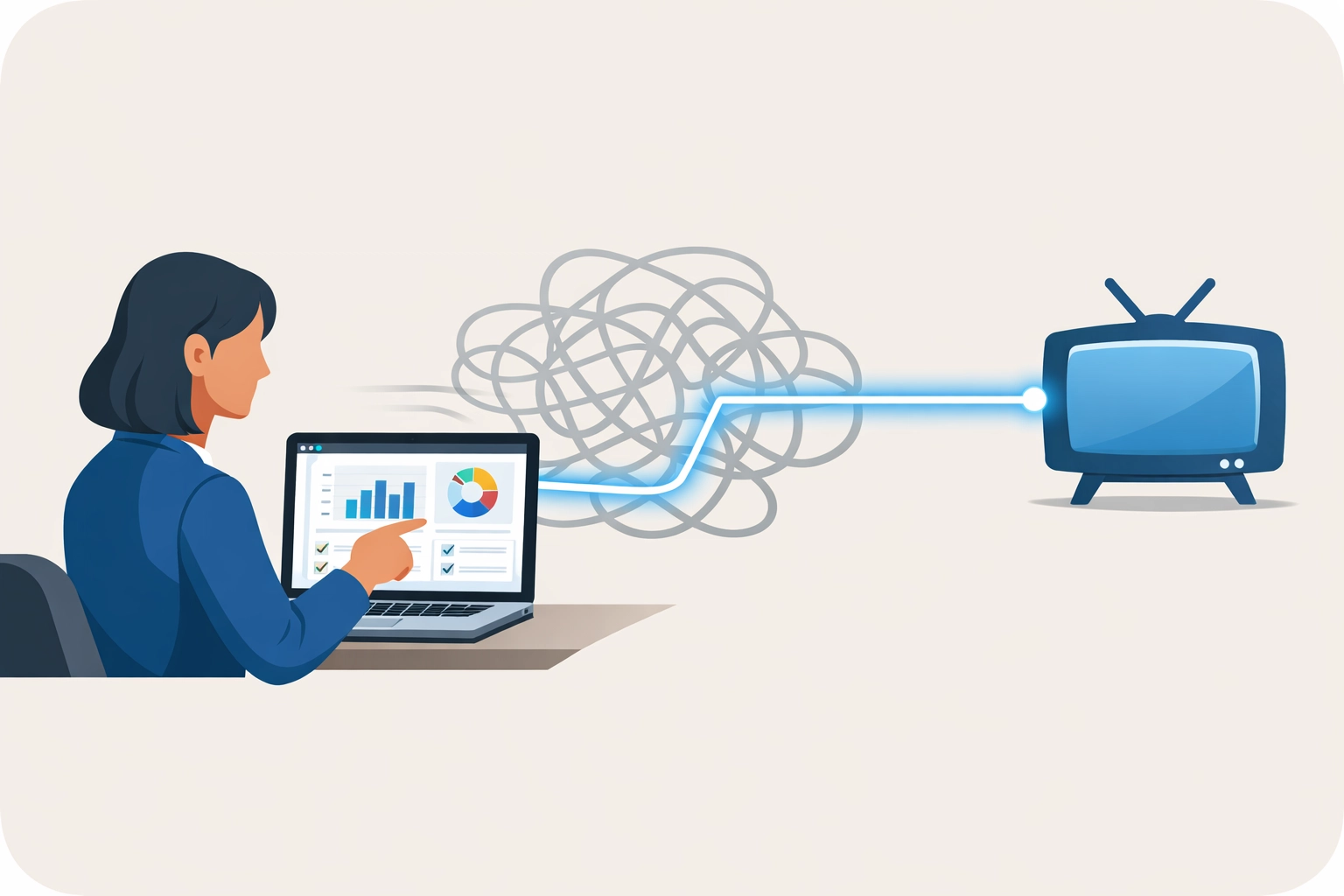
Many campaigns think they need a massive agency with a six-figure monthly retainer just to get onto CTV. These middlemen often add "hidden fees" to the CPM and provide zero transparency into where the ads actually play.
The Fix: Use a self-serve platform. Turn It Blue Ads offers a meta-DSP that provides institutional-grade technology with no contracts and no middlemen. You can start your digital ad plan with as little as a $500 minimum. This empowers even the smallest local campaigns to compete on the big screen with the same precision as a Presidential race.
Why Efficiency is Your Secret Weapon
You don’t need a million-dollar budget to win. In fact, we’ve found that smaller campaigns can be more effective because they have to be more disciplined with their targeting. When every dollar counts, you can't afford to "spray and pray."
By avoiding these seven mistakes, you ensure that your campaign isn't just spending money: it's building power.
Key Takeaways for Your 2026 Strategy:
- Start Early: We see an 85% win rate for campaigns that get their digital infrastructure in place early in the cycle.
- Trust the Data: Stop guessing and start using Tunnl issue-based segments.
- Demand Transparency: If you can't see your data in a real-time dashboard, you aren't in control of your campaign.
- Keep it Simple: Use modern campaign tools that allow for self-serve ease and quick execution.
Ready to Stop Shouting into the Void?
The 2026 cycle is going to be the most competitive digital landscape in history. Don’t let your message get lost in the noise because of poor measurement or outdated technology.
Whether you are running for School Board or Senate, our team is ready to help you navigate the complexities of CTV and digital advertising. As the Best Political Service Team of 2025, we know exactly what it takes to get your ads in front of the right voters at the right time.
Start Your Digital Ad Plan Today!
Don't wait until the airwaves are crowded and the prices skyrocket. Take control of your measurement, master your targeting, and turn your district blue.
Want to dive deeper? Check out our guide on YouTube Ads vs. CTV to see which platform is the best fit for your specific goals this cycle.
Share this Content!