Beyond the Walled Garden: Why Programmatic + CTV are the New Essentials for 2026 Campaigns
Beyond the Walled Garden: Why Programmatic + CTV are the New Essentials for 2026 Campaigns
![[HERO] Beyond the Walled Garden: Why Programmatic + CTV are the New Essentials for 2026 Campaigns](https://cdn.marblism.com/tX11BfoiEu7.webp)
Here's a question for you: When was the last time you actually stopped scrolling on Facebook to watch a political ad?
If you're struggling to remember, you're not alone. And if you're still sinking campaign dollars into Meta's walled garden, Facebook and Instagram, expecting breakthrough results, it's time we had a frank conversation about where the digital advertising landscape is actually heading in 2026.
The era of relying on social media platforms as your primary voter contact strategy is over. Not because social doesn't work at all, but because there are now demonstrably better ways to reach voters where they're actually paying attention, and where your message won't get buried under a mountain of cat videos and misinformation.
The Walled Garden Problem
Let's talk about what you're really getting when you advertise on Meta platforms.
First, there's the algorithm. It changes constantly, prioritizes engagement over everything else, and treats political content like a liability rather than an opportunity. Your carefully crafted message about healthcare or climate policy? It's competing with engagement-bait videos and viral memes for attention, and the algorithm isn't doing you any favors.
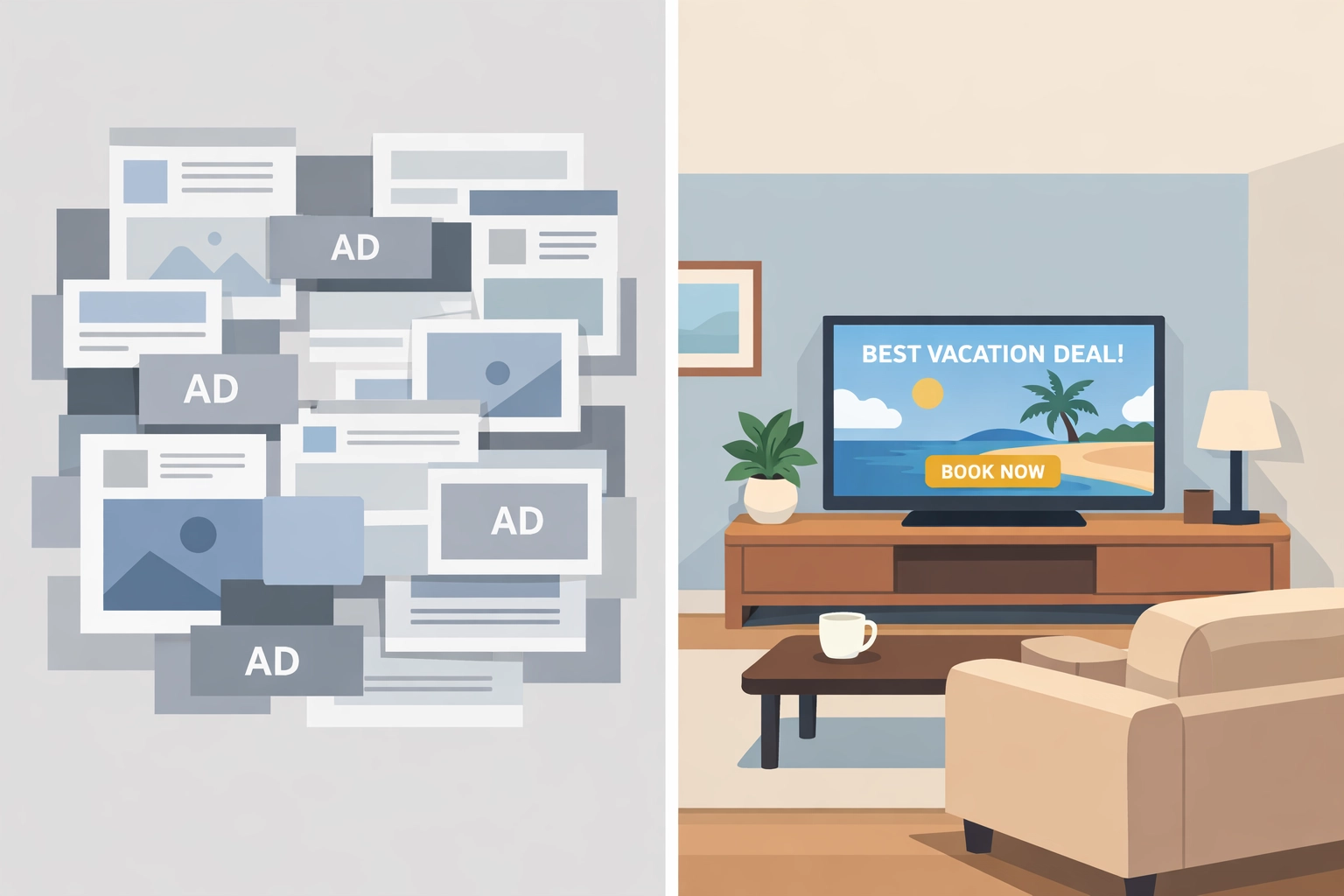
Then there's the noise. During election cycles, Facebook and Instagram become absolutely saturated with political content. Every campaign, PAC, advocacy group, and random person with an opinion is fighting for the same limited attention span. Your ad becomes just another post users scroll past while waiting in line at the grocery store.
Meta's restrictions on political advertising have only gotten tighter. More disclosure requirements. More approval delays. More limitations on targeting capabilities. And all of this happens inside a black box where you get limited visibility into who's actually seeing your ads and what they're doing after they see them.
Here's the kicker: You don't own any relationship with the voters you reach on these platforms. Meta does. You're renting access to an audience, playing by rules that change without notice, and hoping the algorithm decides your message is worthy of distribution.
Why Programmatic + CTV Changes Everything
Programmatic advertising and Connected TV aren't just alternatives to social media, they're fundamentally different approaches that give you back control, precision, and measurable impact.
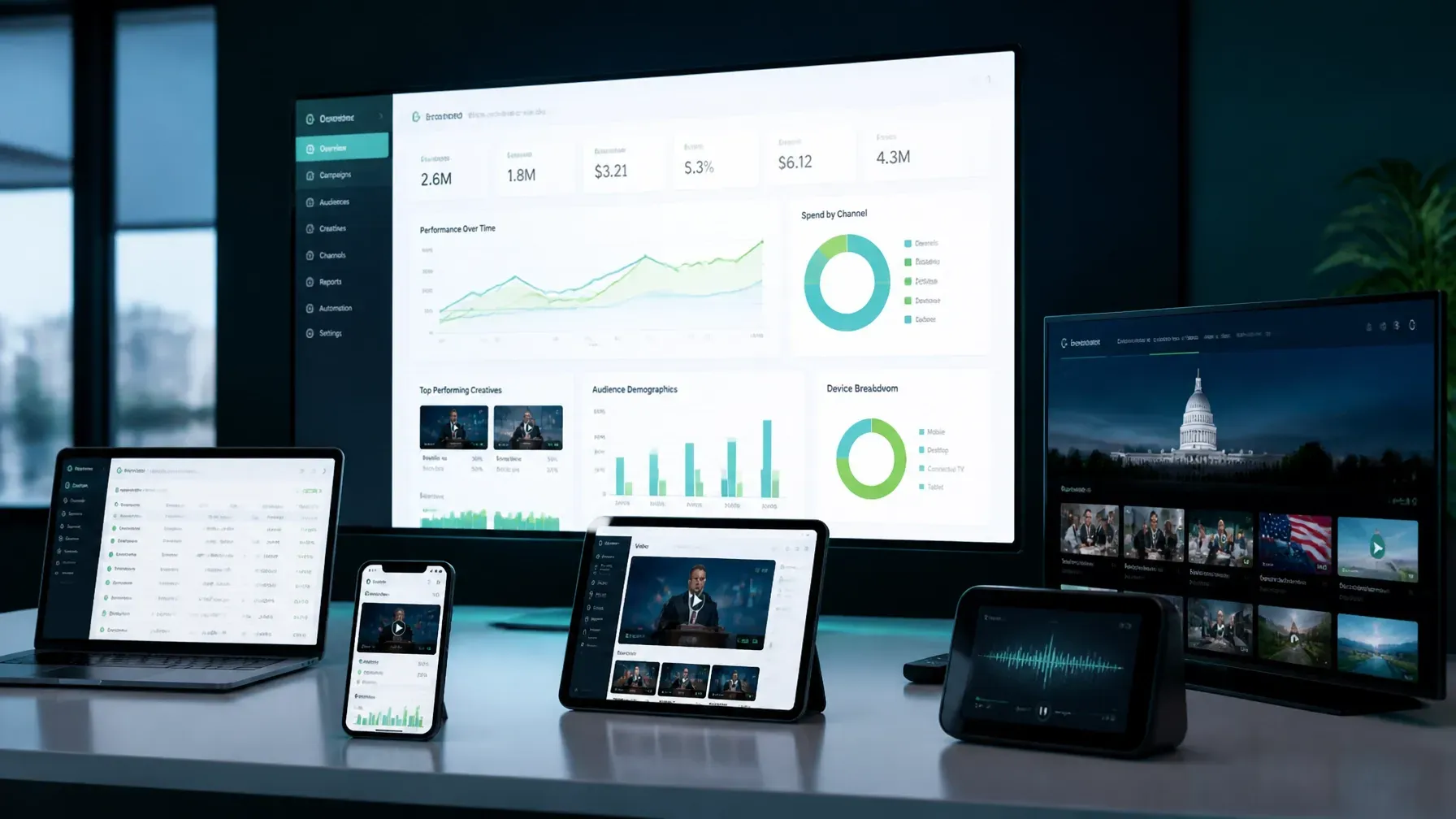
Let's start with what programmatic actually means for your campaign. Instead of being locked into a single platform's ecosystem, you're buying ad space across the entire open internet. Display ads on news sites. Video pre-rolls on streaming content. Audio ads on podcasts. And yes: premium Connected TV inventory on platforms like Hulu, Peacock, Pluto TV, and Roku.
Over 90% of CTV advertising is now transacted programmatically, and for good reason. It works. And it's no longer just for presidential campaigns with eight-figure budgets. With platforms like Turn It Blue Ads, you can launch programmatic campaigns: including premium CTV: starting at just $500.
Here's why this matters for Democratic campaigns specifically: You can target voters based on actual voter file data from trusted data partners Tunnl and L2, not just Meta's approximation of who might care about progressive issues. You're reaching registered Democrats in your district while they're watching Hulu on their living room TV: not scrolling past your ad while half-watching Instagram stories.
The Living Room vs. The Feed
Think about the difference between these two scenarios:
Scenario 1: A voter is scrolling through Facebook during their lunch break. They see 47 different posts in three minutes: friends' photos, news articles, ads for jeans, your campaign ad, more friends' photos, a conspiracy theory post they report, another ad. Your message got maybe 1.2 seconds of attention before the scroll continued.
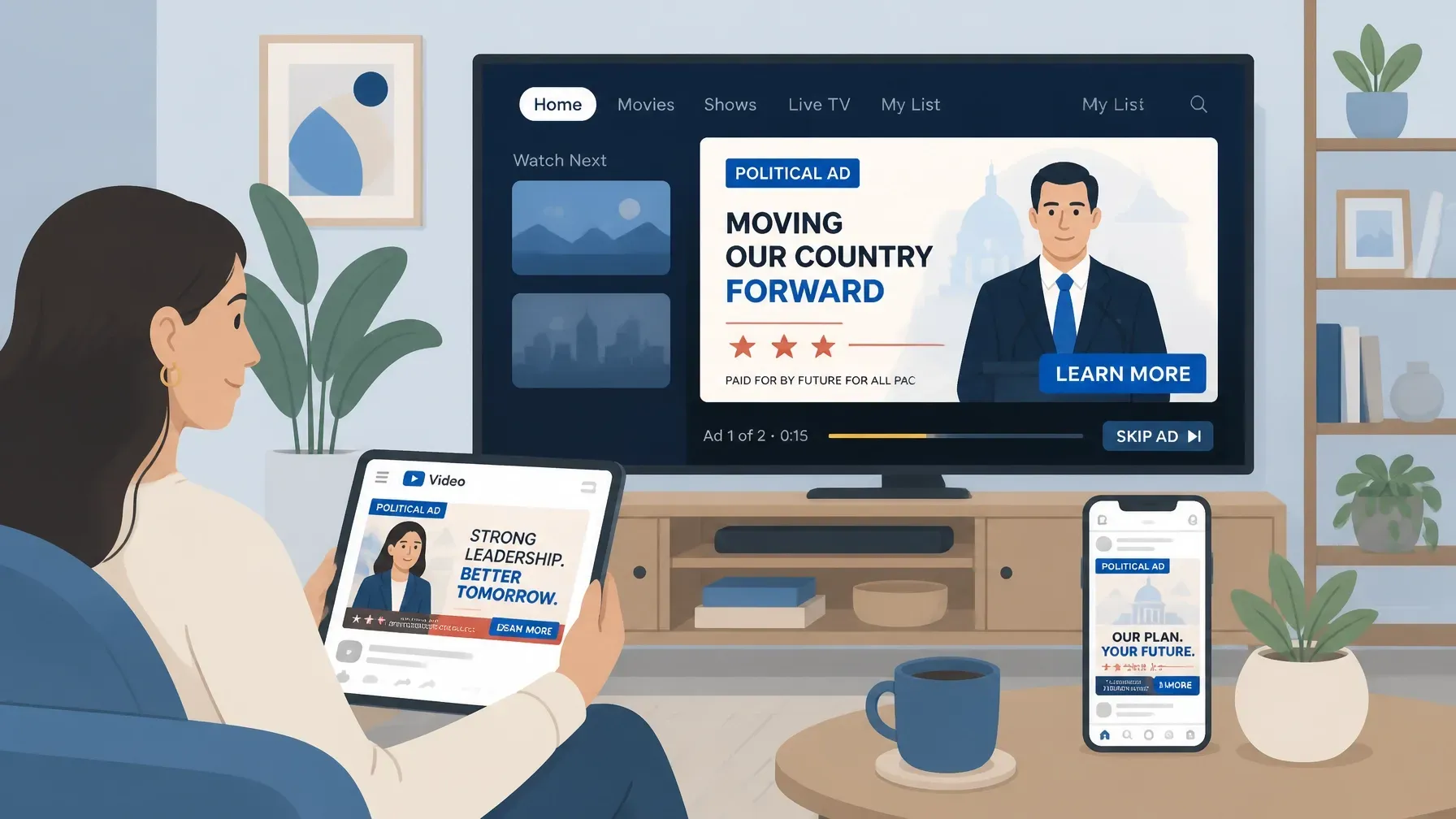
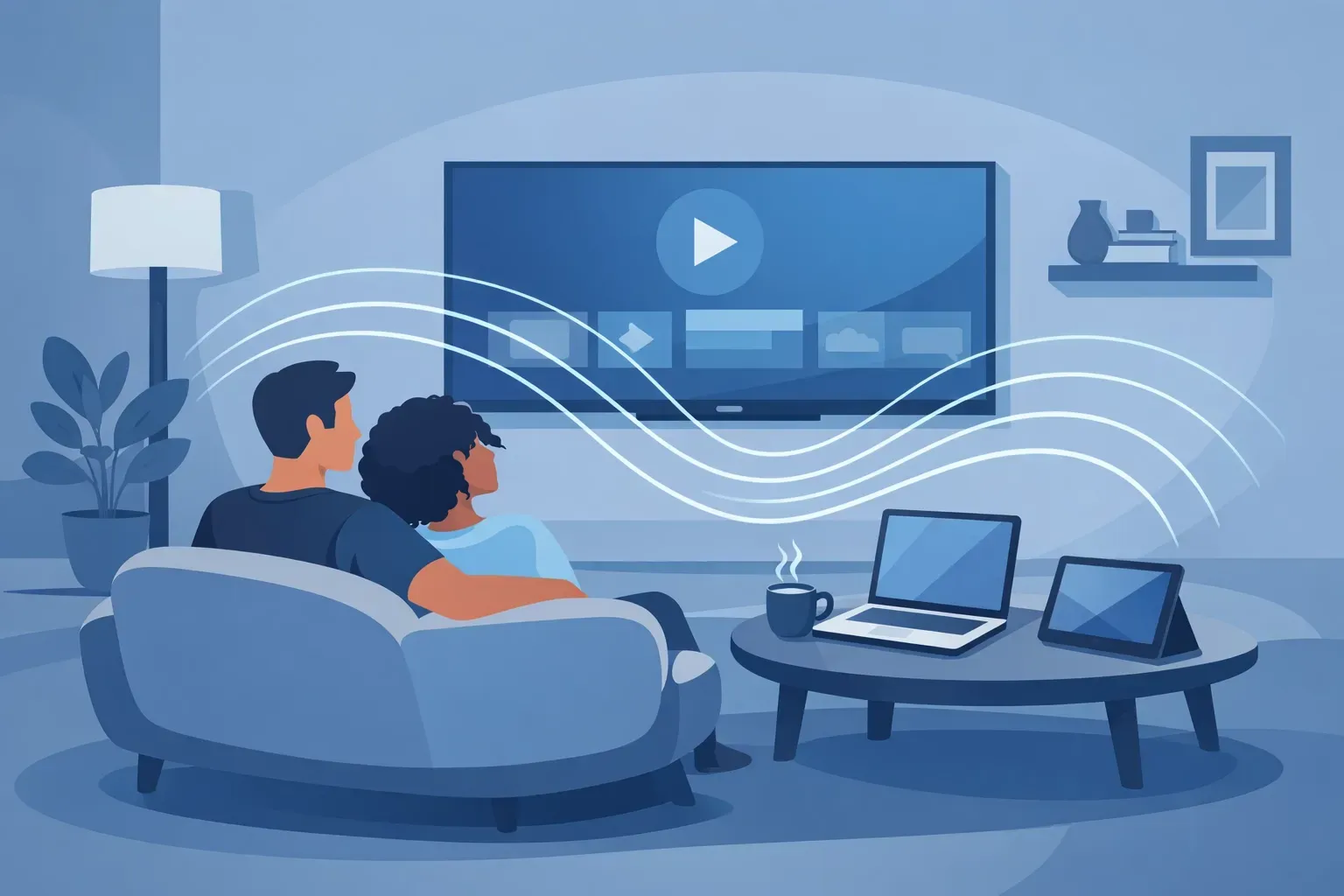
Scenario 2: That same voter is home watching their favorite show on Hulu. Your 30-second CTV ad plays. They're sitting on their couch, remote in hand, but not clicking away because they're engaged with the content. Your message has their full attention for the entire length of the ad.
Which scenario do you think drives more impact?

CTV isn't just reaching voters: it's reaching them in a premium, attentive environment. 53% more purchases happen within 30 minutes of interaction with CTV ads compared to standard digital ads. While that stat is from e-commerce, the principle holds for political actions: donations, volunteer sign-ups, petition signatures. You're catching voters when they have time and mental bandwidth to engage, not when they're mindlessly scrolling.
And here's what makes CTV particularly powerful for down-ballot races: You can target with incredible precision. Not just by geography or demographics, but by specific voter file matches. You're not wasting impressions on Republicans or non-voters. You're reaching persuadable Democrats and likely Democratic voters in your specific district or state.
Data That Actually Delivers
One of the biggest limitations of walled gardens is that you're stuck with their data and their targeting options. Meta can tell you someone "likes" progressive pages or has expressed interest in environmental causes. Great. But do they vote? Are they in your district? Are they actually registered Democrats who turn out in midterms?
Programmatic advertising lets you layer first-party voter data onto your targeting. Through Turn It Blue Ads' partnerships with TargetSmart and L2: the gold standard in Democratic voter data: you can build audiences based on actual voting history, party registration, issue priorities, and predictive models.
This isn't theoretical. Our clients using the platform have an 85% win rate. That's not luck: that's the power of reaching the right voters with the right message in the right environment.
You can create audiences of:
- Infrequent Democratic voters who need motivation to show up
- Persuadable independents in swing districts
- High-propensity voters around specific issues (climate, healthcare, education)
- Donors to similar campaigns who might support yours
And you can reach all of them outside Meta's restrictions, algorithm changes, and noise.
Breaking Free from Election-Cycle Clutter
Here's something every political consultant knows but hates to admit: Social media becomes virtually unusable during peak election season. The amount of political content flooding Facebook and Instagram in the final months before Election Day is overwhelming: for voters and for campaigns trying to break through.
Programmatic + CTV lets you avoid that clutter entirely. While your opponents are fighting over the same saturated social feeds, you're reaching voters on premium streaming platforms where political ad loads are significantly lower. You're in their living room, not their newsfeed. You're part of their entertainment experience, not part of the noise they're trying to escape.

And as more campaigns realize this advantage, the shift is accelerating. Up to 50% of streaming advertisers are expected to shift budgets from search and social to CTV in 2026. This isn't a future trend: it's happening right now. The question is whether you're ahead of the curve or behind it.
The Turn It Blue Ads Advantage
Here's where theory meets practice. Turn It Blue Ads isn't just another ad platform: it's a meta-DSP built specifically for Democratic campaigns, giving you access to the same programmatic technology that enterprise advertisers use, but with a self-serve interface that doesn't require a PhD in ad tech.
You get:
- Direct access to premium CTV inventory (Hulu, Peacock, Pluto TV, Roku, and more)
- Integrated voter file targeting through Tunnl and L2
- Display, video, and audio ads across the open web
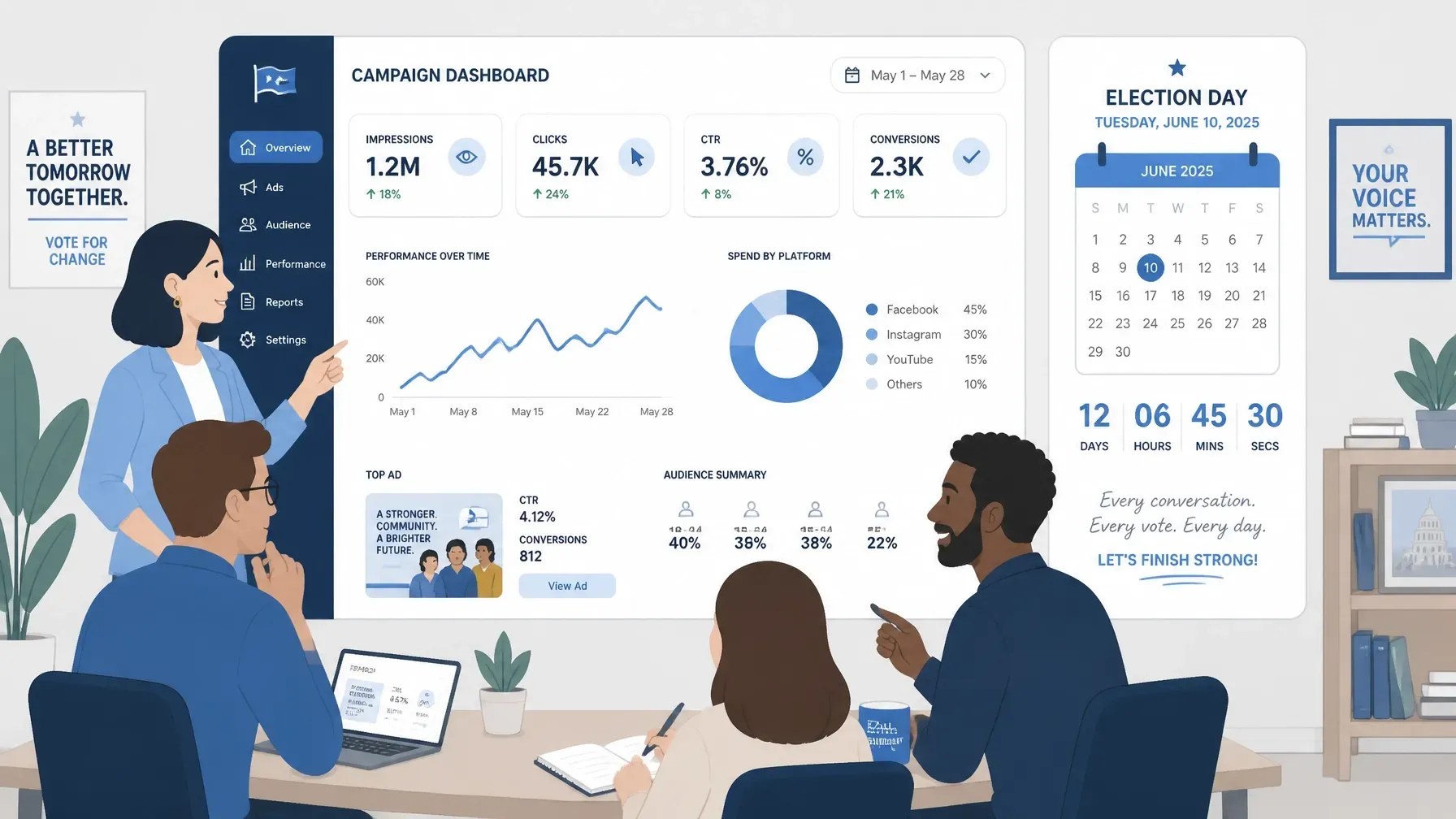
- Real-time reporting and optimization
- Support from a team that won the "Best Political Service Team" award from Campaigns & Elections Magazine last year
You're not locked into a walled garden. You're not guessing who's seeing your ads. You're not competing with algorithm changes or hoping Meta decides to show your content. You're running professional-grade programmatic campaigns with the precision and control that wins elections.
And you can start with as little as $500: no million-dollar budget required. Because while campaigns absolutely compete on resources, you don't need the biggest war chest to win. You need to spend smarter, target better, and reach voters where they're actually paying attention.
The Bottom Line
The walled gardens served a purpose when they were the only game in town. But in 2026, they're not. Programmatic advertising and Connected TV offer better targeting, better environments, better data, and better results: without the limitations, algorithm headaches, and saturation issues that plague social platforms.
Meta isn't going anywhere, and smart campaigns will still maintain a social presence. But treating Facebook and Instagram as your primary paid media strategy? That's 2016 thinking in a 2026 race.
The campaigns that win in 2026 and beyond will be the ones that embrace programmatic + CTV early, test and optimize constantly, and build voter contact strategies around where attention actually lives: not where it used to.
Ready to break free from the walled garden? Start building your programmatic campaign today with Turn It Blue Ads, or schedule a demo to see how our meta-DSP technology can transform your voter outreach.
Your voters are streaming. Your ads should be too!
Share this Content!