How to Avoid the Biggest Political Ad Inventory Pitfalls During the 2026 Surge
How to Avoid the Biggest Political Ad Inventory Pitfalls During the 2026 Surge
![[HERO] How to Avoid the Biggest Political Ad Inventory Pitfalls During the 2026 Surge](https://cdn.marblism.com/ViRH9NLFc0z.webp)
It’s October 2026. Your campaign is in the home stretch. You’ve got the perfect 30-second spot, the tracking polls are tightening, and you’re ready to dump your remaining budget into digital to cross the finish line.
Then you see the invoice. Or worse, you see the "At-Risk Delivery" warning.
The CPMs have tripled. Your ads are showing up on obscure "free" gaming apps instead of the local news. The premium inventory you thought was guaranteed has vanished into the pockets of high-spending national PACs. This is the reality of the 2026 political surge, and if you aren’t prepared, your budget will vanish faster than a candidate's promise on Inauguration Day.
The "Great Squeeze" of 2026 isn't just about price; it's about access. But here’s the good news: you don't need a million-dollar war chest to secure the best seats in the house. You just need to change the way you buy.
The Inventory Scarcity Myth: It’s Not Gone, It’s Just Hidden
Most campaigns think that when the surge hits, the inventory is simply "sold out." That’s rarely true in the world of digital. What’s actually happening is that the "walled gardens" and traditional agencies are prioritizing the highest bidders and the easiest commissions.
When you use a standard, single-source platform, you are competing in a tiny pond. When that pond gets crowded, the price of the water goes up. To survive the 2026 cycle, you need to think bigger. You need to leverage political streaming TV advertising through a system that looks at the entire ocean of inventory, not just one pond.
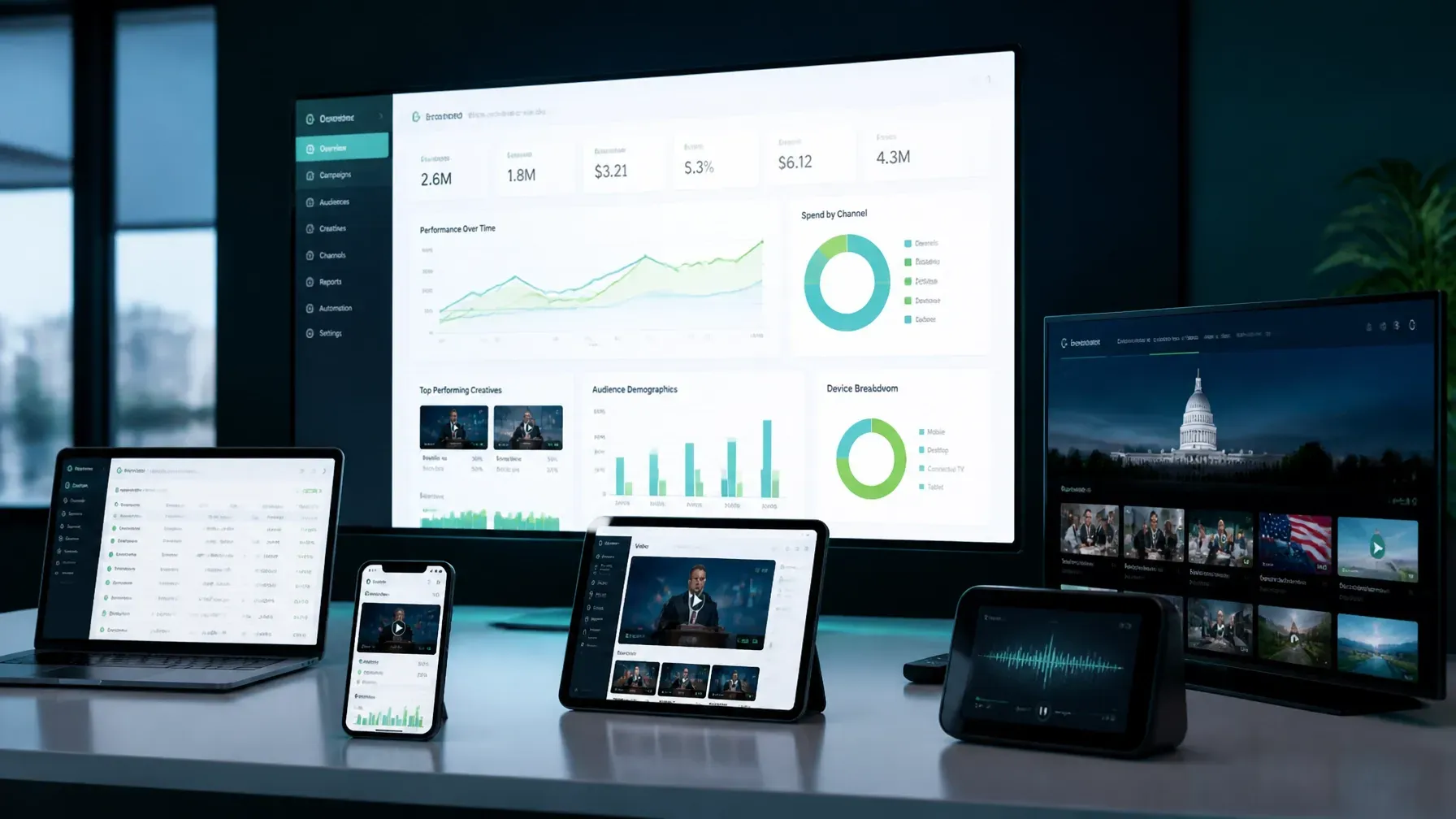
At Turn It Blue Ads, we are a meta-DSP. Think of it as a platform of platforms. Instead of bidding through one demand-side platform, our technology bids and buys across many of them simultaneously in real-time. This allows our users to sidestep the bottlenecks that trap other campaigns and find the hidden pockets of inventory.
Avoiding the "Junk" Trap
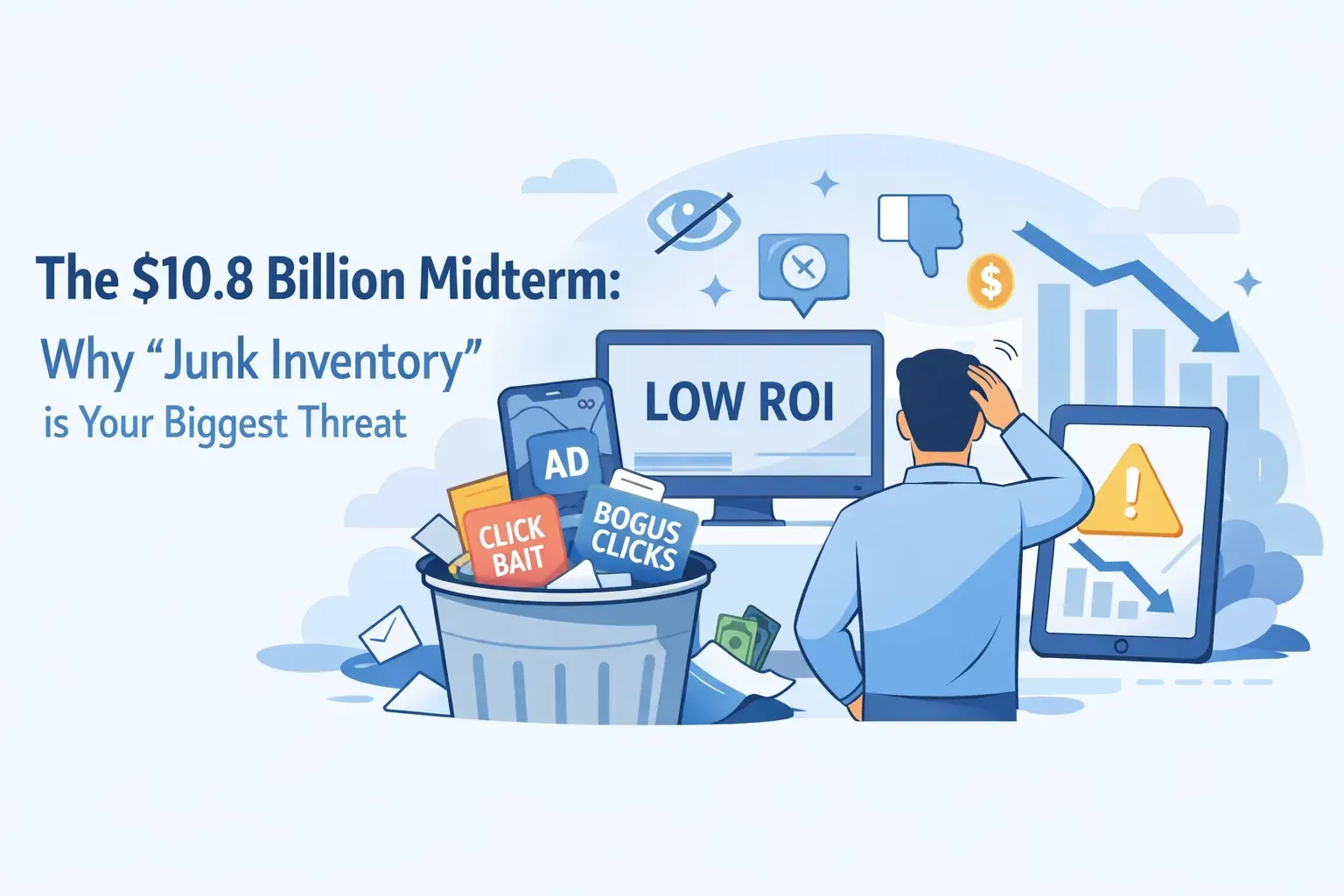
During a surge, many self-serve platforms will still take your money, but they’ll give you "remnant" inventory. This is the digital equivalent of a billboard in the middle of a desert. You might get the impressions you paid for, but no one who matters is seeing them.
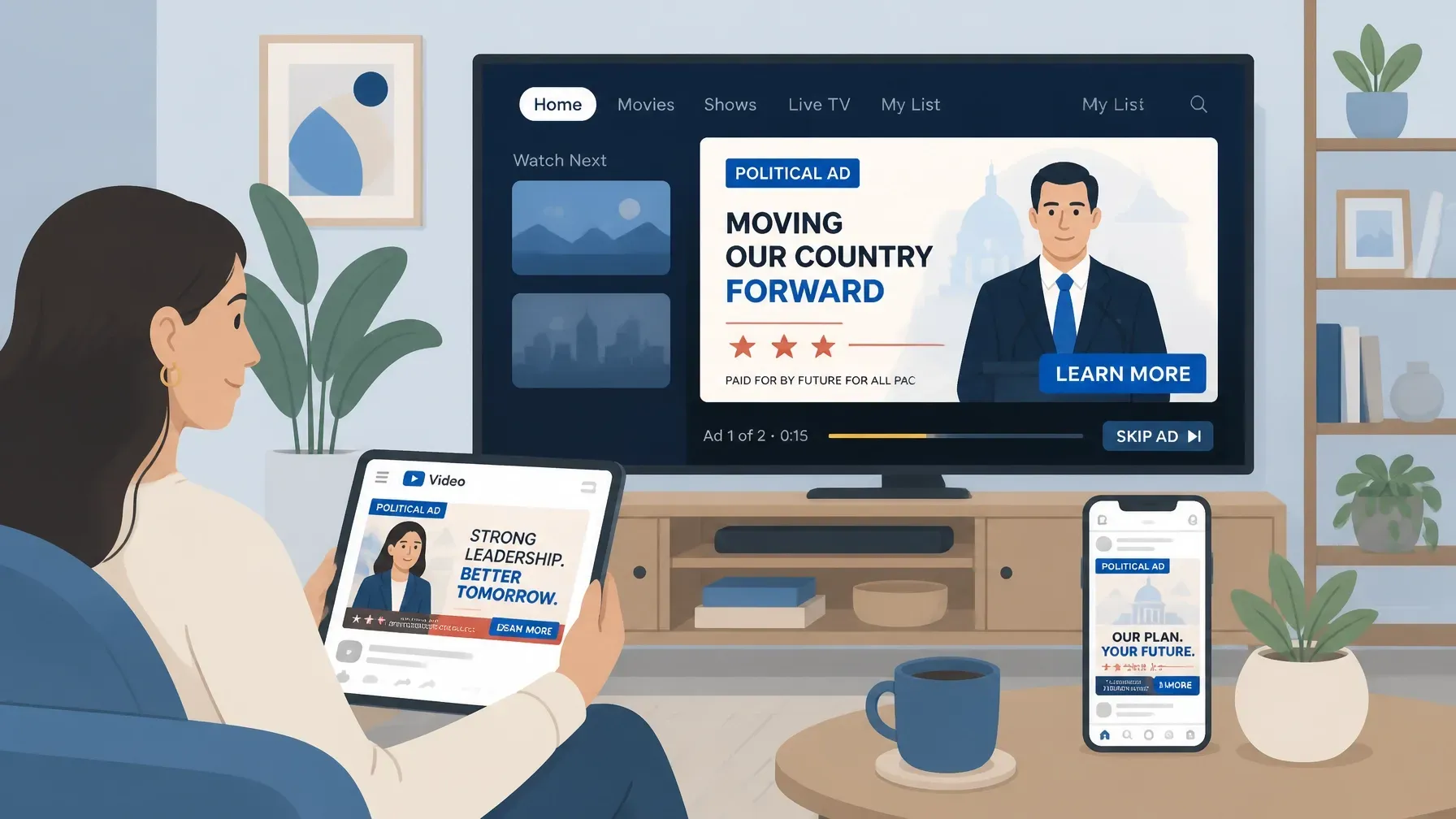
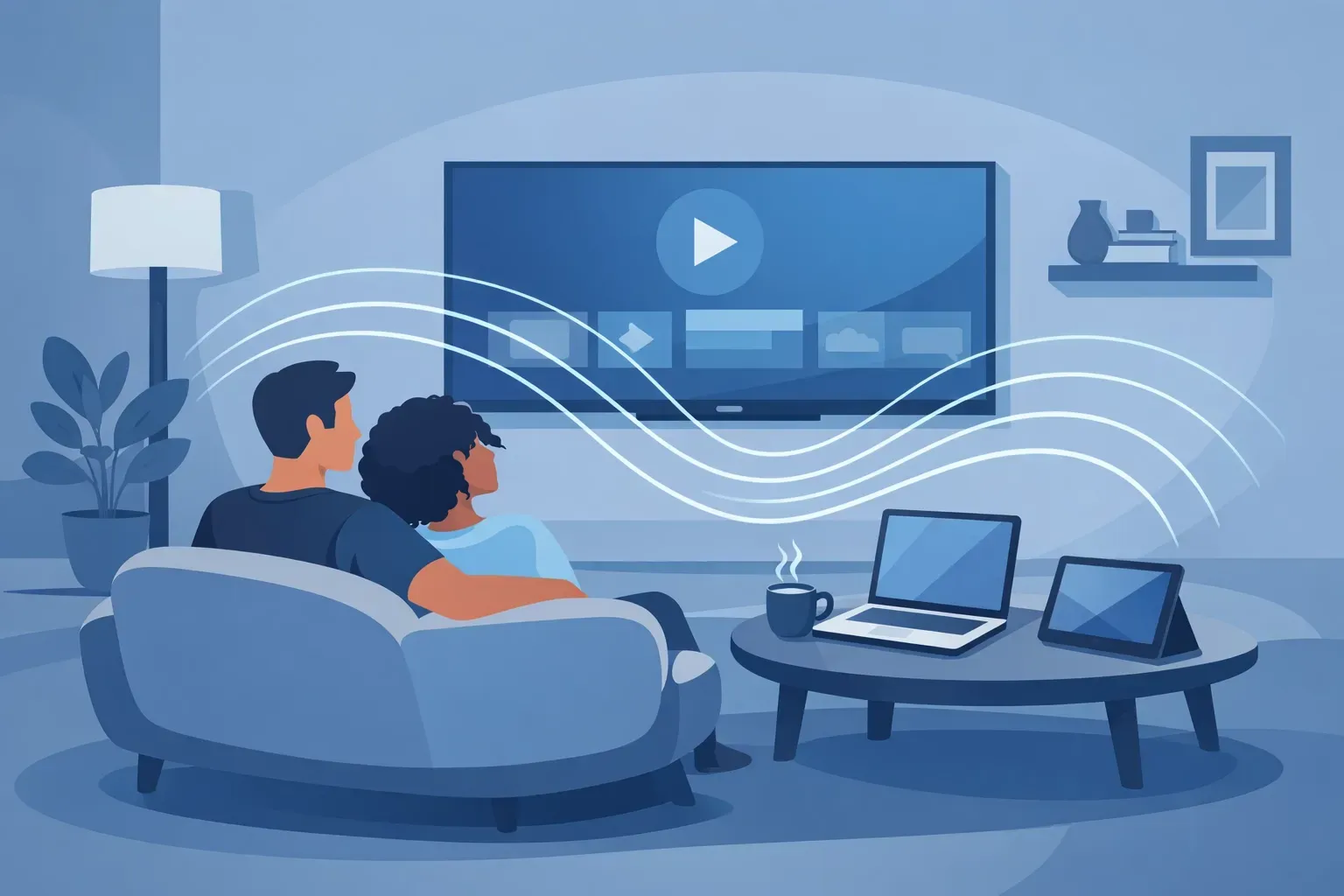
If you want to win, you need to be on the big screens. We’re talking about connected TV advertising for candidates on platforms people actually watch, Hulu, CNN, Roku, and premium live sports.
Here’s why this matters: Premium inventory has higher completion rates and higher trust factors. Voters treat an ad on Hulu differently than an ad that pops up during a game of Candy Crush.

3 Pitfalls That Will Kill Your 2026 Budget (And How to Dodge Them)
1. The "Middleman Tax" and Surge Pricing
Traditional media buyers often add a layer of "management fees" or markups that grow as your spend grows. During a surge, these middlemen are often just as overwhelmed as you are. They can’t pivot fast enough when prices spike.
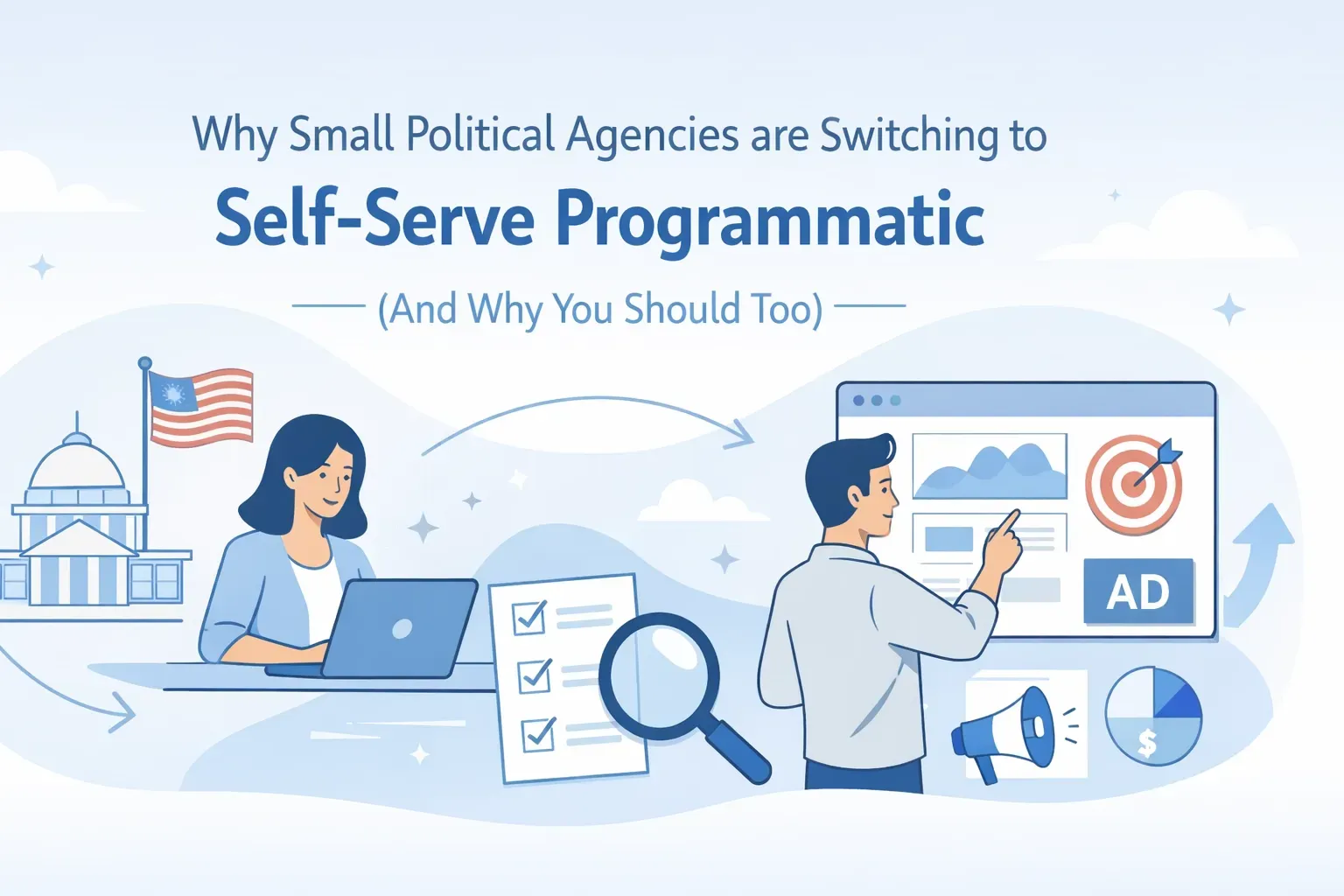
By using self-serve programmatic advertising, you cut out the middleman entirely. You see the real costs, and you control the levers. Our platform was built for the "no-minimums" reality of down-ballot racing. While the big agencies won't pick up the phone for less than $50,000, you can start your digital ad plan with us for as little as $500.
2. Paying to Preach to the Converted
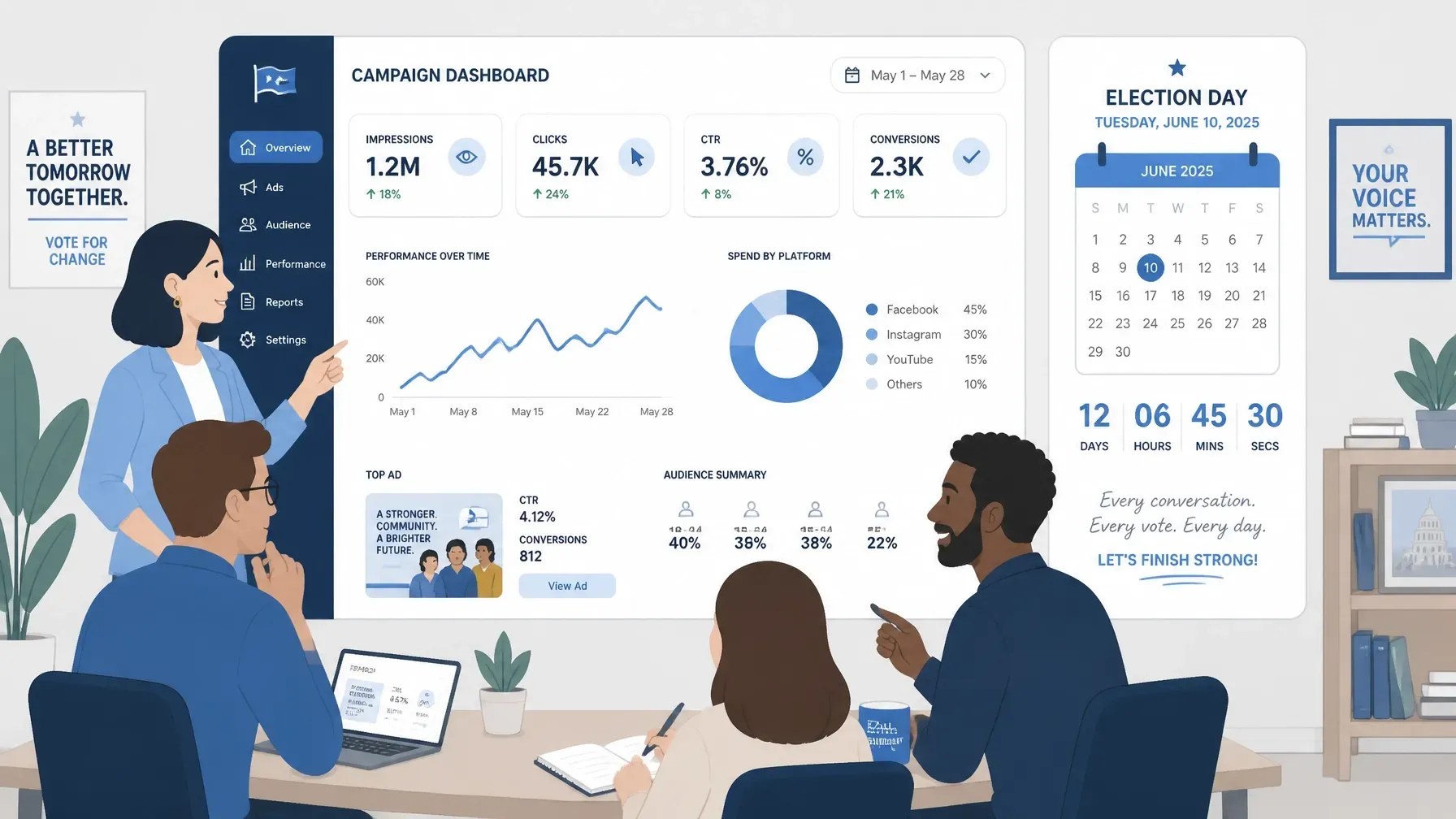
One of the biggest wastes of money in 2026 will be showing ads to people who have already voted. With early voting and mail-in ballots dominating the landscape, a static voter list is a recipe for wasted spend.
The solution? Real-time optimization. You need a platform that can dynamically exclude voters as they cast their ballots. This ensures your 1,000th impression is going to a "persuadable" or a "late-voter," not someone who sent their ballot in three weeks ago. We focus heavily on OTT advertising for political campaigns because it allows for this kind of surgical precision.
3. High CPMs with Low ROI
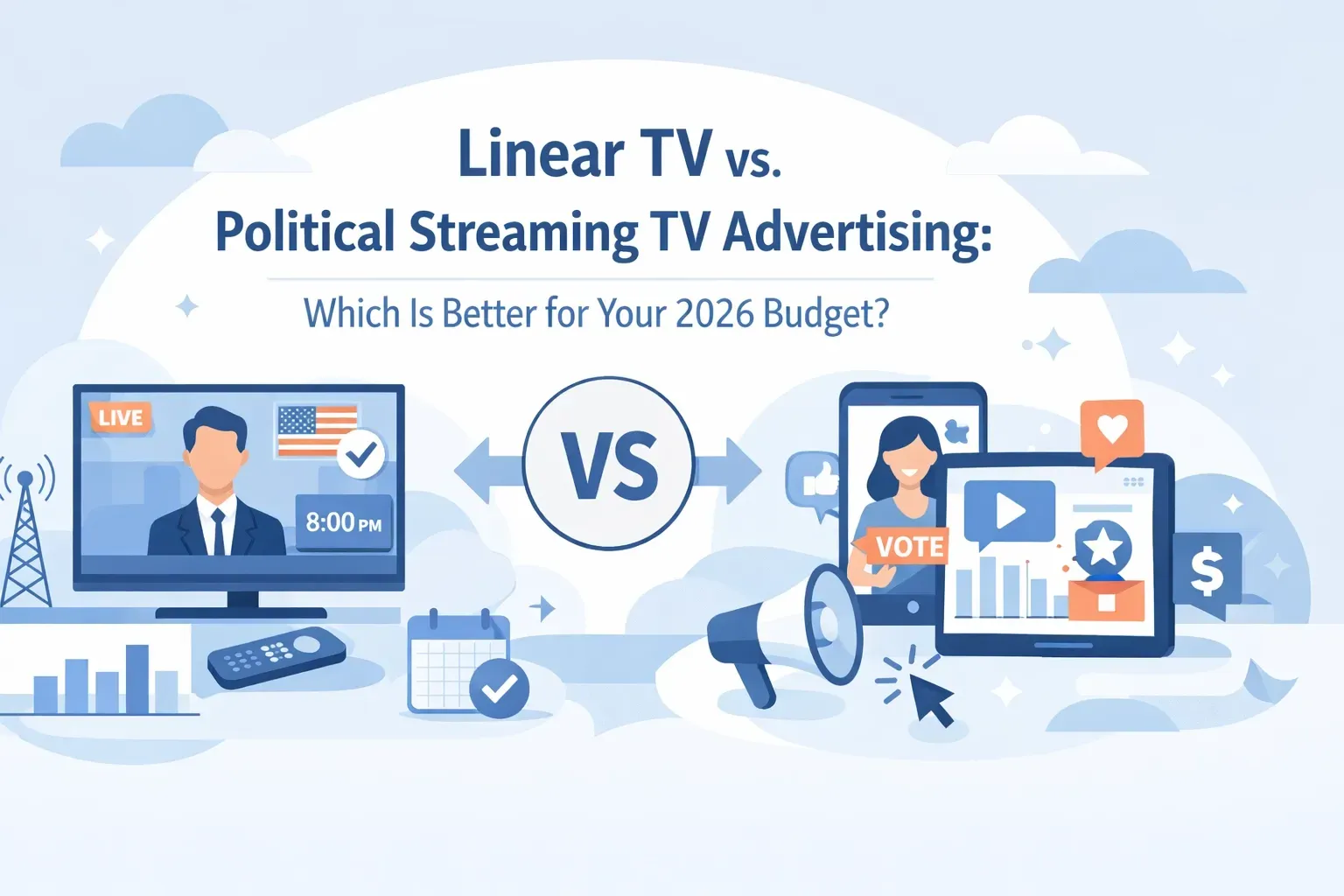
Don't get blinded by a "low CPM." In 2026, a $10 CPM for display ads might seem like a steal compared to a $35 CTV buy. But if those display ads are being served to bots or are hidden below the fold, your actual ROI is zero.
Bottom line: Efficiency is more important than raw volume. You are better off reaching 5,000 high-value voters on their living room TV via a Hulu buy than hitting 50,000 random devices with a banner ad they’ll never notice.
The Power of Better Data: Why We Choose Tunnl & L2 Data
The 2026 surge will be a battle of data. If you’re still targeting by simple party registration, you’re losing. The "swing voter" isn't a monolith; they are people with specific concerns about inflation, local schools, or public safety.
This is why we prioritize data from Tunnl & L2. By using issue-based modeling, we can help you find the voters who actually care about your specific message. Instead of "Registered Democrats," you can target "Voters concerned about healthcare costs who also watch live sports." That kind of granularity is how you win in a crowded market. It’s not about how much you spend; it’s about who you reach.
Why Turn It Blue Ads is Different
We know the stakes because we’ve been in the trenches. Our team didn't just build a platform; we built a winning strategy. In fact, our clients enjoy an 85% win rate, a statistic we’re incredibly proud of.
We don't just provide the tech; we provide the expertise. Our team was honored with the 2025 Award for 'Best Political Service Team' by Campaigns & Elections Magazine. When you use our self-serve platform, you’re using the same tools that our award-winning team uses to win the toughest races in the country.

How to Secure Your Inventory Now
You don't have to wait for the surge to feel the squeeze. Here is your 2026 "Surge Protection" checklist:
- Launch Early: Start your "awareness" phase now. The inventory is cheaper, and the "noise" is lower.
- Go Direct: Use a self-serve programmatic advertising platform to keep control of your budget.
- Focus on CTV: Secure your spot on the "Big Screen" (Hulu, CNN, Roku) where the impact is highest. Check out our CTV CPM reality check to see what you should actually be paying.
- Use Better Data: Move beyond basic voter files and use Tunnl-powered issue targeting.
- Verify Your Reach: Ensure you are using deterministic, household-level verification so you know your ads are actually being seen by humans.
Now What?
The 2026 cycle is going to be faster, louder, and more expensive than anything we've seen before. The campaigns that succeed won't be the ones that spent the most, they'll be the ones that spent the smartest.
You can dodge the surge pricing. You can skip the middlemen. You can put your candidate on the same premium channels as the national brands without needing a national brand's budget.
Ready to get started? You can launch your first campaign today. No long-term contracts, no hidden fees, just the most powerful political ad tech on the market.
Share this Content!